
If You Grew Up in Kelowna, You’ll Remember These 11 Things
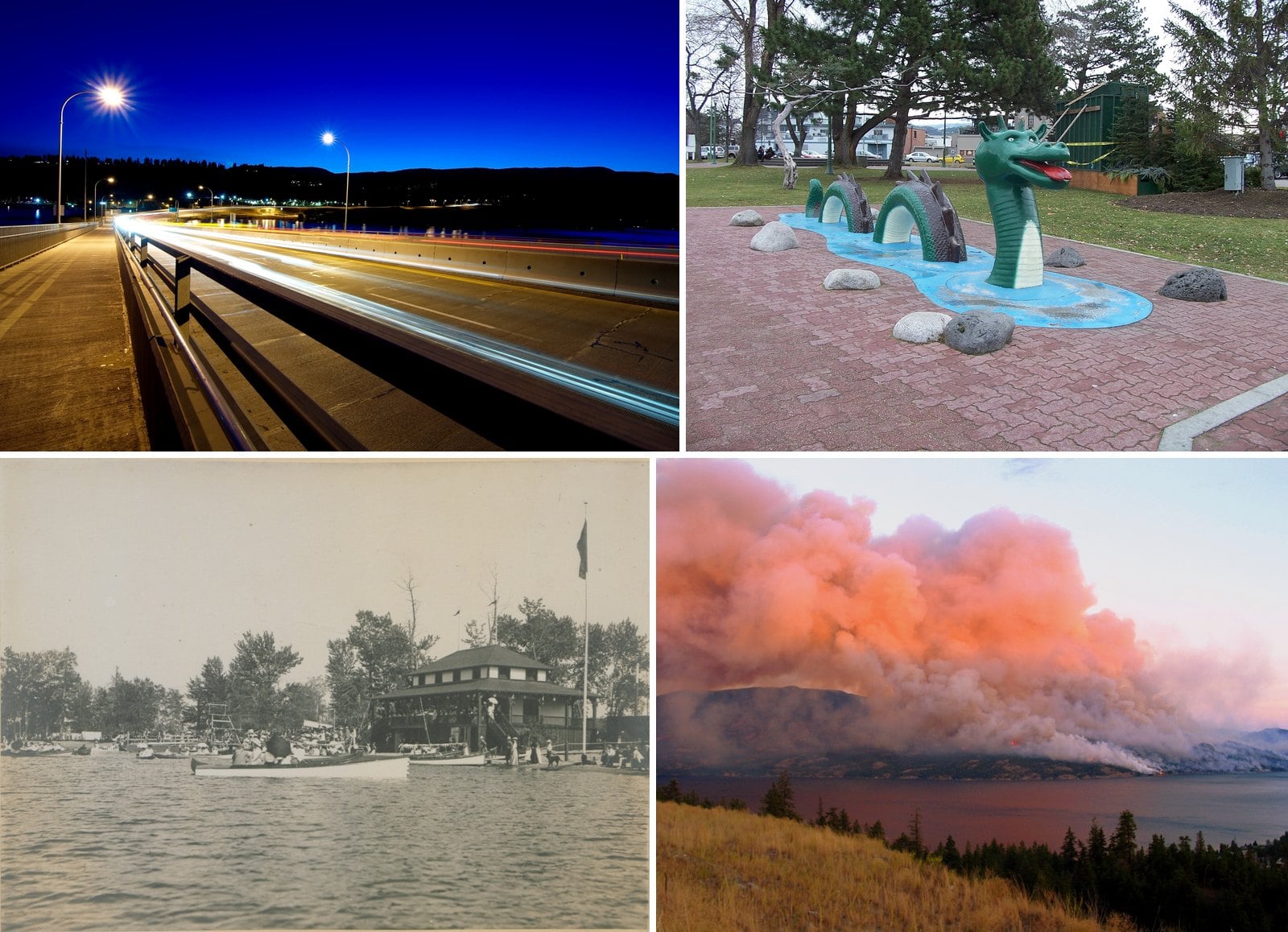
Kelowna changes fast. The bridge you crossed as a kid is gone. The arena has a new name. A paddlewheeler that once carried more than 30,000 people a year hasn’t run as a tour boat since 2008.
The city has been making memories on the water for a long time. Its Regatta grew out of a “Race Meet and Regatta” held at the CPR wharf at the foot of Bernard Avenue in September 1905, the year Kelowna was incorporated, and made its official debut in 1906.
This list sticks to what’s on the record. It covers the floating bridge and its lift span, the Ogopogo you sat on, the Regatta and how it ended, the summer of 2003, and the places you can still walk to. Each one comes with what’s left to see and how to get there.
11. Rattlesnake Island, Ogopogo’s home (Okanagan Lake, off Okanagan Mountain Park)
Where: Okanagan Lake, about 20 km south of Kelowna
When: Summer paddle destination
Cost: Free
Getting there: About 3 km paddle across the lake from Peachland
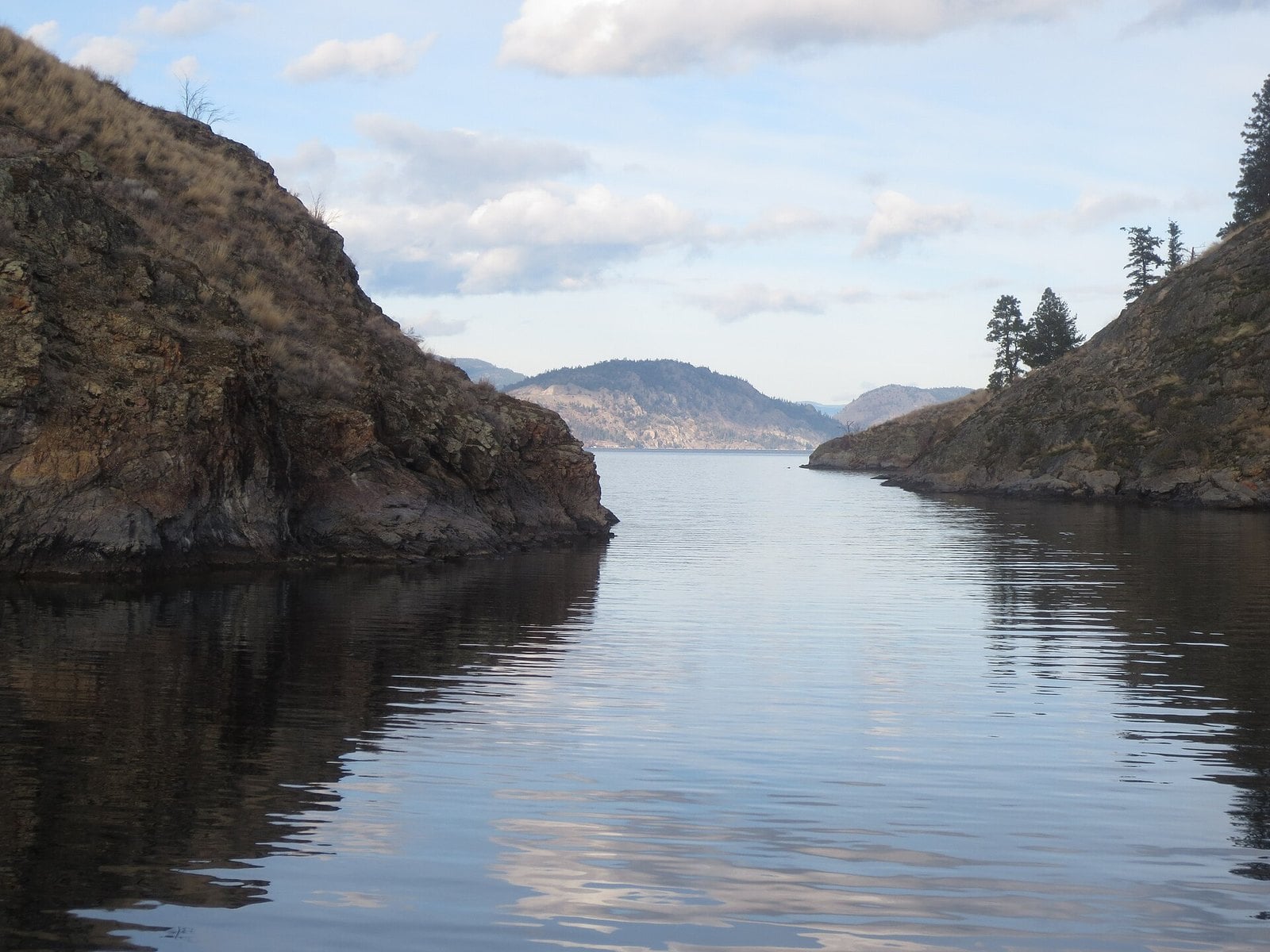
Ask a Kelowna kid where Ogopogo lives and the answer was Rattlesnake Island. Local legend puts the creature in a cave underneath it. The island sits about 20 km south of Kelowna, off Okanagan Mountain Park. The 2003 fire started near here.
Then there’s the amusement park that never happened. In the 1970s a businessman tried to turn the island into an Arab-themed attraction with pyramids, mini golf and a giant camel. It was never finished. Paddlers still find the old concrete mini-golf holes.
It’s a summer paddle, about 3 km across the lake from Peachland. The crossing can get rough when the wind picks up, so check the forecast before you push off. Paddle BC has more on paddling around Kelowna.
10. The Laurel Packinghouse (Cultural District)
Where: Ellis Street at Cawston Avenue, Cultural District
When: Built 1917 to 1918; museum open Thursday to Saturday, 10 a.m. to 5 p.m.
Cost: By donation (suggested $5 per person, $15 per family)
Getting there: Walk from the downtown waterfront
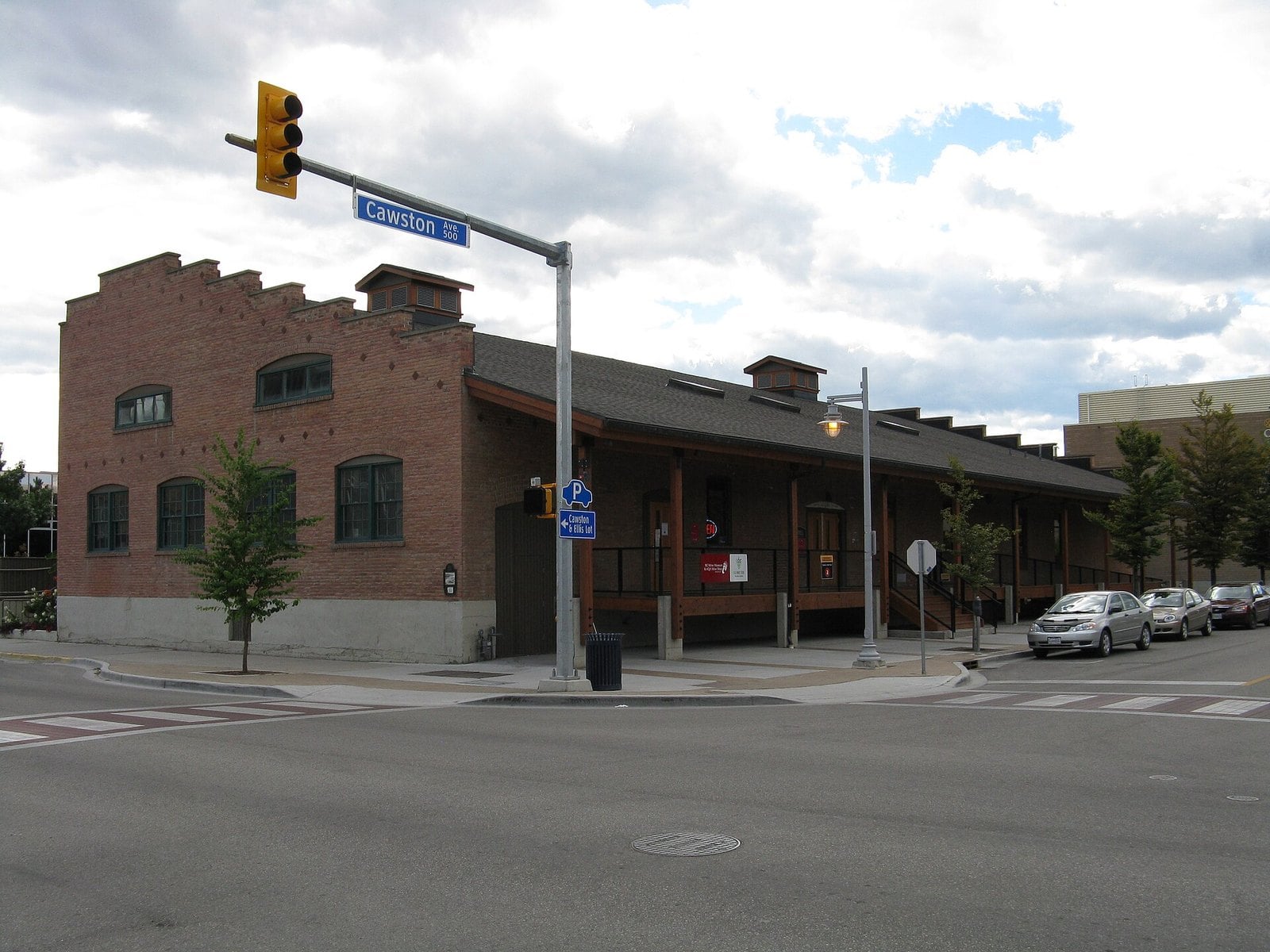
Before wine, Kelowna ran on fruit. The Laurel Packinghouse went up in 1917 and 1918. It was built from bricks made with Knox Mountain clay. The area around it was full of packinghouses, canneries and a sawmill. It packed fruit until the 1970s.
In 1982 it was slated for demolition. The community rallied to save it. It was saved and restored as a heritage building.
It now houses a Kelowna Museums wine and orchard museum. It’s open Thursday to Saturday, 10 a.m. to 5 p.m., and admission is by donation (suggested $5 per person or $15 per family), according to Kelowna Museums. It’s on Ellis Street at Cawston Avenue, walkable from the waterfront. The Okanagan Heritage Museum is within walking distance too.
9. The Fintry Queen paddlewheeler (Okanagan Lake, foot of Bernard Avenue)
Where: Okanagan Lake; for years docked at the end of Bernard Avenue
When: Ferry until the bridge opened in 1958; renamed 1968; last tour sailings 2008
Cost: n/a
Getting there: Current mooring not confirmed
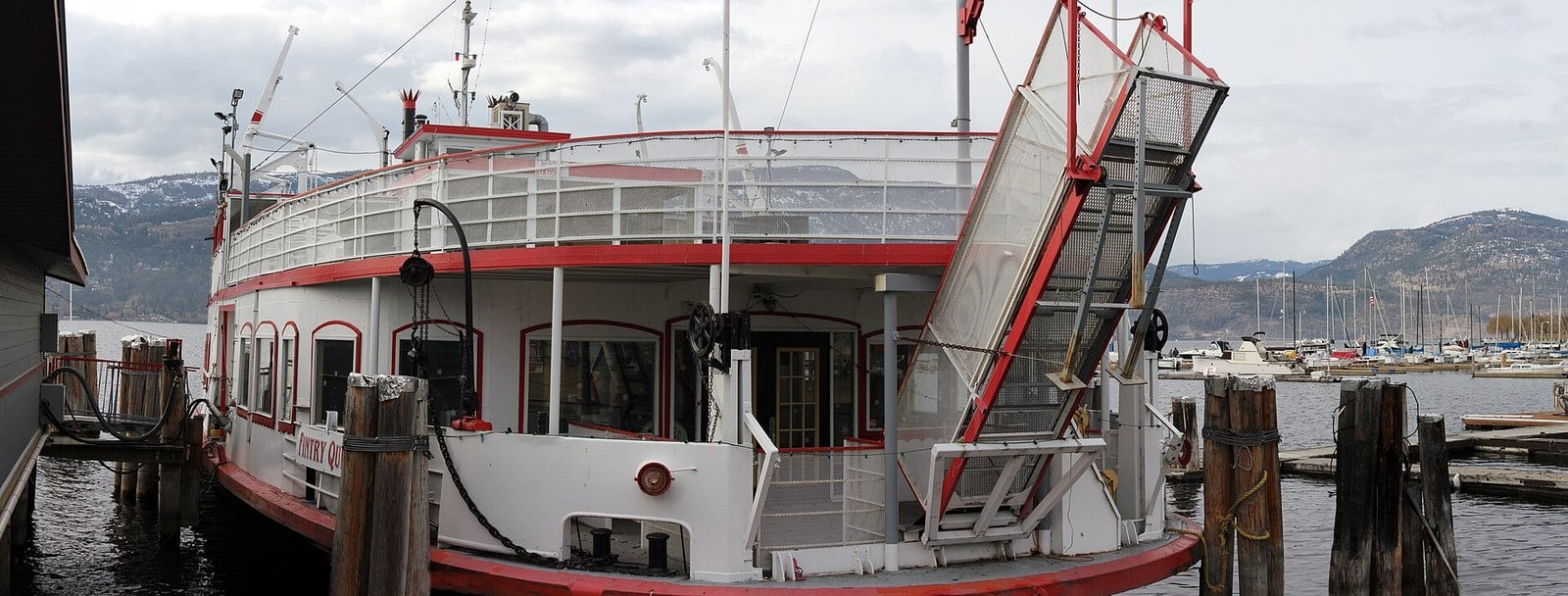
Before the bridge, you crossed the lake by ferry. The Fintry Queen started out as one of them. It was the car ferry Lequime, running between Kelowna and the Westside before the bridge opened in 1958.
In 1968 it was turned into a replica paddlewheeler and renamed. For decades it was the party and tour boat docked at the end of Bernard Avenue. It carried more than 30,000 passengers a year for more than 40 years. Some older locals remember it passing the old bridge when the lift span went up.
It hasn’t run as a tour boat since 2008. The Okanagan Luxury Boat Club has since bought it from its previous owner, according to the Similkameen Spotlight. Its current mooring and status aren’t confirmed, so don’t plan a trip around seeing it.
8. The Myra Canyon trestles burning, then coming back (Kettle Valley Rail Trail)
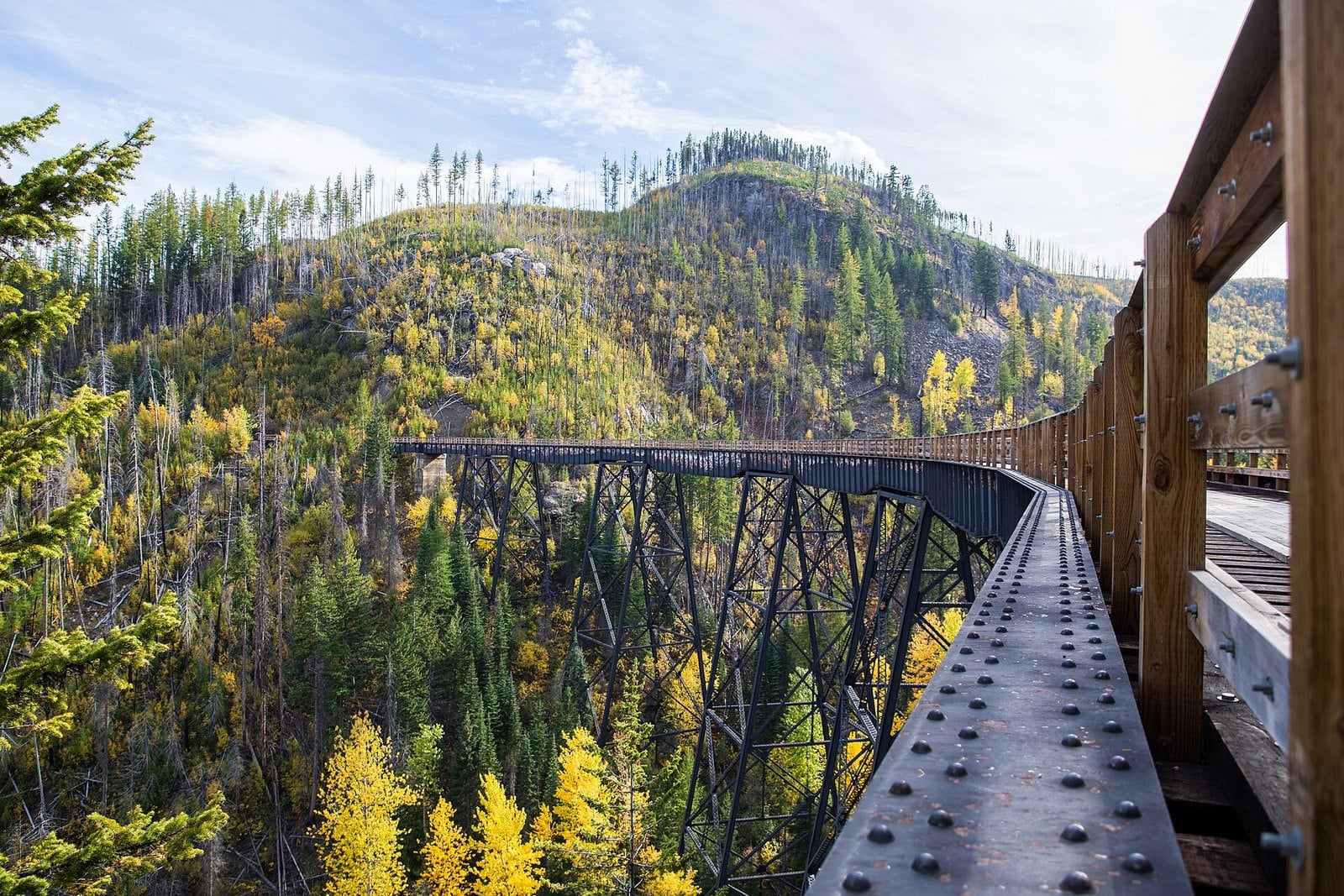
Where: Myra-Bellevue Provincial Park (Myra Canyon), Kettle Valley Rail Trail, southeast of Kelowna
When: Burned September 2003; reopened June 22, 2008
Cost: Check BC Parks
Getting there: Forest-service road from Kelowna’s southeast side; check BC Parks for conditions
The fire wasn’t finished when it left the south slopes. In the summer of 2003 it reached the old Kettle Valley Railway in Myra Canyon. It destroyed 12 of the canyon’s 18 wooden trestles.
Every one of them was rebuilt. A society of volunteers guided the work. The restored trestles officially reopened on Sunday, June 22, 2008. That was the same spring the old floating bridge closed, which made 2008 a big year for Kelowna landmarks.
The canyon is in Myra-Bellevue Provincial Park, southeast of Kelowna; see BC Parks for directions. There’s no fee to walk or bike the trail. It’s open year-round, but in winter the gravel access road may need a 4×4, so check BC Parks for current conditions. In summer, go early to beat the heat.
7. Paul’s Tomb beach and Knox Mountain (Knox Mountain Park)
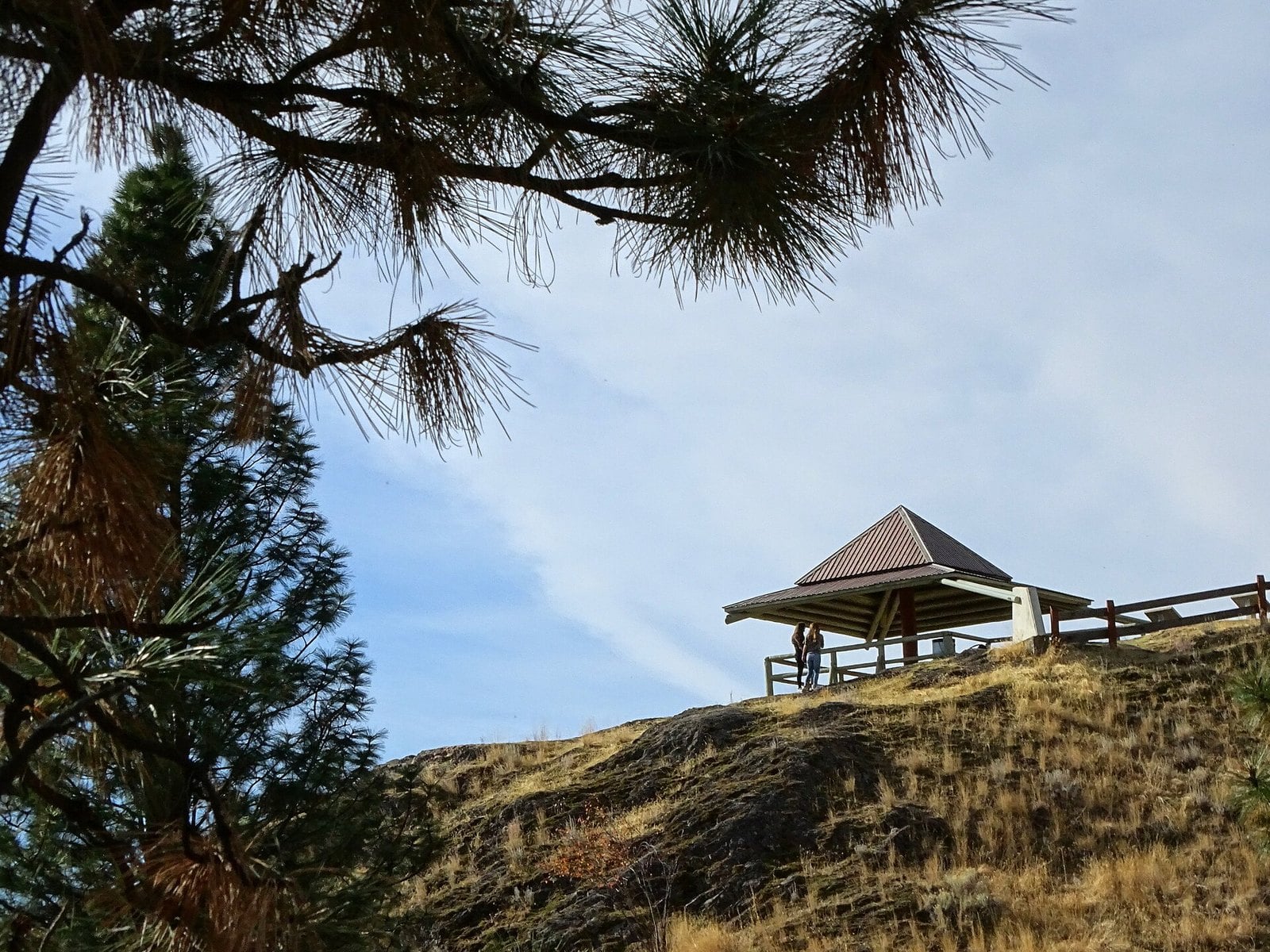
Where: Knox Mountain Park, north of downtown
When: Year-round
Cost: Free
Getting there: Knox Mountain Drive, north end of downtown; about 3 km round trip to the cove
Paul’s Tomb was the beach you walked to. The trail to the cove is about 3 km round trip and rated easy to moderate. The tomb is a family vault built above the lake by Paul, an Okanagan pioneer who owned the land.
Knox Mountain has its own history. The first Knox Mountain Hill Climb was held in 1958. The City’s Knox Mountain Park brochure has the full timeline.
It’s a City of Kelowna park. It’s off Knox Mountain Drive at the north end of downtown.
6. When the Rockets came to town, and Skyreach Place (Water Street)
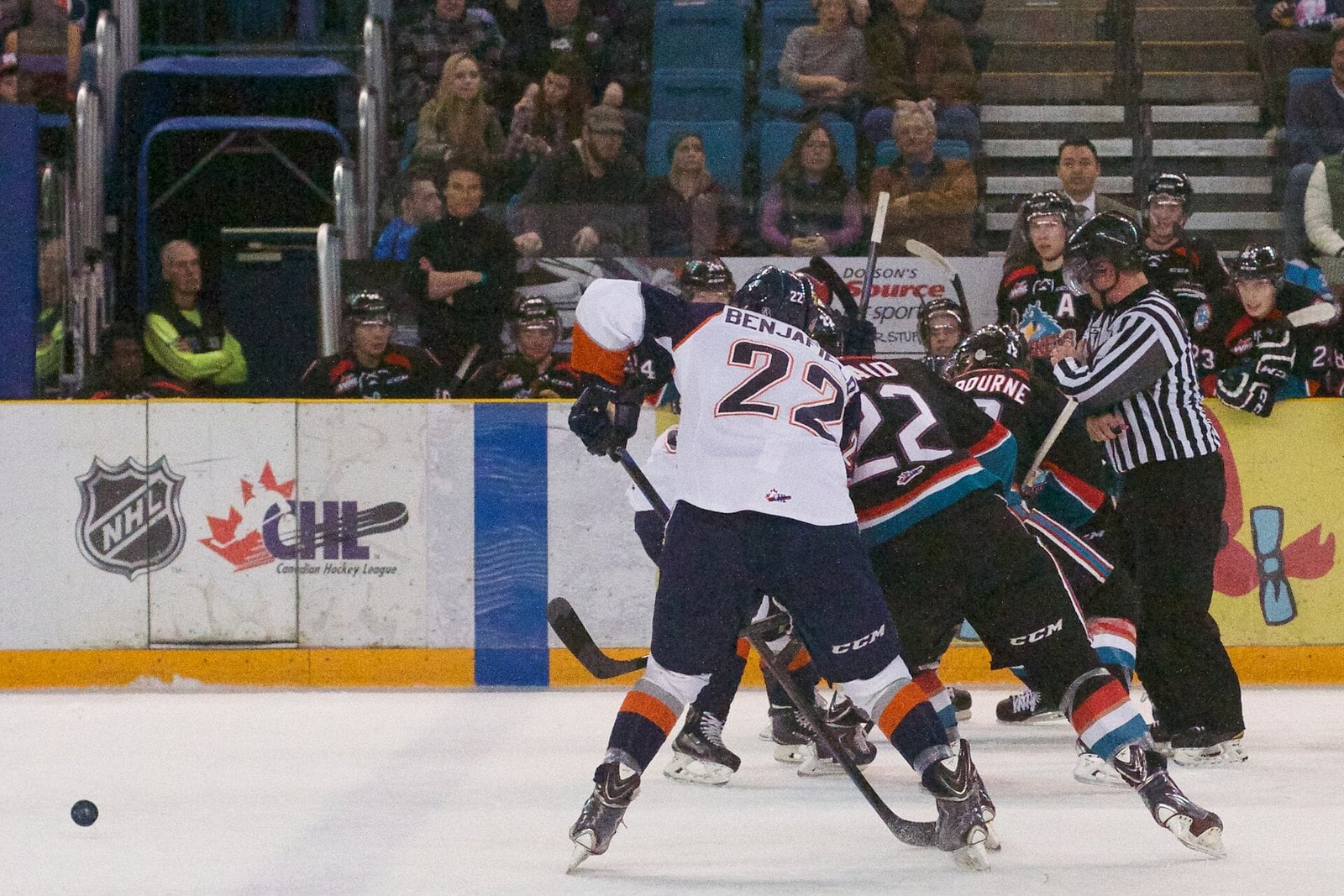
Where: Prospera Place (formerly Skyreach Place), 1223 Water Street
When: Rockets arrived 1995; Skyreach Place opened fall 1999
Cost: Check current ticket prices
Getting there: Downtown on Water Street
In 1995 the WHL’s Tacoma Rockets left the 20,000-seat Tacoma Dome and moved to Kelowna. They played four seasons here before their new home was ready.
In fall 1999 the fans followed the team to the new Skyreach Place on Water Street. The building is Prospera Place now. Plenty of people still call it Skyreach.
The high point came in 2004, when Kelowna hosted and won the Memorial Cup.
The arena is at 1223 Water Street, downtown. The Kelowna Rockets listing has more on the team; check ticket prices with the team before you go.
5. The Sails, Spirit of Sail (Foot of Bernard Avenue)
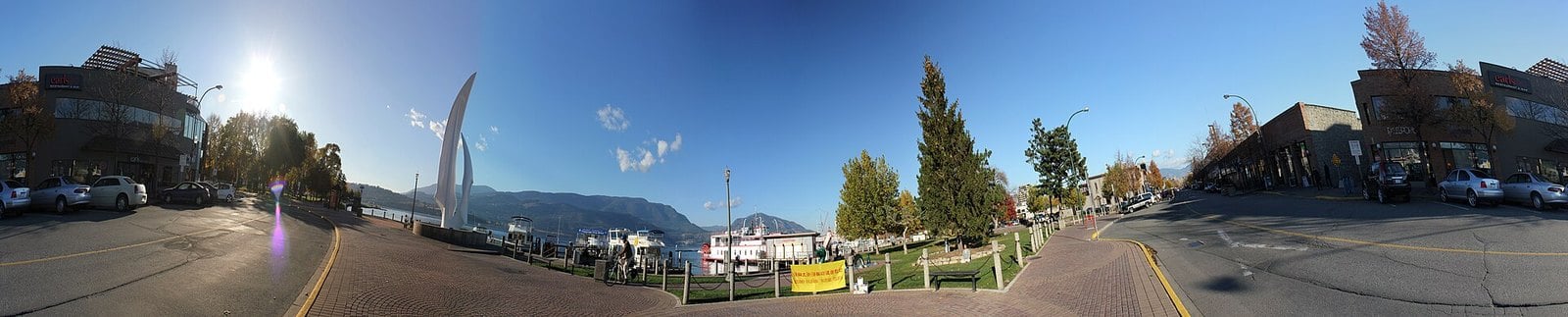
Where: Foot of Bernard Avenue, near the north entrance to City Park
When: Installed 1977 or 1978
Cost: Free
Getting there: Walk to the foot of Bernard Avenue
Spirit of Sail is the official name. Locals just call it the Sails. Sculptor Robert Dow Reid made it from fibreglass. It stands 12 metres high and weighs about 1,820 kg.
It went in by helicopter in the late 1970s. News reports say 1977 (the City’s public art listing says 1978). It became the city’s best-known landmark.
Reid also made Rhapsody, the dolphin sculpture installed in 1993 at Rhapsody Plaza on Water Street. He died in April 2025 at 91.
The Sails stand near the north entrance to City Park and are free to visit. From there, the Ogopogo statue and Rhapsody are both a short walk.
4. The 2003 Okanagan Mountain Park fire (Okanagan Mountain Park and Kelowna’s south slopes)
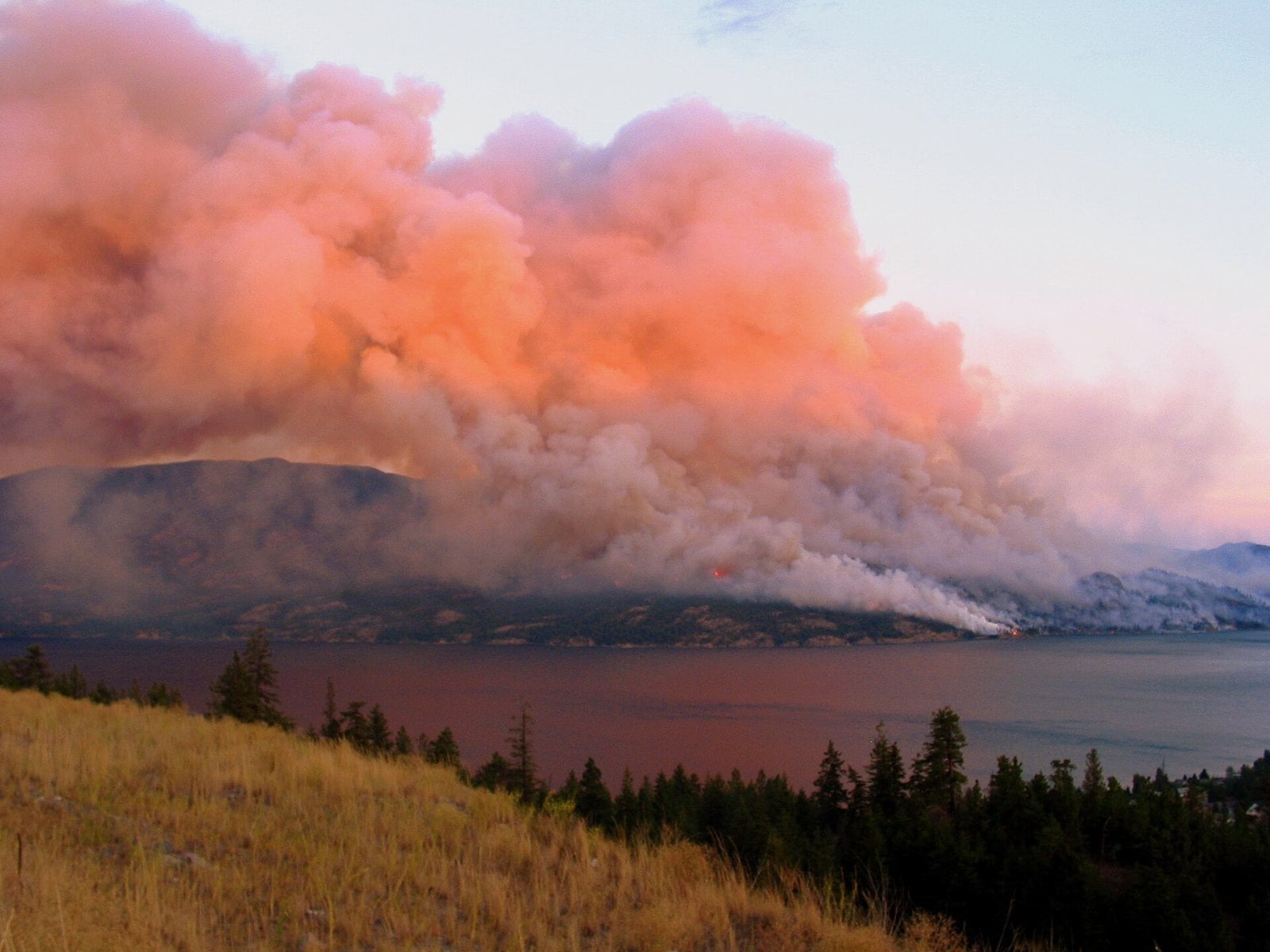
Where: Okanagan Mountain Park and Kelowna’s south slopes (Mission, Crawford, Kettle Valley)
When: August 16 to mid-September 2003
Cost: n/a
Getting there: Okanagan Mountain Provincial Park is south of Kelowna on the east side of the lake; check BC Parks for access
Lightning started it near Rattlesnake Island on August 16, 2003. It burned out of Okanagan Mountain Park and into neighbourhoods on Kelowna’s southern edge, in Mission, Crawford and Kettle Valley.
The City of Kelowna says it forced more than 27,000 people in the city from their homes and destroyed 239 houses. CBC puts damage at about $200 million. It wasn’t brought under control until September.
Ask anyone who lived here then where they were the night the fire came over the hill. Almost everyone has a story.
Okanagan Mountain Provincial Park is south of Kelowna on the east side of the lake. Check BC Parks for current access before you go.
3. The Kelowna Regatta (City Park and the downtown waterfront)
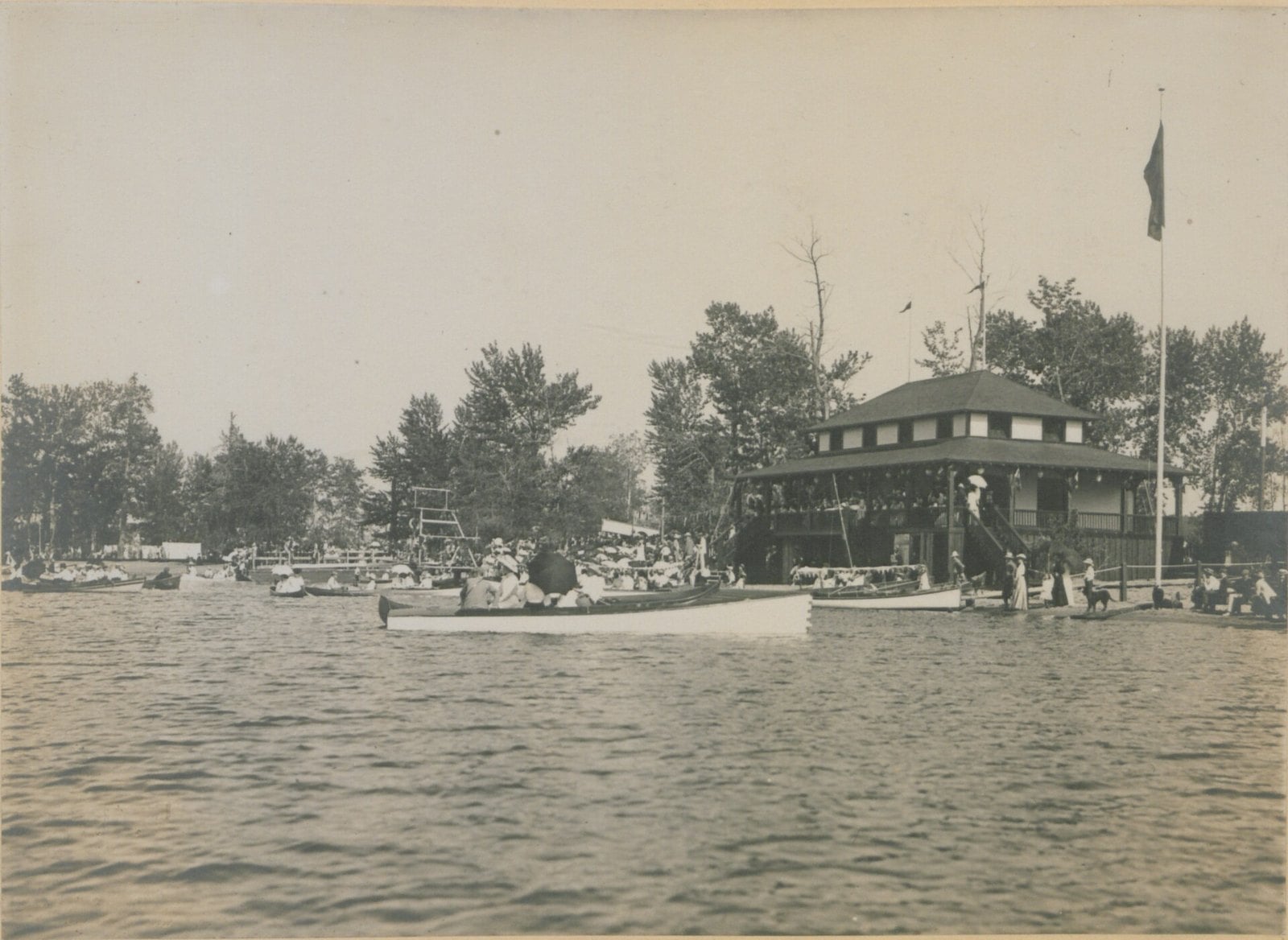
Where: City Park waterfront to the foot of Bernard Avenue (Kerry Park)
When: First held 1905 or 1906; last full Regatta 1987
Cost: Free to walk the old course
Getting there: Walk the City Park waterfront north to the foot of Bernard Avenue
The Regatta is nearly as old as the city. It grew out of a September 1905 “Race Meet and Regatta” at the CPR wharf at the foot of Bernard Avenue. Kelowna Museums dates the first Regatta to 1906, though some accounts say 1905.
A single day of swimming, diving, rowing and sailing grew into a multi-day festival. It billed itself as Canada’s Greatest Water Show. The serious races shared the lake with bathtub races, duck-catching contests and the greased pole walk. Then there was bolster and bar, a pillow fight on a log over the water.
The ending is the part people still talk about. Riots broke out downtown on Regatta weekend in 1986, and again in 1987. The event was cancelled in 1988. A smaller, family-oriented Regatta was tried in the early 1990s and faded out.
The Okanagan Heritage Museum’s Regatta exhibition, Making Waves, closed November 9, 2026. To trace the old course yourself, walk the City Park waterfront, where the Aquatic stood, north to the old CPR wharf site at the foot of Bernard (today’s Kerry Park).
2. Sitting on the Ogopogo statue’s head (Downtown waterfront)
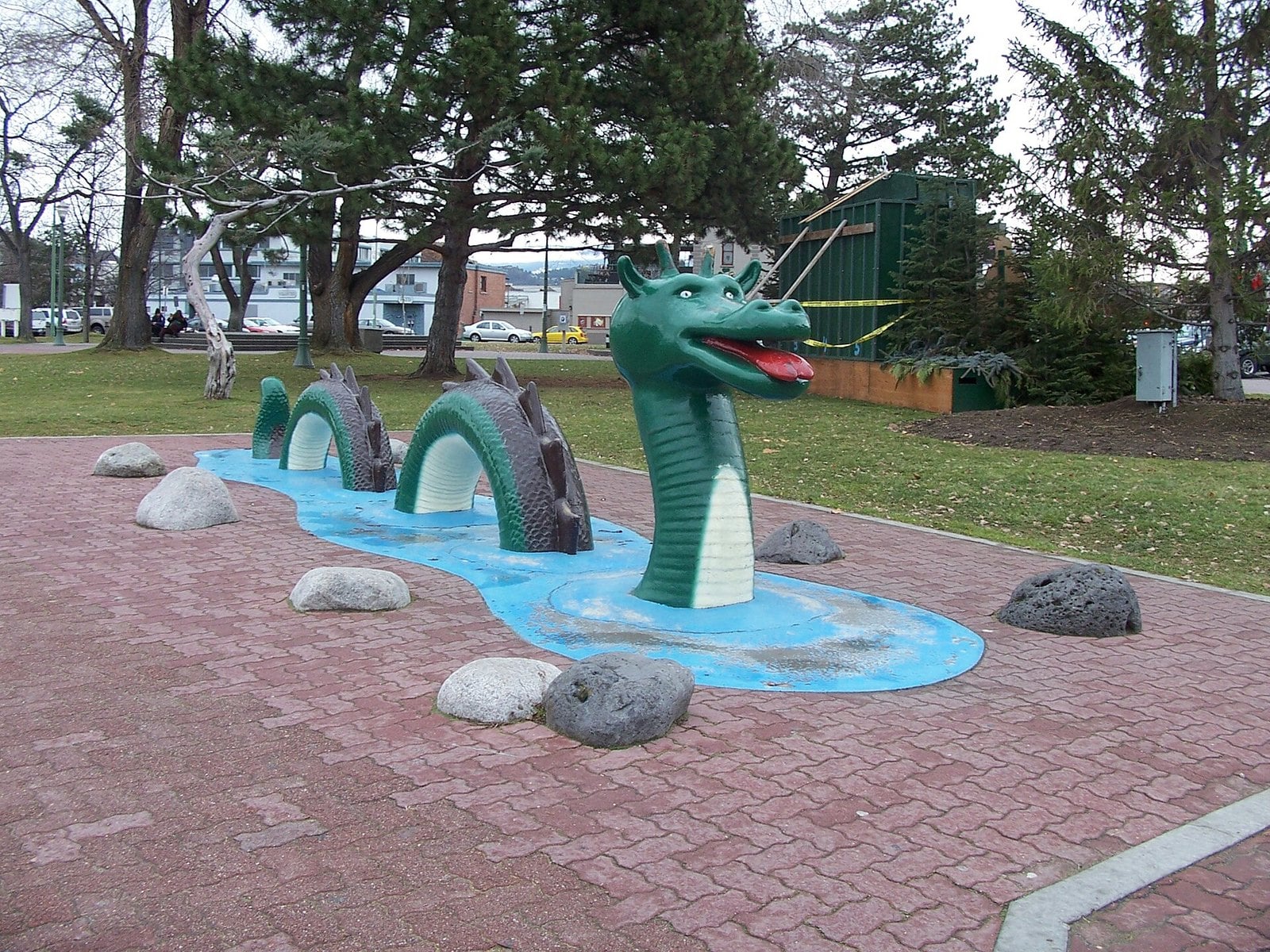
Where: Waterfront boardwalk between the Sails and the Kelowna Visitor Centre
When: Made in 1960; outdoors year-round
Cost: Free
Getting there: Walk to the foot of Bernard Avenue and follow the boardwalk toward the Visitor Centre
Plenty of Kelowna kids have a photo sitting on the green Ogopogo’s head. It joined the City’s Public Art Collection in 1998, and it’s probably the most photographed piece of public art in the city.
It now sits on the boardwalk between the Sails and the Kelowna Visitor Centre, according to Tourism Kelowna. It’s outdoors, free and there year-round. Walk to the foot of Bernard Avenue and follow the boardwalk toward the Visitor Centre.
The creature is older than the statue. The name Ogopogo comes from a comic English music-hall song. The syilx story of n’ha-a-itk, the spirit of the lake, goes back much further.
Locals are protective of it. Ogopogo had been on every city parade float for more than 50 years.
1. The old Okanagan Lake floating bridge (Okanagan Lake, Hwy 97)
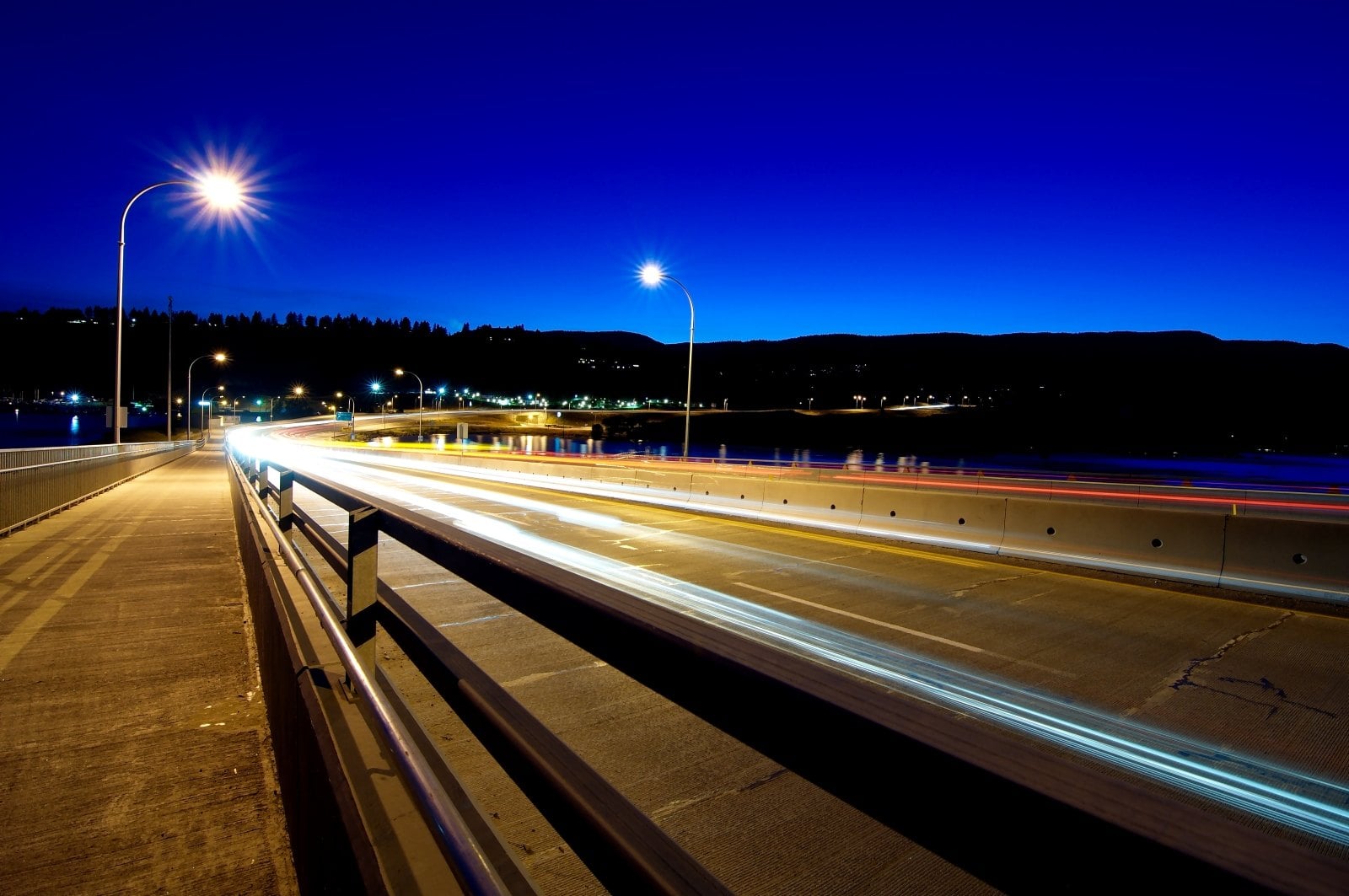
Where: Okanagan Lake, between downtown Kelowna and the Westside (Hwy 97)
When: In use July 1958 to May 31, 2008
Cost: Tolled both ways 1958 to 1963; today’s W.R. Bennett Bridge is toll-free
Getting there: Drive or walk across the W.R. Bennett Bridge, which has a sidewalk
For 50 years, getting to the Westside meant driving across the lake on a bridge that floated. It opened as a two-lane crossing 650 metres long. It cost $7.5 million to build. A third lane was added later. Princess Margaret cut the ribbon on July 18, 1958.
The part most kids remember is the lift span. It rose so tall boats could get through. Drivers also paid tolls in both directions until 1963.
The five-lane W.R. Bennett Bridge opened May 25, 2008. The old bridge closed six days later, on May 31. It was hauled away in pieces through 2009. The opening-day history is worth a read if you remember the old deck.
You can still cross on foot, because the Bennett Bridge has a sidewalk. For a then-and-now photo, stand in City Park or near Kerry Park and look across to the Westside. The new bridge sits roughly where the old one did.
| Metric | Old | New |
|---|---|---|
| Opened | 1958 | 2008 |
| Lanes | 2, later 3 | 5 |
| Cost | $7.5M | $144M |
| Design capacity (vehicles/day) | 38,000 | 80,000 |
| Actual traffic in 2005 (vehicles/day) | 50,000 | n/a |
Getting there from Vancouver
Kelowna is about four hours from Vancouver via Hwy 1, the Coquihalla and the Okanagan Connector. Winter tire and chain signs apply from October 1 to April 30. The province’s winter driving page has the rules.
When to go
- The Sails, the Ogopogo statue and Knox Mountain Park are outdoors and there year-round.
- Rattlesnake Island is a summer paddle. Pick a calm day.
- Myra Canyon gets hot in summer, so start early.
- The Okanagan Heritage Museum charges admission (adults $10, students and seniors $8, youth $7, family $25); check its website for current hours and any discount days.
Okanagan Heritage Museum
The museum is at 470 Queensway Avenue, downtown. Its Regatta exhibition, Making Waves, closed November 9, 2026.
- Adults: $10
- Students and seniors: $8
- Youth (5 to 17): $7
- Family: $25
Check Kelowna Museums for what’s showing now.
A downtown walking loop
Start at the Sails at the foot of Bernard Avenue. Follow the boardwalk to the Ogopogo statue. Then head to Rhapsody on Water Street and up to the Laurel Packinghouse on Ellis Street in the Cultural District. Add the Okanagan Heritage Museum on Queensway if you have time. To trace the old Regatta course, walk the City Park waterfront north to the foot of Bernard.
Respect and safety
- Ogopogo grew out of the syilx story of n’ha-a-itk, the spirit of the lake. Treat that story with respect.
- Check the forecast before paddling to Rattlesnake Island. Wind can make the crossing rough.
- Check BC Parks for current access to Okanagan Mountain and Myra Canyon before you head out.
| Landmark | Year | What it is | Where |
|---|---|---|---|
| Ogopogo statue | 1960 | Green Ogopogo by a local artist; in the Public Art Collection since 1998 | Boardwalk between the Sails and the Visitor Centre |
| Spirit of Sail (the Sails) | 1977 or 1978 | 12-metre fibreglass sculpture, about 1,820 kg | Foot of Bernard Avenue |
| Rhapsody | 1993 | Dolphin sculpture by the same sculptor as the Sails | Rhapsody Plaza, Water Street |
| Laurel Packinghouse | 1917 to 1918 | Brick fruit packinghouse, now the Okanagan Wine and Orchard Museum | Ellis Street at Cawston Avenue |
Some of these you can still visit, like the Sails, the Ogopogo statue and the trestles in Myra Canyon. Others live on only in museum files and in what locals tell each other. Walk the downtown waterfront and you’ll pass several of them, along with the spot where the old bridge used to float.
Get the weekend plan in your inbox. Burrard Bulletin is a free email on what’s actually on from Vancouver to Whistler. Sign up here.
Photo credits
- WRBBLooking West.jpg by Darren Kirby from Edmonton, AB, Canada, CC BY-SA 2.0 (combined into a montage, cropped). Via Wikimedia Commons.
- Statue of Ogopogo in a Kelowna park..jpg by Hamedog at English Wikipedia, CC BY-SA 3.0 (combined into a montage, cropped). Via Wikimedia Commons.
- The aquatic building from the lake, Regatta Day Kelowna, British Columbia (HS85-10-21792).jpg by G. H. E. Hudson, Public domain (combined into a montage, cropped). Via Wikimedia Commons.
- Okanagan Mountain Park Fire.jpg by Shawn, CC BY-SA 2.0 (combined into a montage, cropped). Via Wikimedia Commons.
- Myra Canyon Trestles No-6.jpg by Mack Male from Edmonton, AB, Canada, CC BY-SA 2.0 (resized). Via Wikimedia Commons.
- Fintry Queen close up-March 2011.jpg by Accuruss, CC BY-SA 3.0 (resized). Via Wikimedia Commons.
- Russdionnedotcom Kelowna Sails Panarama.jpg by Accuruss, CC BY-SA 3.0 (resized). Via Wikimedia Commons.
- 2015-365-38 Anyone Seen a Puck? (16283415120).jpg by cogdogblog, CC BY 2.0 (resized). Via Wikimedia Commons.
- BC Growers Packing House, northeast corner.JPG by Machegav, CC BY-SA 3.0 (resized). Via Wikimedia Commons.
- Autumn at Knox Mountain Park – Kelowna – BC – Canada – 05 (23869909688) (2).jpg by Adam Jones from Kelowna, BC, Canada, CC BY-SA 2.0 (resized). Via Wikimedia Commons.
- Eastern Entrance to Ogopogo Gap.JPG by Extemporalist, CC0 (resized). Via Wikimedia Commons.
