
19 Historic Sites Around Vancouver That Are Free to Visit
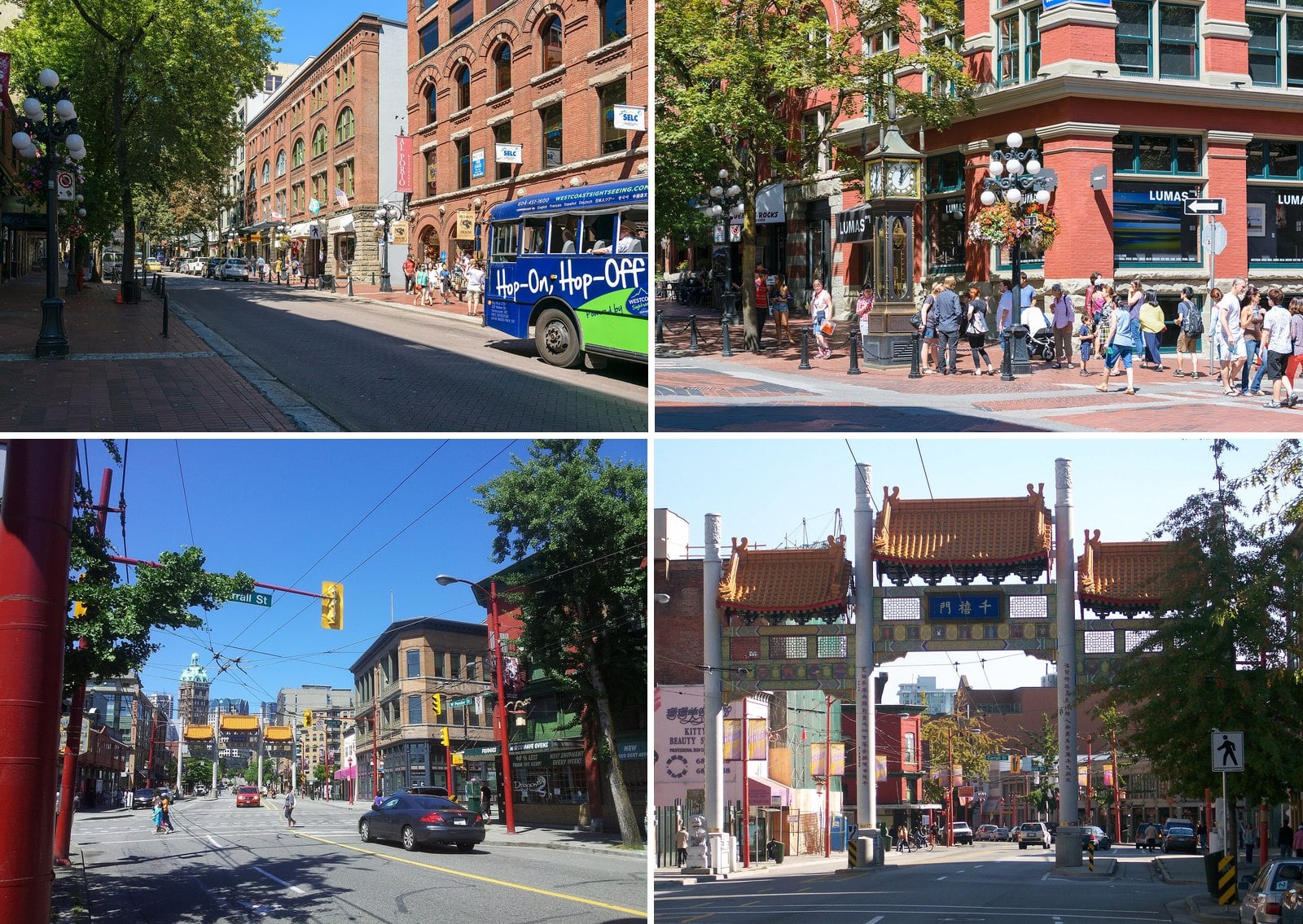
A lot of Metro Vancouver’s history sits out in the open. Gastown was designated a National Historic Site of Canada in 2009. Chinatown followed, and Parks Canada records its designation date as July 19, 2011. You can walk both without paying a cent. The same goes for a lighthouse built on arches, a cannon that still fires every evening and a shipyard on the Fraser.
This guide covers heritage streets, buildings, memorials and small museums from Gastown to Port Moody, Steveston, South Surrey and Fort Langley. Most are free. A few are by donation, which means you can walk in without paying but the site asks for a contribution. Each of those is labelled.
Some well-known places nearby charge admission, so they’re left off. That includes Fort Langley National Historic Site (daily admission fee), the Gulf of Georgia Cannery ($14.75 adult), the Dr. Sun Yat-Sen Classical Chinese Garden and the Chinatown Storytelling Centre. Adults pay at Parks Canada sites outside special free periods.
| Area | Sites | Good to know |
|---|---|---|
| Gastown and Chinatown | Gastown Historic District, Steam Clock, Chinatown National Historic Site, Millennium Gate, Sam Kee Building, Dr. Sun Yat-Sen Park | Mostly public streets with no hours; Waterfront Station and Stadium-Chinatown SkyTrain nearby |
| Stanley Park | Brockton Point Totem Poles, Brockton Point Lighthouse, Nine O’Clock Gun, Japanese Canadian War Memorial | Poles, lighthouse and gun sit close together at Brockton Point; all parking is paid |
| Point Grey | Old Hastings Mill Store Museum | Weekend afternoons, mid-February through November |
| Steveston | Britannia Shipyards, Steveston Museum & Post Office, London Farm | Britannia is Fri to Sun in winter, then daily Dec 27 to 31; London Farm grounds open dawn to dusk |
| Burnaby, New Westminster, Port Moody | Burnaby Village Museum, New Westminster Museum, POMO Museum | Festive Village runs late Nov into Jan; New West stays open until 8 p.m. Mon to Thu |
| South Surrey and Fort Langley | Historic Stewart Farm, Fort Langley CN Station | Stewart Farm farmhouse Tue to Sun; CN Station closed until Victoria Day weekend 2027 |
19. Fort Langley CN Station, by donation (Fort Langley)
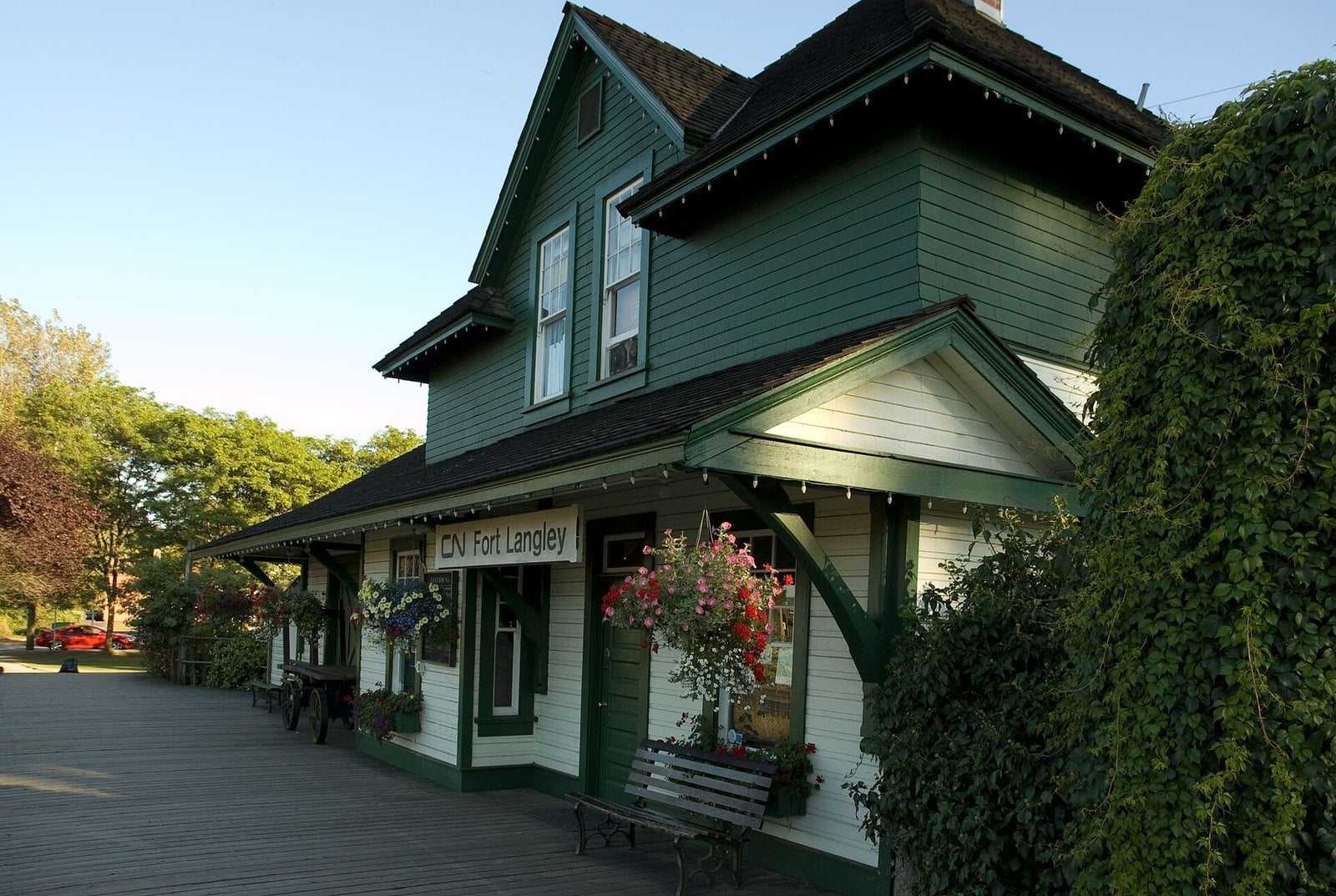
Where: 23245 Mavis Ave at Glover Rd, Fort Langley
When: Closed for the season; reopens Victoria Day weekend 2027 (weekends, noon to 4 p.m. in season). Exterior viewable year-round
Cost: By donation (per a 2019 report; confirm with the Langley Heritage Society)
Getting there: Corner of Glover Rd and Mavis Ave in Fort Langley village, about 48 km from downtown Vancouver
The Canadian Northern Railway built this station in 1915. The Township owns it, and the Langley Heritage Society maintains it. A caboose and restored rail cars sit on the site.
It opens seasonally, on weekends from noon to 4 p.m. The station is now closed for the season and reopens on the Victoria Day weekend in 2027. The by-donation status comes from a 2019 news report, so check with the Langley Heritage Society before you count on getting inside.
The station is in Fort Langley village, near the Fort Langley National Historic Site. Even when the doors are shut, the building and rail cars are worth a look from outside on a village walk.
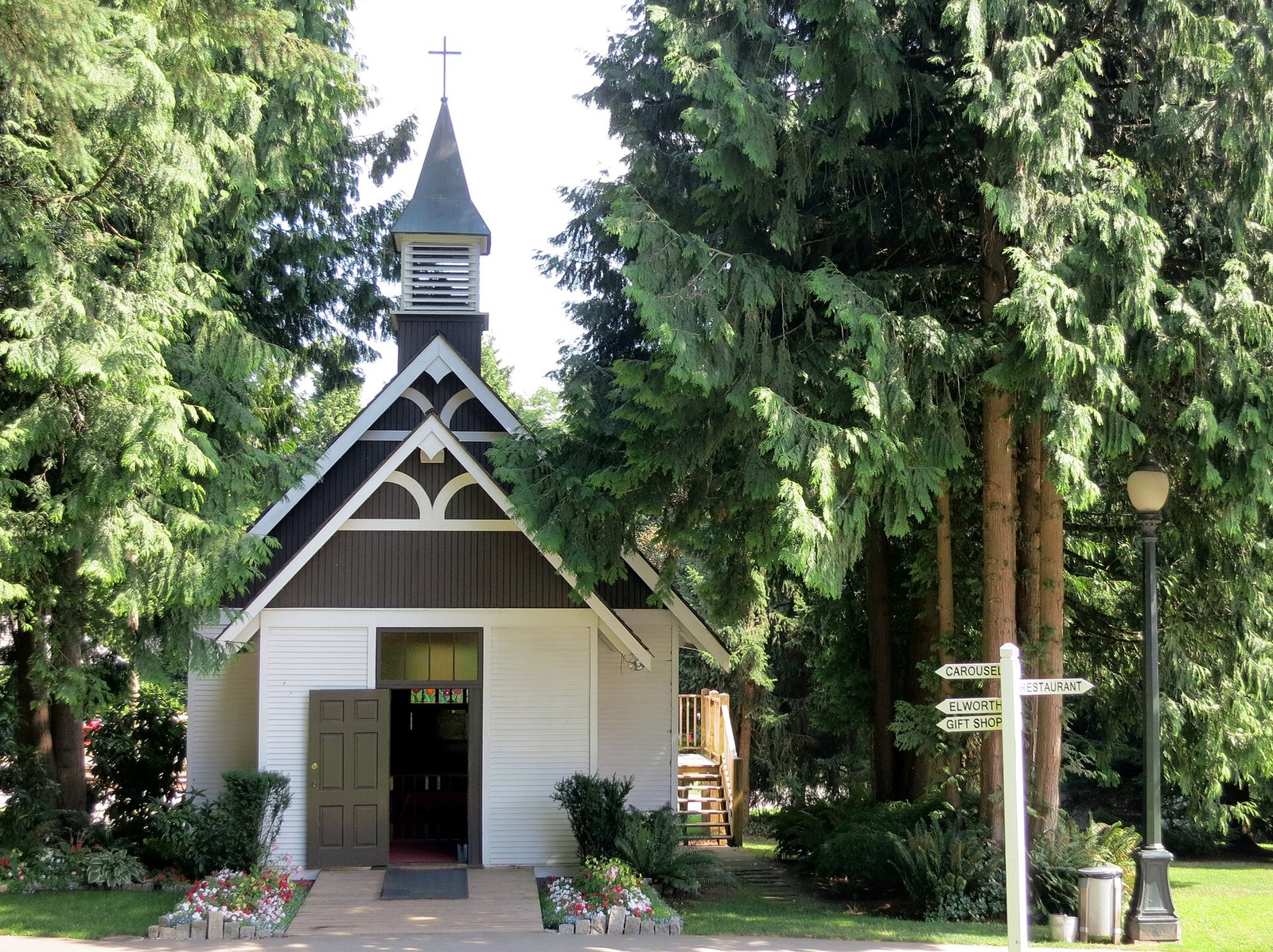
18. Burnaby Village Museum (Burnaby)
Where: 6501 Deer Lake Ave, Burnaby
When: Festive Village: Nov 25 to Dec 13, 2026, Wed to Sun, 2 to 9 p.m.; daily Dec 16, 2026 to Jan 3, 2027, 2 to 9 p.m. (closed Dec 24 and 25)
Cost: Free gate admission; carousel $2.86 plus tax per ride
Getting there: Deer Lake Ave, Burnaby
This is a 10-acre open-air museum set in the 1920s. You walk among heritage buildings, an Indigenous Learning House and a 1912 C.W. Parker carousel. Gate admission is free except during Haunted Village.
In winter the site turns into Festive Village, lit up and decorated for the holidays. In 2026 it runs November 25 to December 13, Wednesday to Sunday, 2 to 9 p.m., and it’s closed Mondays and Tuesdays. Then it’s open daily from December 16, 2026 to January 3, 2027, 2 to 9 p.m., closed December 24 and 25.
The carousel costs $2.86 plus tax per ride, so bring a card for the kids. The City’s Festive Village page has listed a Bright in Burnaby tree lighting. Confirm the 2026 date there before you plan around it.
The museum is on Deer Lake Avenue. General hours and rates are on the museum’s own site.
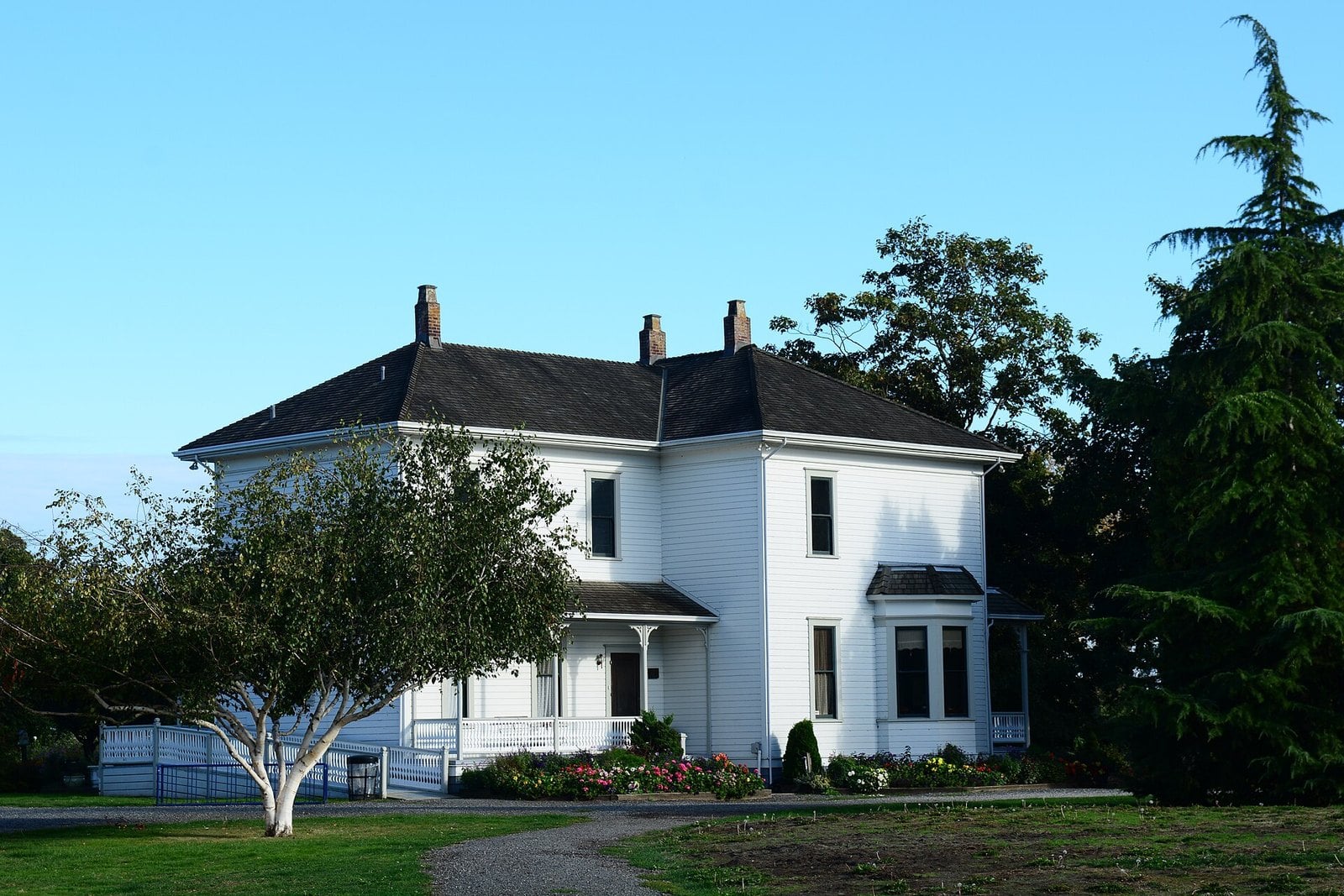
17. London Farm grounds (Richmond)
Where: 6511 Dyke Rd, Richmond
When: Grounds dawn to dusk; farmhouse closed Oct 1 to Dec 31, 2026
Cost: Free
Getting there: Dyke Road, east of Steveston Village
This is one of Richmond’s earliest farm sites. Charles and Henrietta London built the farmhouse in 1898, and the park overlooks the Fraser River.
The grounds are open dawn to dusk year-round, and admission is free. The farmhouse is another matter. It’s closed October 1 to December 31, 2026, and the 2027 schedule isn’t posted yet. Watch the London Farm page for the reopening.
The farm is on Dyke Road, east of Steveston Village. There are picnic tables on site, so pack lunch and make a slow afternoon of it.
16. Dr. Sun Yat-Sen Park, free public side (Chinatown, Vancouver)
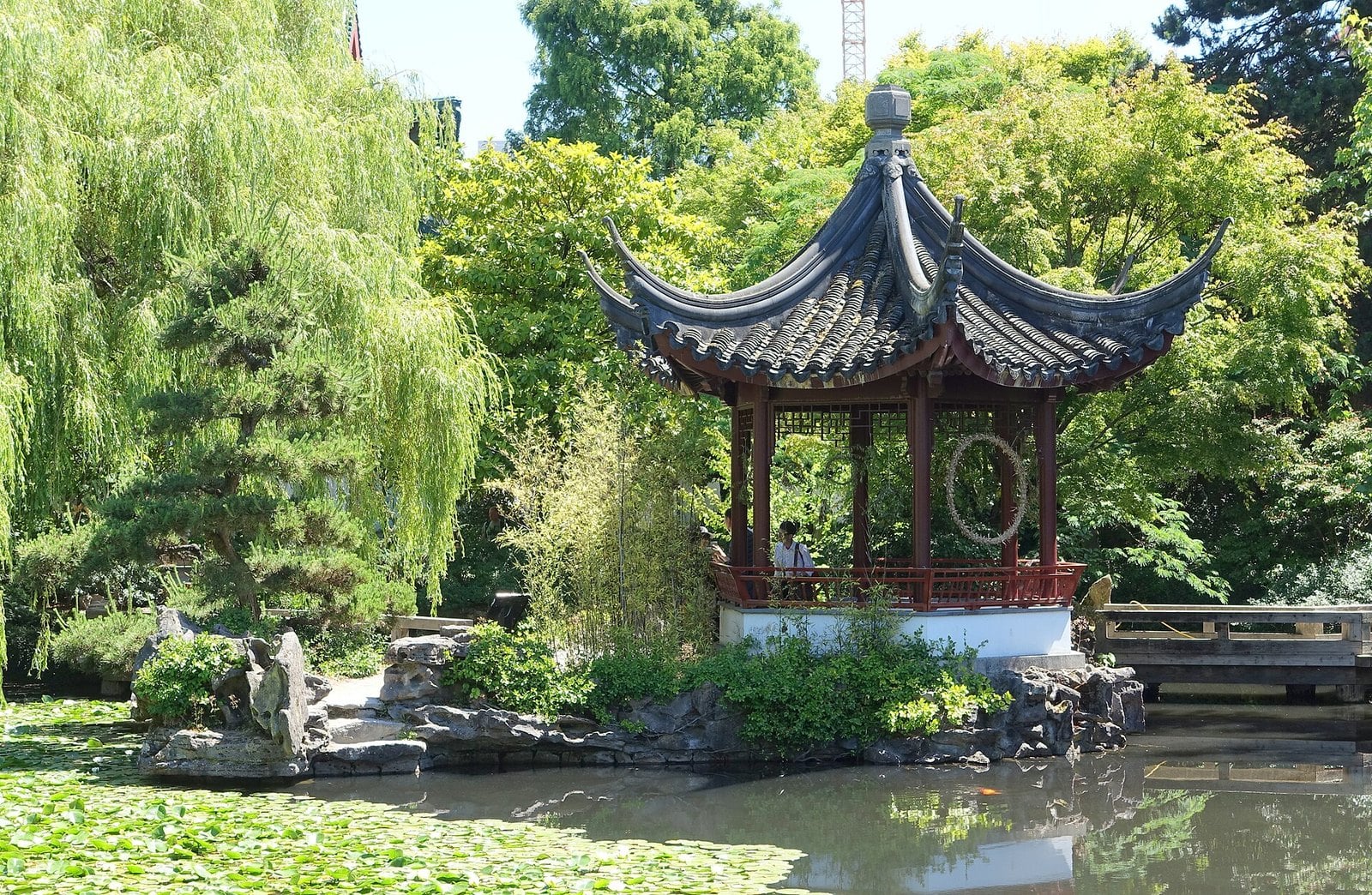
Where: 578 Carrall St, Chinatown
When: Gated; the Park Board locks it outside the Classical Garden’s hours (Oct to Apr: 10 a.m. to 4:30 p.m., closed Mondays Nov to Apr)
Cost: Free for the public park; the Classical Garden charges admission
Getting there: Through the courtyard off Pender St and Carrall St, beside the Chinese Cultural Centre
There are two spaces here, and only one of them is free. The walled Dr. Sun Yat-Sen Classical Chinese Garden charges admission. Beside it is a separate public park built in Chinese style, mostly with North American materials.
The two share a pond. You enter the park through a courtyard, past a bust of Dr. Sun Yat-Sen.
The courtyard is off Pender and Carrall streets, beside the Chinese Cultural Centre. The park is run by the Vancouver Park Board, which locks its gates in line with the Classical Garden’s hours (10 a.m. to 4:30 p.m. from October to April, closed Mondays from November to April). Don’t plan an evening visit.
15. POMO Museum, Port Moody Station, by donation (Port Moody)
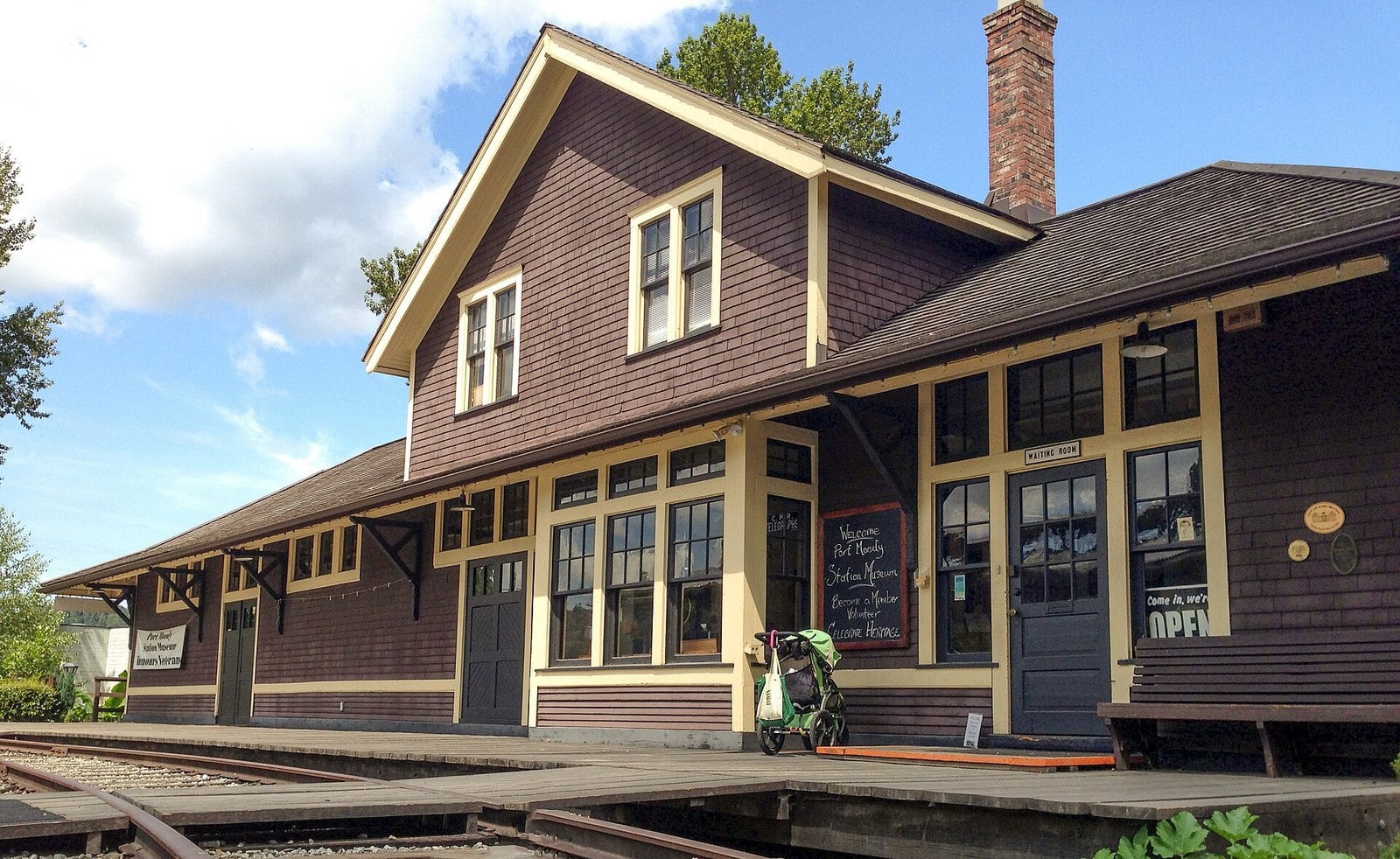
Where: 2734 Murray St, Port Moody
When: September to May: Wed to Sun, noon to 4 p.m.; closed statutory holidays
Cost: By donation ($5 suggested)
Getting there: Murray St next to Rocky Point Park
The museum is in Port Moody’s old train station beside Rocky Point Park. It covers local history, and the collection includes a 1921 rail car.
From September to May it’s open Wednesday to Sunday, noon to 4 p.m., closed statutory holidays. Entry is by donation, with $5 suggested. Hours are on the museum’s site.
It’s on Murray Street next to Rocky Point Park. Pair the visit with a walk in the park.
14. Historic Stewart Farm (South Surrey)
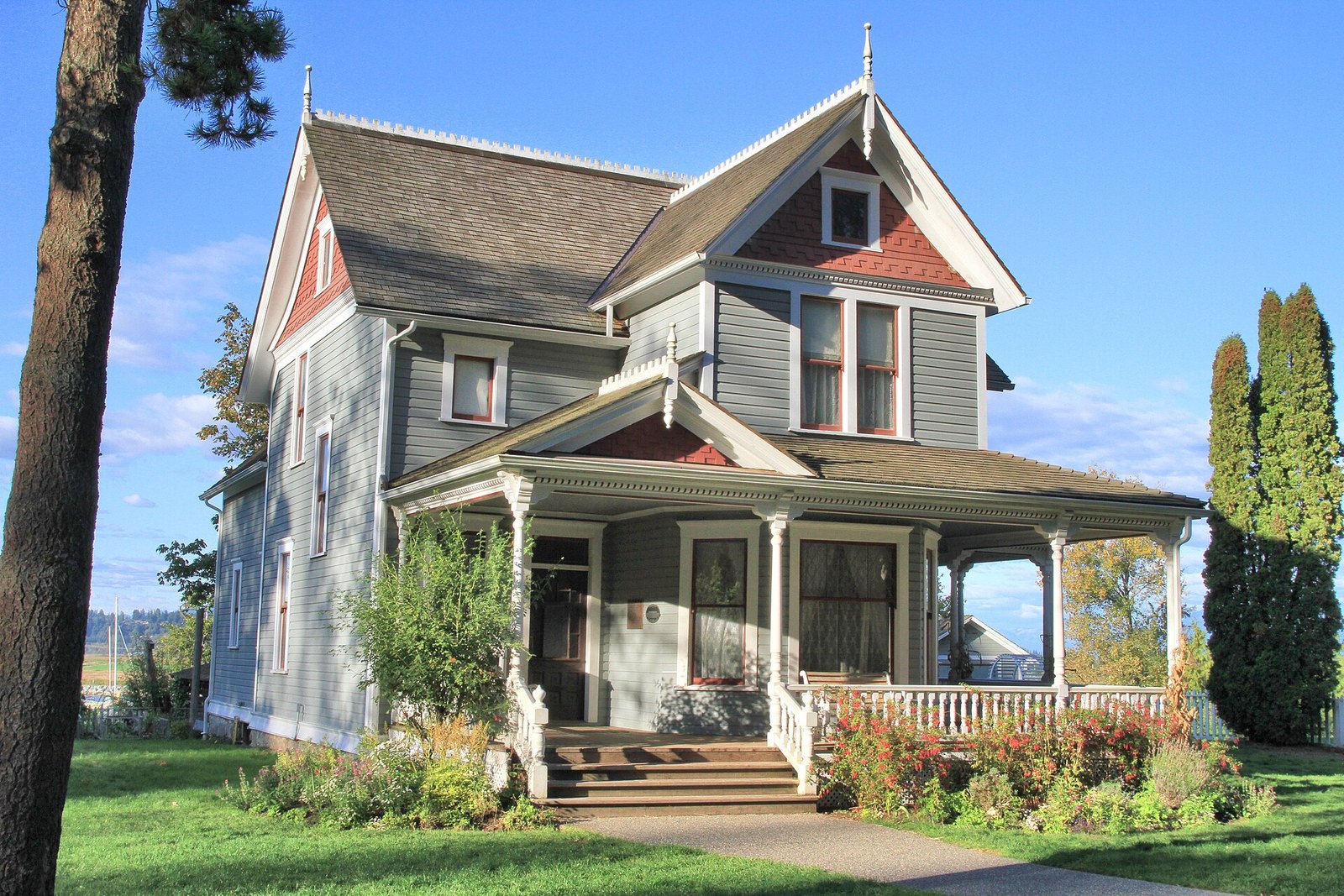
Where: 13723 Crescent Rd (Elgin Heritage Park), South Surrey
When: Farmhouse Tue to Sun, noon to 4:30 p.m.; park dawn to dusk
Cost: Free
Getting there: Crescent Rd near Crescent Beach, South Surrey
This heritage farmstead tells the story of a Surrey family around 1900. The farmhouse is open to walk through, which beats reading placards.
The grounds sit in Elgin Heritage Park, which is open dawn to dusk. The farmhouse is open Tuesday to Sunday, noon to 4:30 p.m., and it’s free. Check the City of Surrey’s page for any changes.
It’s on Crescent Road near Crescent Beach. The farmhouse is closed Mondays. Holiday closures such as Remembrance Day aren’t posted on the City’s page, so call 604-591-4627 before visiting on November 11.
13. New Westminster Museum, by donation (New Westminster)
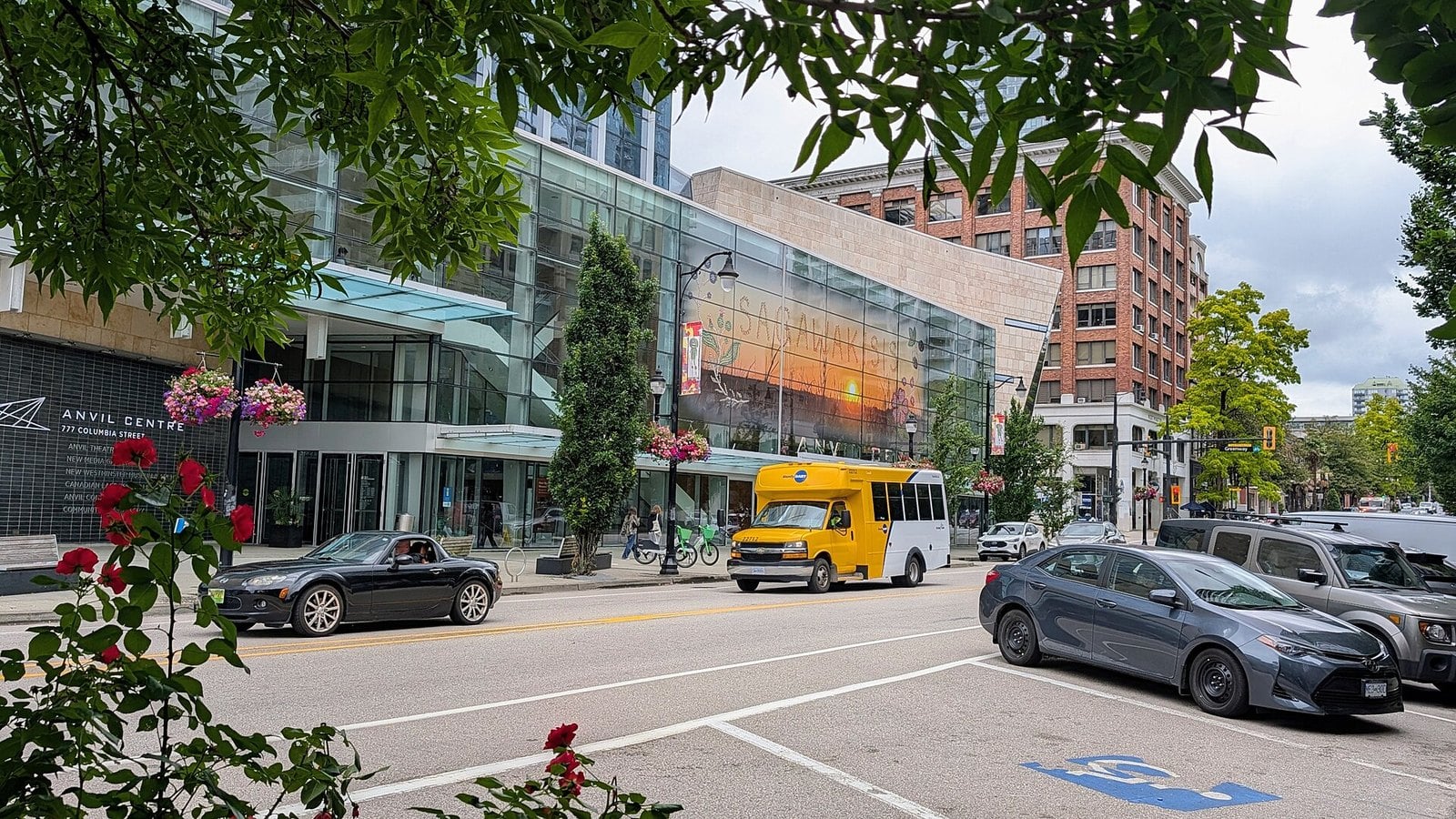
Where: Anvil Centre, 3rd floor, 777 Columbia St, New Westminster
When: Mon to Thu, 10 a.m. to 8 p.m.; Fri to Sun, 10 a.m. to 5 p.m.
Cost: By donation
Getting there: 777 Columbia St, downtown New Westminster
This is the City of New Westminster’s community museum. It sits on the third floor of the Anvil Centre in the downtown core of the old royal city.
The City says admission to all of its museum sites is by donation. There’s no ticket desk to get past, just a request to chip in.
It’s open Monday to Thursday, 10 a.m. to 8 p.m., and Friday to Sunday, 10 a.m. to 5 p.m. The late weekday hours make it an easy after-work stop. Details are on the City’s museums and archives page.
12. Chinatown Millennium Gate (Chinatown, Vancouver)
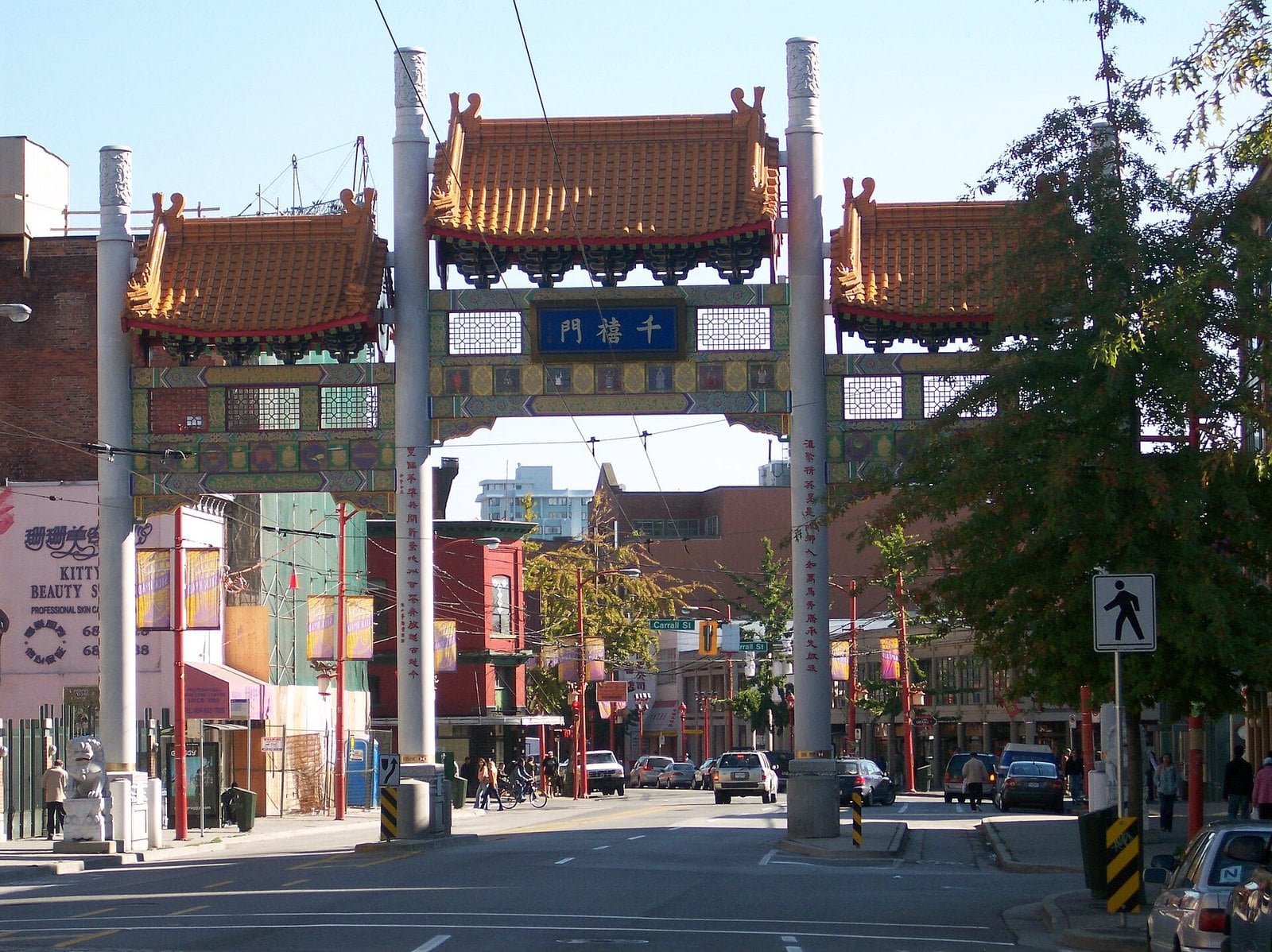
Where: W Pender St at Taylor St, Vancouver
When: Year-round
Cost: Free
Getting there: West edge of Chinatown on Pender Street
The gate went up in 2002 at the western end of Chinatown. It’s one of the youngest structures in this guide, and it was designed by local architect Joe Y. Wai.
It marks the neighbourhood’s western boundary, which makes it a natural starting line. It’s also stop one on the Vancouver Heritage Foundation’s Chinatown walking guide.
You’ll find it on Pender Street at Taylor Street. Start here, then walk a few steps east to the Sam Kee Building, which the same guide covers at stop 2.
11. Britannia Shipyards National Historic Site (Steveston, Richmond)
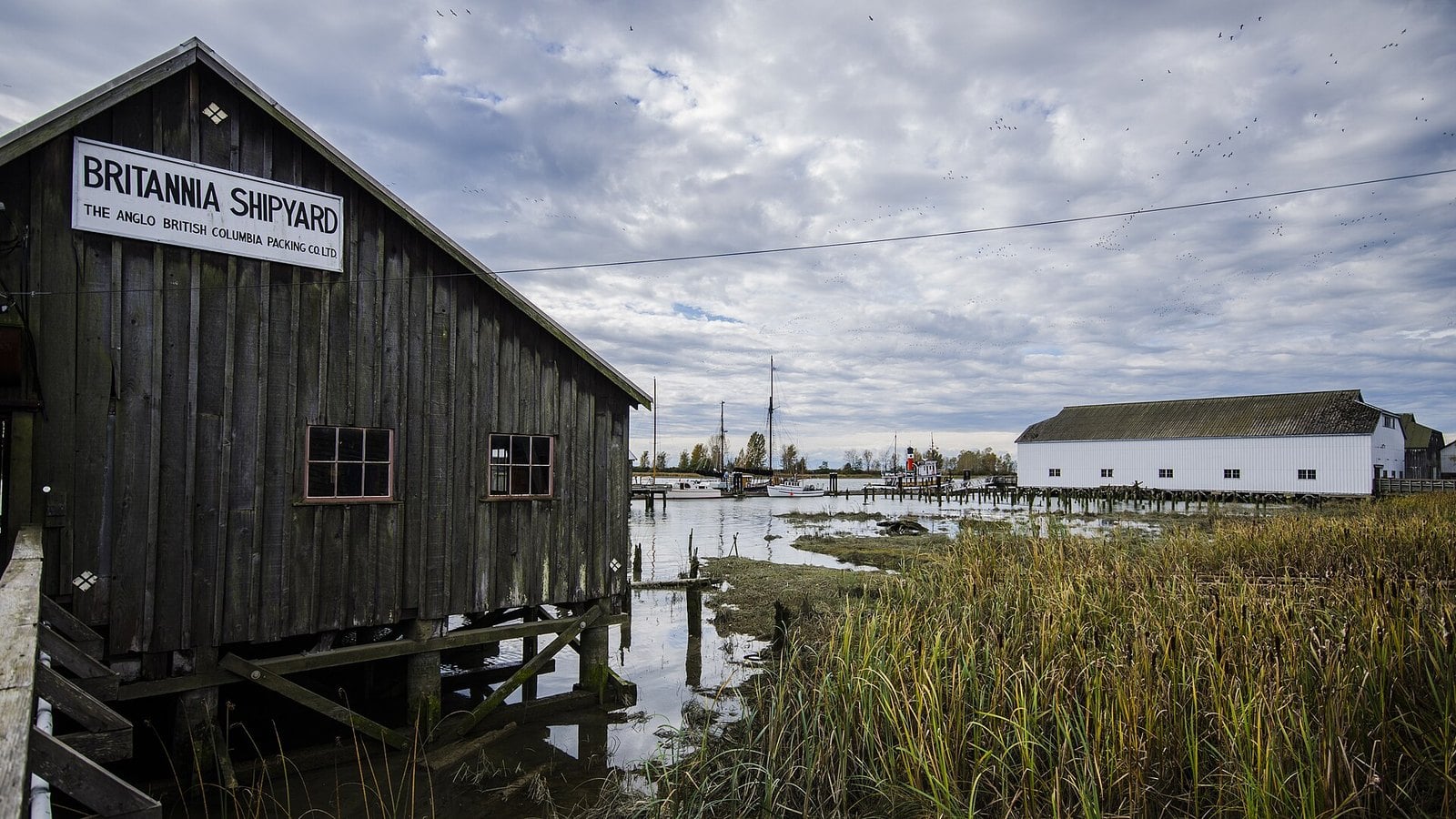
Where: 5180 Westwater Dr, Steveston, Richmond
When: Oct 6 to Nov 22, 2026: Fri to Sun, 10 a.m. to 4 p.m.; Nov 27 to Dec 20: Fri to Sun, 10 a.m. to 5 p.m.; Dec 27 to 31: daily, 10 a.m. to 5 p.m.; closed statutory holidays
Cost: Free entry to heritage buildings
Getting there: Waterfront walk from Steveston Village
This eight-acre outdoor site is a cluster of heritage buildings joined by boardwalks on the Steveston waterfront. It started as a cannery and later became a boatbuilding complex. You can go into the heritage buildings for free.
All the buildings are accessible except the second floor of the Chinese Bunkhouse, which has stairs. The Seine Net Loft was listed as closed for repairs as of June 8, 2026. Check whether it has reopened.
Winter hours run October 6 to November 22, 2026: Friday to Sunday, 10 a.m. to 4 p.m.; November 27 to December 20: Friday to Sunday, 10 a.m. to 5 p.m.; and December 27 to 31: daily, 10 a.m. to 5 p.m. The buildings are closed November 23 to 26, December 21 to 26 and on statutory holidays. High tides or maintenance can close buildings. Call 604-238-8050 the day you go, or check the plan your visit page.
It’s on Westwater Drive, a waterfront walk from Steveston Village.
10. Steveston Museum & Post Office and Japanese Fishermen’s Building (Steveston, Richmond)
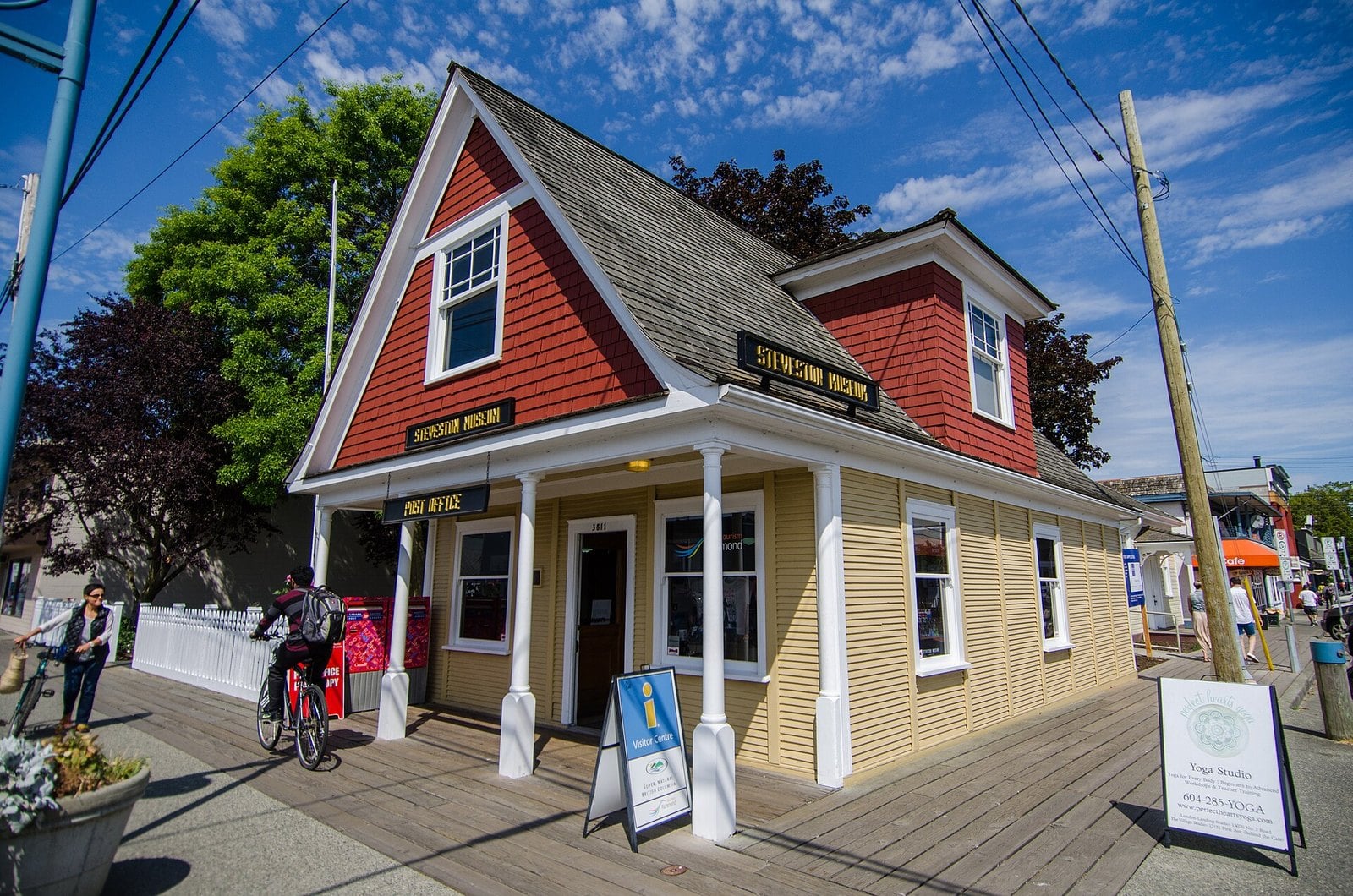
Where: 3811 Moncton St, Steveston, Richmond
When: Mon to Sat, 9:30 a.m. to 5 p.m.; Sun, noon to 4 p.m.; closed statutory holidays
Cost: Free
Getting there: Moncton Street, Steveston Village
The building went up in 1905 as Steveston’s first bank. Today it holds a museum and a working post office, so you can buy stamps in a heritage exhibit.
Behind it is the Japanese Fishermen’s Building, also free. It tells the story of the local Japanese Canadian fishing community, which shaped this village.
Hours are Monday to Saturday, 9:30 a.m. to 5 p.m., and Sunday, noon to 4 p.m. It’s closed statutory holidays. See the museum’s visit page for updates.
It’s on Moncton Street in Steveston Village. Bring postcards. You can mail them from inside the museum.
9. Old Hastings Mill Store Museum, by donation (Point Grey, Vancouver)
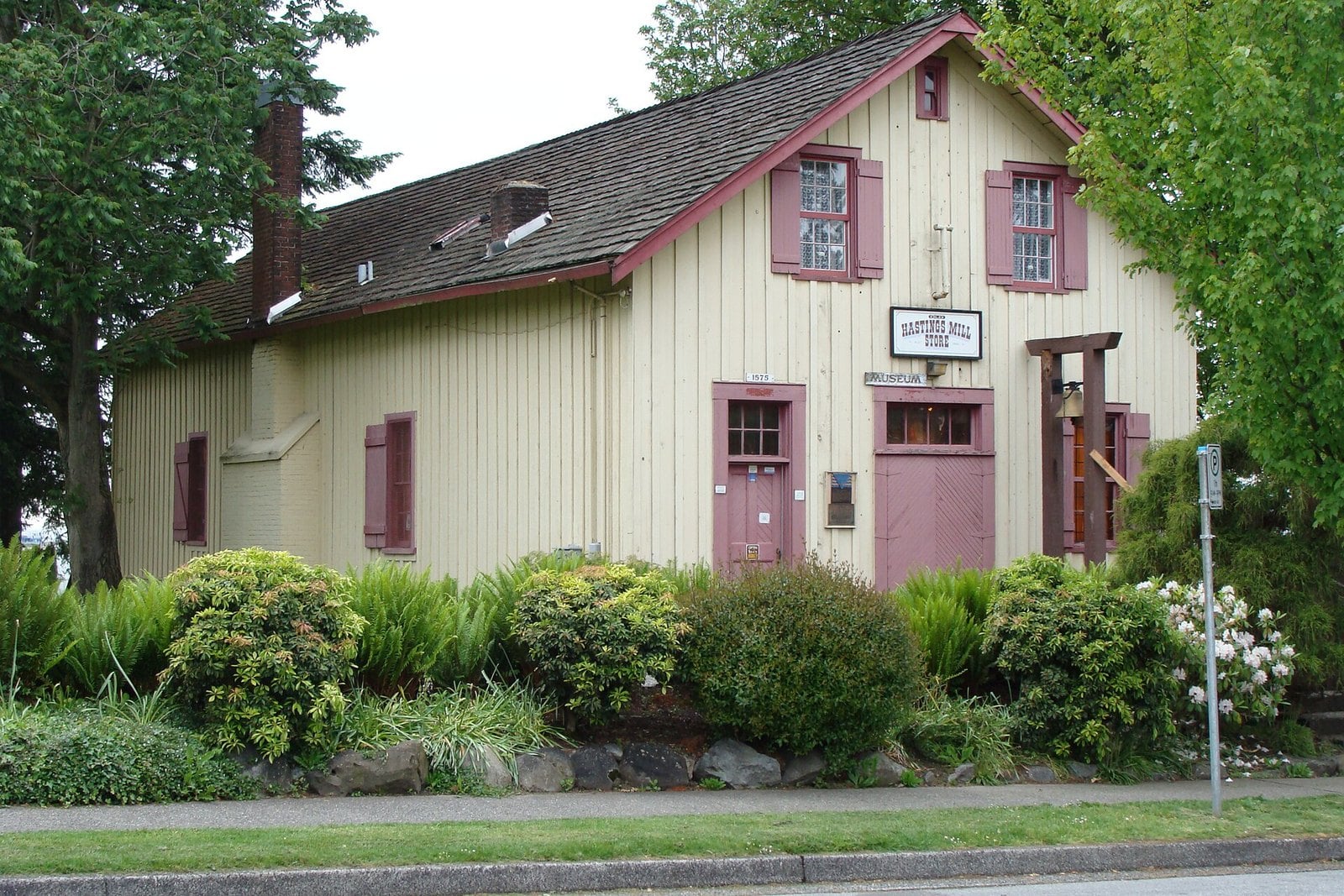
Where: 1575 Alma St (Hastings Mill Park), Point Grey
When: Sat and Sun, 1 to 4 p.m., mid-February through November; closed December and January
Cost: By donation (pay what you can)
Getting there: Corner of Alma St and Point Grey Rd, near Jericho Beach
This is Vancouver’s oldest surviving building, dating from about 1868. It served as the Hastings Mill’s store and first stood at the foot of Dunlevy Street, east of Gastown. Sources disagree on the year. The museum itself uses c. 1868.
The building was moved by barge and opened as a museum in 1932. Volunteers still run it. That’s part of why the hours are short.
It’s open Saturdays and Sundays, 1 to 4 p.m., from mid-February through November, and closed in December and January. The last open weekends of 2026 are in November, and the 2027 reopening date isn’t posted yet. Admission is pay what you can, by cash or card. Check the museum’s visit page before you go.
It sits in Hastings Mill Park at Alma Street and Point Grey Road, near Jericho Beach. If you’re reading this in late fall, go this month or wait until February.
8. Brockton Point Lighthouse (Stanley Park, Vancouver)
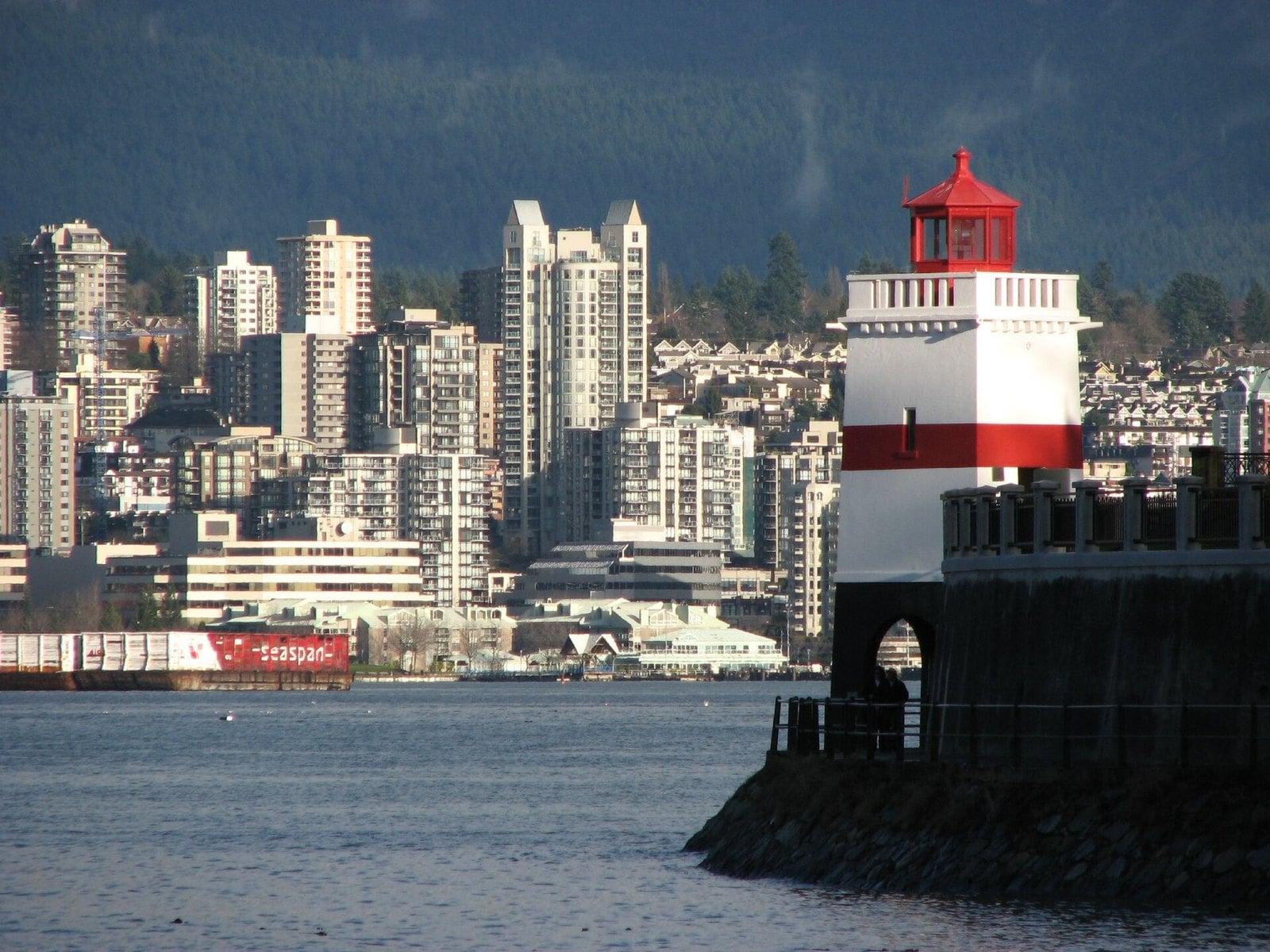
Where: Stanley Park seawall, Brockton Point
When: Year-round
Cost: Free (Stanley Park parking is paid)
Getting there: Short seawall walk from the totem poles
A light first went up on this point in 1890 to mark the sharp turn into Burrard Inlet. The tower you see now was built in 1914.
It stands on arches, and the seawall path runs right underneath. That means you can walk right through the base. The Vancouver Park Board has managed it since 2006.
It’s a short walk along the seawall from the totem poles. Take the curved stairs down to the lower seawall to stand under the arches and look up.
7. Japanese Canadian War Memorial (Stanley Park, Vancouver)
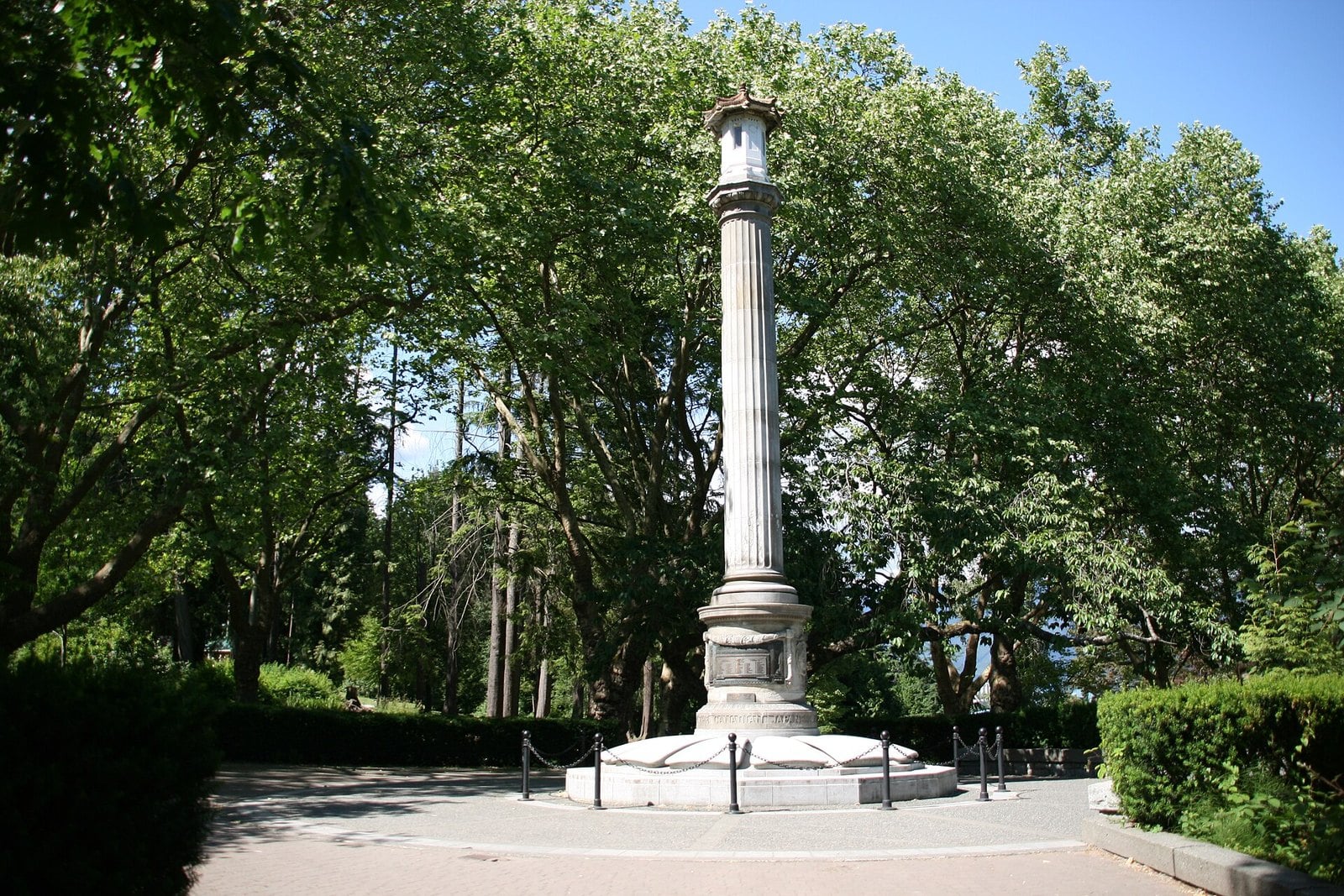
Where: Stanley Park, near Lumberman’s Arch
When: Year-round
Cost: Free
Getting there: Near the Vancouver Aquarium and the Lumberman’s Arch picnic area
The Canadian Japanese Association built this memorial in 1920. It was unveiled on April 9 that year to honour Japanese Canadian soldiers who fought for Canada in the First World War, including at Vimy and Hill 70.
It was later updated to honour Japanese Canadians who served in the Second World War, the Korean War and the war in Afghanistan. Its lantern was put out during the Second World War, when Japanese Canadians were declared enemy aliens. That history is why the memorial carries the weight it does. It’s a National Historic Monument and is on Heritage BC’s Register of Japanese Canadian Historic Places.
A secondary source places it on the south side of the Lumberman’s Arch picnic area, behind the Vancouver Aquarium. The Nikkei National Museum & Cultural Centre holds a Remembrance Day ceremony at the memorial on Wednesday, November 11, 2026, at 10:30 a.m. It’s open to everyone.
Pair it with the totem poles, lighthouse and gun for a short Stanley Park history loop. Keep your voice down here.
6. Nine O’Clock Gun (Stanley Park, Vancouver)
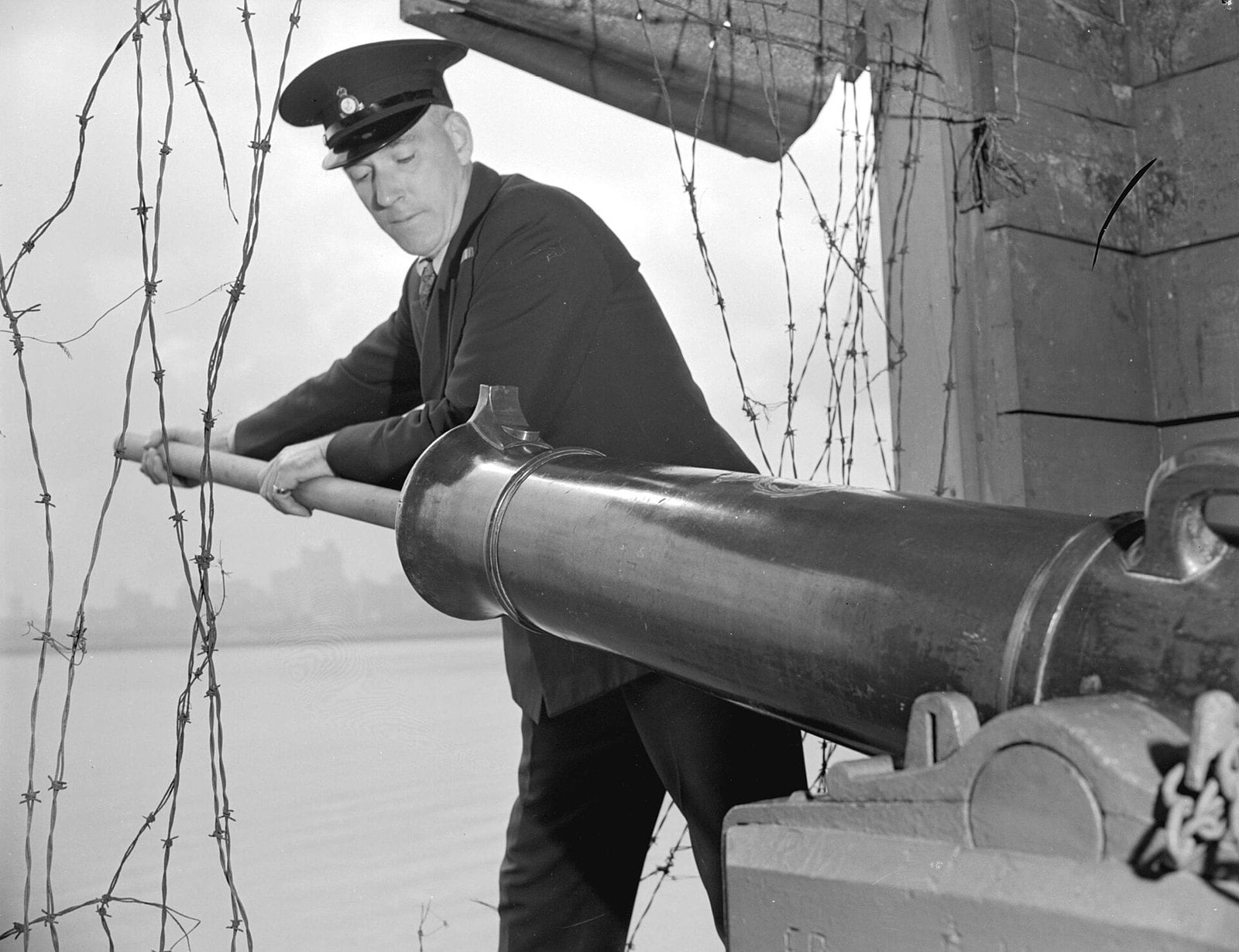
Where: Stanley Park seawall, south side of Brockton Point
When: Fires nightly at 9 p.m.
Cost: Free
Getting there: On the seawall near the totem poles
The cannon has been part of Stanley Park since 1894. It started out in a wooden cupola. In 1936 that was replaced by the concrete-and-stone structure it sits in now.
It fires every evening at 9 p.m. The shot originally gave ships in the harbour a time signal to set their chronometers. The ships have their own clocks now. The gun fires anyway.
It’s on the south side of Brockton Point, on the seawall near the totem poles. Time an evening seawall walk so you’re nearby at 9 p.m. Warn kids before it goes off, and keep dogs back. It’s loud.
5. Sam Kee Building (Chinatown, Vancouver)
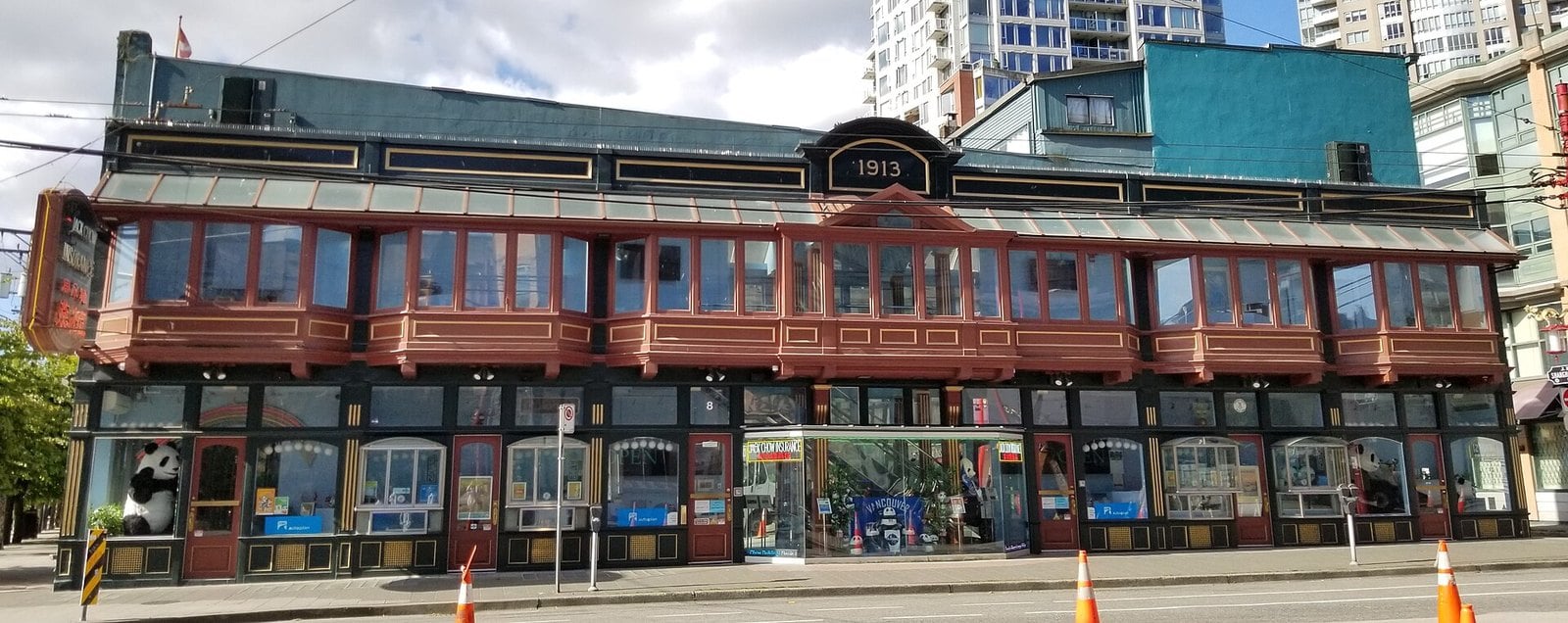
Where: 8 W Pender St, Chinatown
When: Year-round; exterior viewing
Cost: Free (exterior)
Getting there: Corner of Pender and Carrall, just east of the Millennium Gate
This building exists because of a grudge match with a street plan. The City expropriated most of businessman Chang Toy’s lot to widen the street and left him a six-foot strip. Chang Toy, known as Sam Kee, built on it anyway in 1913.
Guinness World Records recognizes the result as the world’s shallowest commercial building. The basement once held public baths and extends under the sidewalk. Glass blocks set into the pavement let light down into it.
Jack Chow bought the building in 1985, and it still works as an insurance office. View it from the sidewalk and let the staff get on with their day.
It sits at the corner of Pender and Carrall, just east of the Millennium Gate. Before you leave, look down at the glass blocks. You’re standing on the roof of the old basement.
4. Brockton Point Totem Poles (Stanley Park, Vancouver)
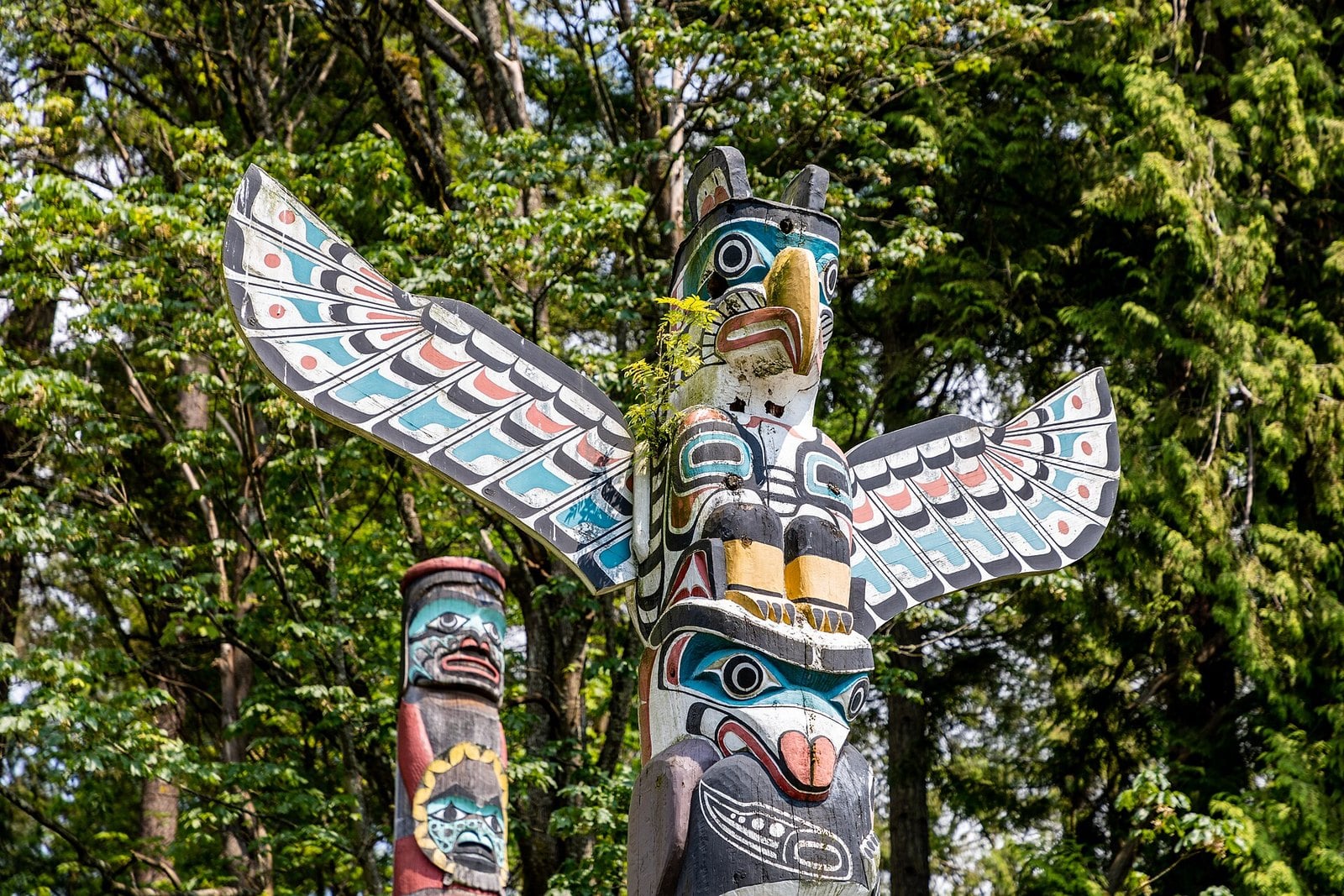
Where: Brockton Point, Stanley Park
When: Year-round
Cost: Free to view; Stanley Park parking is paid
Getting there: Stanley Park Drive at the park’s eastern tip, or along the seawall
The first totem poles came to Stanley Park in 1924. In 1962 all of them were moved to Brockton Point, where they stand today. Many originals have since gone to museums and been replaced with replicas. The newest pole was added in 2009.
The lineup changed again in 2024. The Kakaso’las pole, carved by Ellen Neel in 1955, went back to UBC’s Museum of Anthropology on September 4, 2024, when its loan ended. If an older guide gives you a pole count, it’s out of date.
The poles stand at Brockton Point on Stanley Park Drive, at the park’s eastern tip, and right on the seawall. All parking in Stanley Park is paid. EasyPark, which runs the park’s pay parking, charges $4.25 an hour from October to March, with a $12.75 daily maximum. The meters at the totem poles and Brockton Point don’t sell the daily-maximum ticket, so buy it at another meter in the park if you plan to stay a while.
This is a cultural site, not a climbing frame. Keep kids off the poles and their bases.
3. Vancouver’s Chinatown National Historic Site (Pender Street, Vancouver)
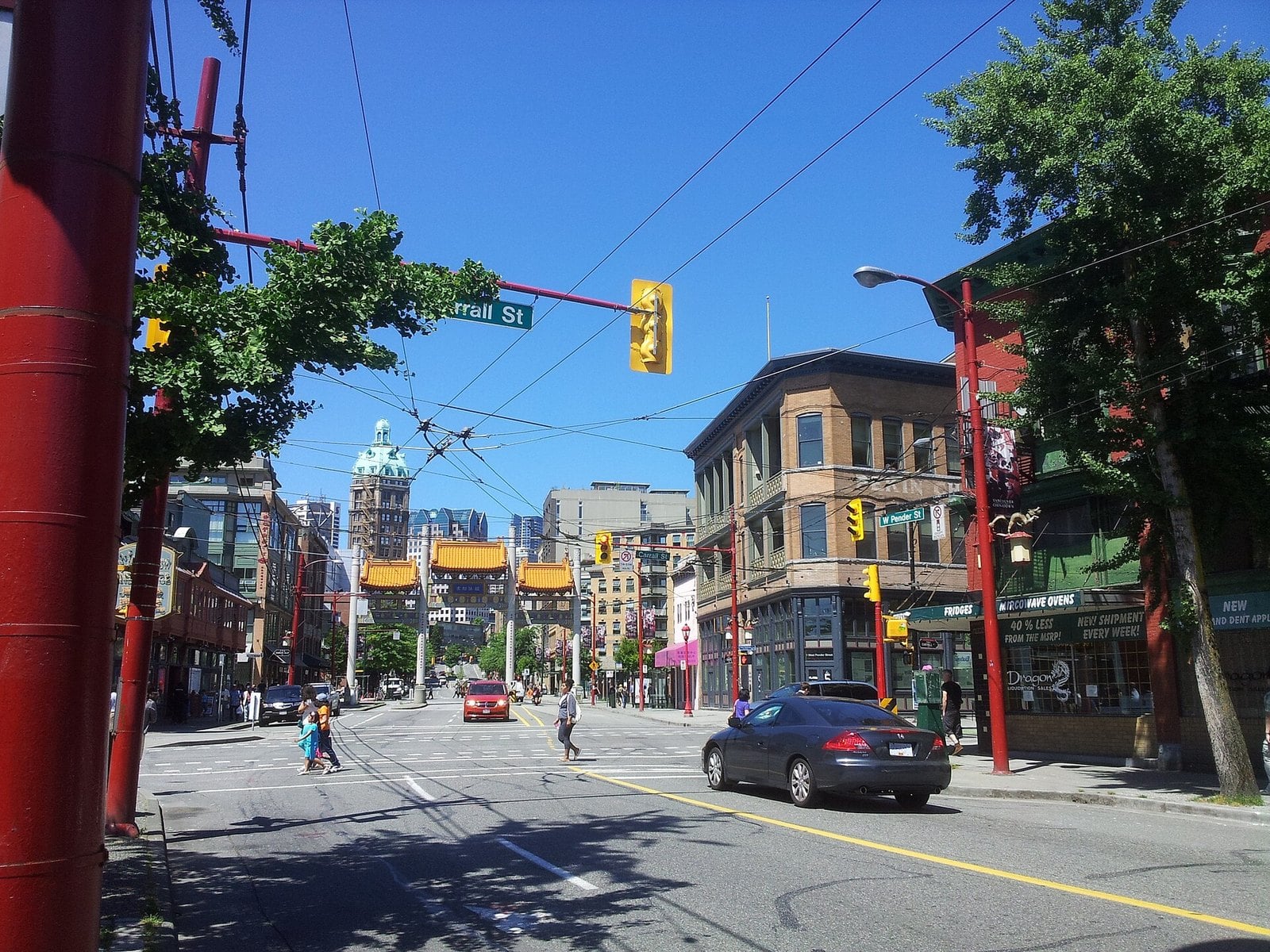
Where: Pender Street between Taylor Street and Gore Avenue, Chinatown
When: Year-round; public streets
Cost: Free to walk
Getting there: Nearest SkyTrain stop: Stadium-Chinatown
Chinatown was first settled in the 1880s. Parks Canada calls it one of the oldest and largest Chinatowns in Canada. Its designation recognizes the contributions and struggles of Chinese Canadians as well as the buildings.
Look up as you walk. Parks Canada singles out the neighbourhood’s recessed balcony architecture, with balconies set back into the upper floors. Most of the historic core runs along Pender Street.
The stretch to walk is Pender Street between Taylor Street and Gore Avenue, which Parks Canada gives as the site’s boundaries. The nearest SkyTrain stop is Stadium-Chinatown. The street is public and open year-round.
For structure, download the Vancouver Heritage Foundation’s free Chinatown map guide. It lays out a numbered walking route that starts at the Millennium Gate.
2. Gastown Steam Clock (Gastown, Vancouver)
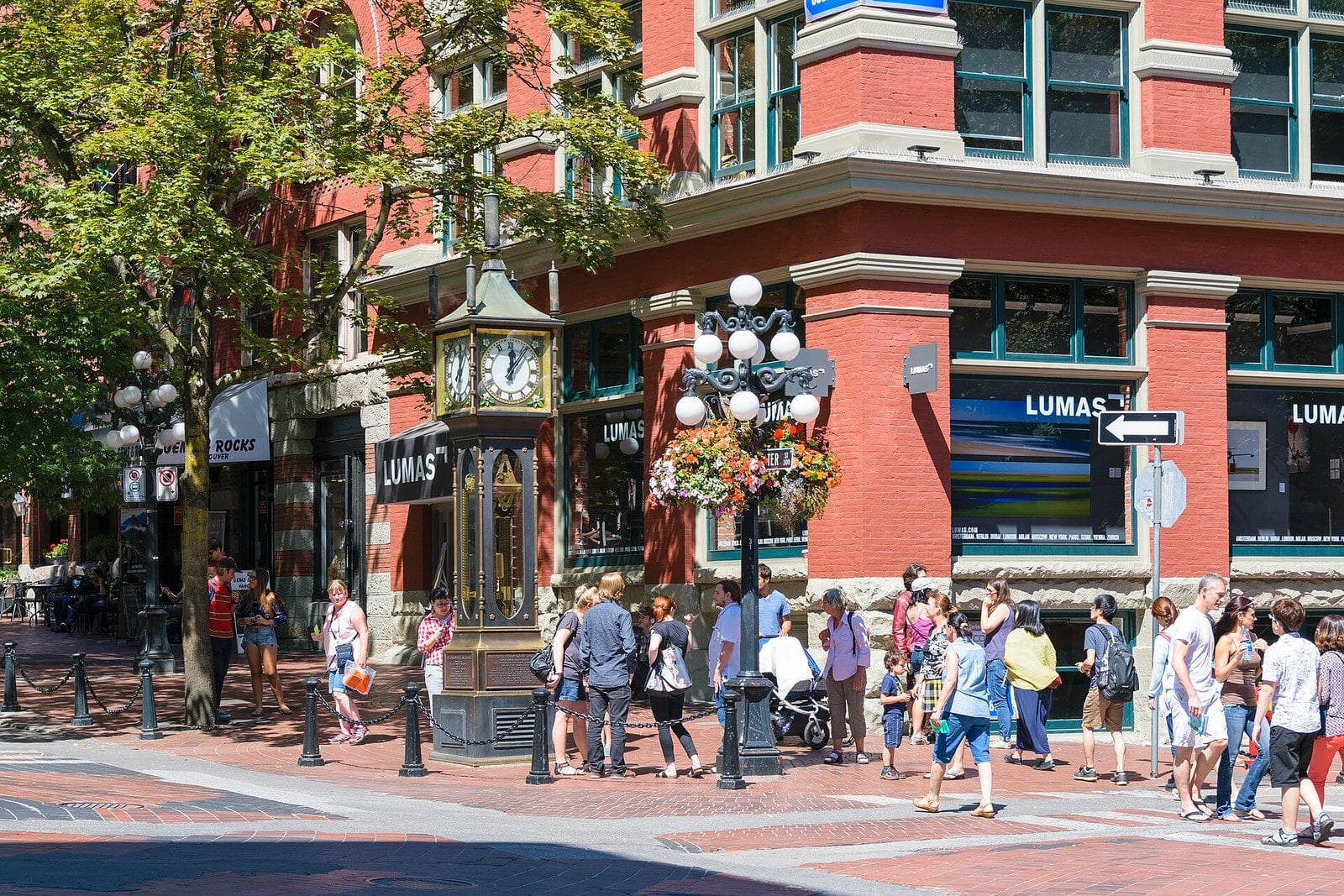
Where: Cambie St and Water St, Gastown
When: Year-round; chimes every quarter hour
Cost: Free
Getting there: Near Waterfront Station
It looks Victorian. It’s from 1977. Horologist Raymond Saunders and metalworker Doug Smith built it after Gastown merchants commissioned it as a monument. Local storeowners and private donors raised about $58,000 to pay for it.
Every 15 minutes it whistles, vents steam and plays the Westminster Quarters. That routine is why there’s nearly always a crowd of phones pointed at it. The City once took it away for a full refurbishment and worked with Saunders on the job.
The clock stands at the corner of Cambie and Water streets, near Waterfront Station. Get to the corner a minute or two before the hour or a quarter past and you’ll catch the whole steam show from the start.
1. Gastown Historic District (Gastown, Vancouver)
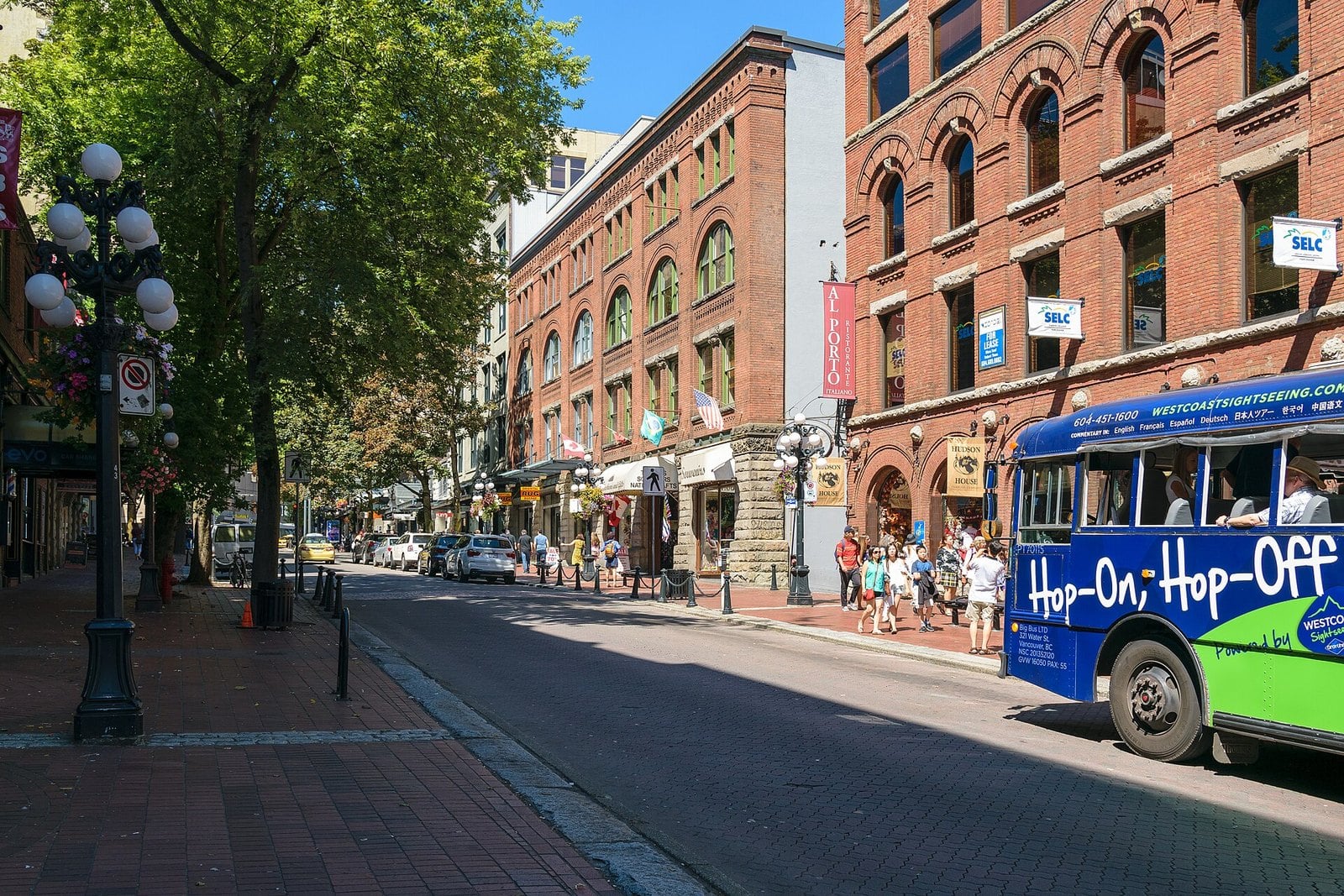
Where: Water Street between Richards and Columbia streets, Gastown
When: Year-round; public street district
Cost: Free
Getting there: Short walk from Waterfront Station
Vancouver started here. Gassy Jack Deighton opened his saloon in 1867, and the settlement grew out from it. Walk Water Street today and many of the commercial buildings around you date from 1886 to 1914.
Parks Canada designated Gastown a National Historic Site of Canada in 2009. The designation covers the district, so the street itself is the exhibit. There are no hours, no gate and no admission.
One thing you won’t find is Gassy Jack. His statue in Maple Tree Square came down during a community protest in February 2022. The City says it’s in storage and won’t be reinstalled in Gastown. The square stays empty while the City consults with the Musqueam, Squamish and Tsleil-Waututh nations on what comes next.
The district runs along Water Street between Richards and Columbia streets, a short walk from Waterfront Station. Start at the Waterfront end and you’ll reach the Steam Clock at Cambie.
Free, by donation, or paid
Free means no charge at all. By donation means you can walk in without paying, but the site asks for a contribution. The Old Hastings Mill Store, the New Westminster Museum and the POMO Museum work this way. Fort Langley CN Station has been listed as by donation too, though that comes from an older news report.
Paid sites nearby are left off this guide. Fort Langley National Historic Site has a daily fee of $10 for adults, and youth 17 and under get in free. The Gulf of Georgia Cannery charges adults $14.75, and youth are free.
Winter closures and short hours
- Old Hastings Mill Store: closed December and January. The last open weekends of 2026 are in November.
- London Farm: the farmhouse is closed October 1 to December 31, 2026. The grounds stay open dawn to dusk.
- Britannia Shipyards: Friday to Sunday only from October 6 to December 20, 2026 (10 a.m. to 4 p.m. until November 22, then 10 a.m. to 5 p.m.), then open daily December 27 to 31.
- Steveston Museum, Britannia Shipyards and POMO Museum: closed statutory holidays, so plan around Remembrance Day (Wednesday, November 11), Christmas Day and Boxing Day.
- Burnaby Village Museum: Festive Village is closed December 24 and 25.
Stanley Park parking
Pay parking applies in Stanley Park all year, from 6 a.m. to 11 p.m. EasyPark charges $4.25 an hour or a $12.75 daily maximum from October to March. One ticket is valid anywhere in the park. The Totem Poles and Brockton Point meters don’t sell the daily maximum, so buy it at another meter. Walking or cycling in on the seawall skips the question entirely.
Getting there
Gastown and the Steam Clock are a short walk from Waterfront Station. For Chinatown, the nearest SkyTrain stop is Stadium-Chinatown. The Brockton Point sites are on the Stanley Park seawall and on Stanley Park Drive. The seawall between Lumberman’s Arch and Third Beach is closed for upgrades until November 14, 2026, with intermittent closures possible until November 20, so come in along the east side from Coal Harbour.
Map your own route for drive and transit times. For scale, Parks Canada puts Fort Langley about 48 kilometres from downtown Vancouver.
What to bring
- A card or some cash for donation sites. The Old Hastings Mill Store takes cash or card.
- A card for the Burnaby Village Museum carousel, at $2.86 plus tax per ride.
- Lunch for London Farm, which has picnic tables.
- Postcards and stamps money for the Steveston post office.
- For the 9 p.m. gun in late fall, go prepared: a warm layer, a rain shell and a light for the walk back along the seawall in the dark.
Etiquette
- The Japanese Canadian War Memorial and the Brockton Point totem poles are memorial and cultural sites. Keep it quiet and respectful, and don’t climb on them.
- The Sam Kee Building is a working insurance office. View it from the sidewalk.
- Small museums like the Old Hastings Mill Store run on volunteers. A few dollars in the box keeps the doors open.
| Year | Site | What happened |
|---|---|---|
| 1867 | Gastown Historic District | Gassy Jack Deighton opens his saloon |
| c. 1868 | Old Hastings Mill Store | Store built for the Hastings Mill |
| 1880s | Chinatown | First settled |
| 1886 to 1914 | Gastown Historic District | Many of the commercial buildings date from this period |
| 1890 | Brockton Point Lighthouse | First light placed on the point |
| 1894 | Nine O’Clock Gun | Cannon becomes part of Stanley Park |
| 1898 | London Farm | Farmhouse built |
| 1905 | Steveston Museum & Post Office | Built as Steveston’s first bank |
| 1912 | Burnaby Village Museum | C.W. Parker carousel built |
| 1913 | Sam Kee Building | Built on a six-foot strip |
| 1914 | Brockton Point Lighthouse | Current tower built |
| 1915 | Fort Langley CN Station | Built by the Canadian Northern Railway |
| 1920 | Japanese Canadian War Memorial | Unveiled April 9 |
| 1921 | POMO Museum | Date of the rail car in its collection |
| 1924 | Brockton Point Totem Poles | First poles arrive in Stanley Park |
| 1932 | Old Hastings Mill Store | Opens as a museum |
| 1936 | Nine O’Clock Gun | Current concrete-and-stone structure replaces the cupola |
| 1962 | Brockton Point Totem Poles | All poles moved to Brockton Point |
| 1977 | Gastown Steam Clock | Built |
| 2002 | Chinatown Millennium Gate | Built |
You could cover Gastown and Chinatown in an afternoon on foot, then save Stanley Park for an evening that ends with the 9 p.m. gun. Steveston makes a full day on its own. The farther sites suit a slower weekend. If you only do one thing before winter sets in, make it the Old Hastings Mill Store, because its season ends with November. Check the official pages linked above before you head out, since winter hours shift and several dates for 2027 aren’t posted yet.
Get the weekend plan in your inbox. Burrard Bulletin is a free email on what’s actually on from Vancouver to Whistler. Sign up here.
Photo credits
- Gastown-19.JPG by Xicotencatl, CC BY-SA 4.0 (combined into a montage, cropped). Via Wikimedia Commons.
- Gastown-16.JPG by Xicotencatl, CC BY-SA 4.0 (combined into a montage, cropped). Via Wikimedia Commons.
- View up West Pender Street, including the Entrance to Chinatown and the Sun Tower. – panoramio.jpg by Shane Smith, CC BY-SA 3.0 (combined into a montage, cropped). Via Wikimedia Commons.
- Millennium Gate.jpg by Bobanny, Public domain (combined into a montage, cropped). Via Wikimedia Commons.
- Sam Kee Building, 16 May 2024.jpg by 李月文, CC BY-SA 4.0 (resized). Via Wikimedia Commons.
- Pavilion – Dr. Sun Yat-Sen Park – Vancouver, Canada – DSC09846.JPG by Daderot, CC0 (resized). Via Wikimedia Commons.
- Vancouver (BC, Canada), Stanley Park, Totem poles, Kakaso’Las totem pole — 2022 — 2043.jpg by Dietmar Rabich, CC BY-SA 4.0 (resized). Via Wikimedia Commons.
- Brockton Point Light and Vancouver.jpg by Andrea Schaffer, CC BY 2.0 (resized). Via Wikimedia Commons.
- Loading the nine o’clock gun Vancouver 1943.jpg by Coltman, Don (Photographer) Steffens Colmer (Photographer), Public domain (resized). Via Wikimedia Commons.
- Japanese War Memorial Stanley Park.jpg by fujitariuji, CC BY 2.0 (resized). Via Wikimedia Commons.
- Hastings Mill Store.JPG by Iota 9 at en.wikipedia, CC BY-SA 3.0 (resized). Via Wikimedia Commons.
- Church in Burnaby Village Museum (7869053454).jpg by Ruth Hartnup from Vancouver, Canada, CC BY 2.0 (resized). Via Wikimedia Commons.
- Downtown New West (55372851478).jpg by Dennis Sylvester Hurd, CC BY 4.0 (resized). Via Wikimedia Commons.
- Old Britannia Shipyard (15392166549).jpg by Jerry Meaden from Surrey, BC, Canada, CC BY 2.0 (resized). Via Wikimedia Commons.
- Steveston Museum 2016.jpg by Jeff Hitchcock from Seattle, WA, USA, CC BY 2.0 (resized). Via Wikimedia Commons.
- London Farm House in Richmond BC.jpg by CathyDaniel, CC BY-SA 4.0 (resized). Via Wikimedia Commons.
- CN station fort langley.jpg by FrankeeD, CC BY-SA 3.0 (resized). Via Wikimedia Commons.
- Stewart Farmhouse 13723 Crescent Road Surrey BC 2590.jpg by Jollycanuck, CC BY-SA 4.0 (resized). Via Wikimedia Commons.
- Port Moody CPR Station.jpg by Arjen van der Meulen, CC BY-SA 4.0 (resized). Via Wikimedia Commons.
