
19 Vancouver Neighbourhood Secrets Only Longtime Locals Know
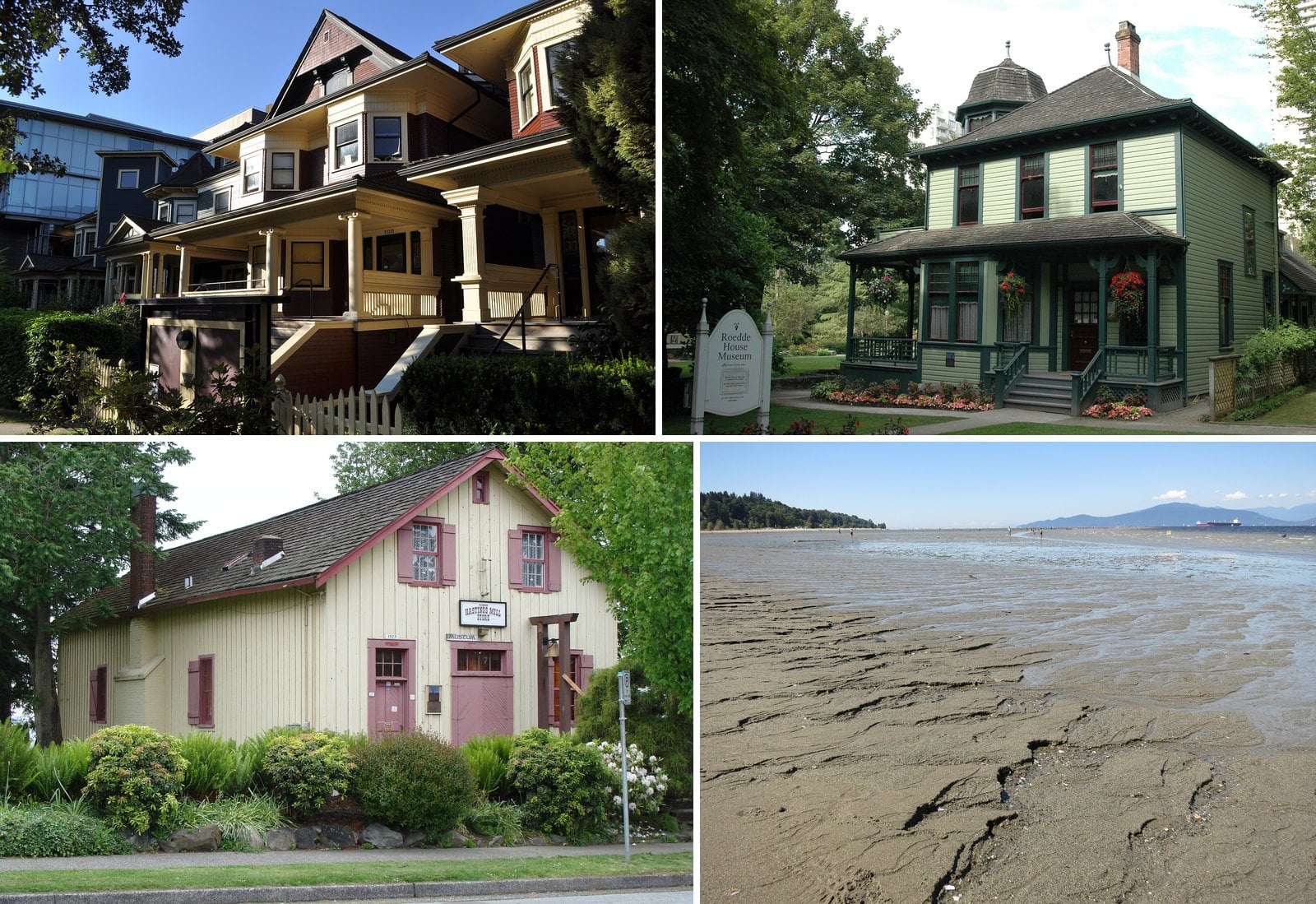
Kitsilano takes its name from Squamish chief August Jack Khatsahlano. The Canadian Pacific Railway borrowed the name when it developed the neighbourhood. Strathcona is called the city’s oldest residential neighbourhood. In Marpole, people were living at c̓əsnaʔəm almost 5,000 years before there was a Vancouver to live in.
That is the kind of thing this list is about. These are the stories under the places you already pass on the way to work, the beach or the Drive. They include a store that survived the 1886 fire and a block of houses residents saved from demolition. There is also a building barely deeper than a hallway, and a park sign that started as a prank.
Each entry covers what you will see, why it matters, when to go and how to get there, using only what official and heritage sources confirm. A few places are homes or working buildings, so some of this is sidewalk viewing. Hours and prices are included where official sources confirm them.
| Year | Place | Neighbourhood |
|---|---|---|
| About 1865 | Hastings Mill Store | Point Grey (originally Burrard Inlet) |
| After the 1886 fire | Byrnes Block | Gastown |
| 1887 | Engine 374 arrives in Vancouver | Yaletown |
| 1888 to 1908 | Mole Hill houses | West End |
| 1889 | Wing Sang Building | Chinatown |
| 1891 | Lord Strathcona School opens as East End School | Strathcona |
| 1893 | Roedde House | West End |
| About 1900 | Arbutus corridor rail line | Kitsilano to Marpole |
| 1908 to 1909 | Hotel Europe | Gastown |
| 1913 | Sam Kee Building | Chinatown |
| 1915 | Postal Station C (Heritage Hall) | Mount Pleasant |
| 1931 | Kitsilano Pool opens | Kitsilano |
| 1958 | Playland Wooden Roller Coaster | Hastings-Sunrise |
19. Kitsilano Pool (Kitsilano)
Where: 2305 Cornwall Avenue, Kitsilano Beach Park
When: Summer only. 2027 dates not yet posted
Cost: 2027 admission not yet posted
Getting there: Cornwall Avenue at Yew Street, Kits Beach
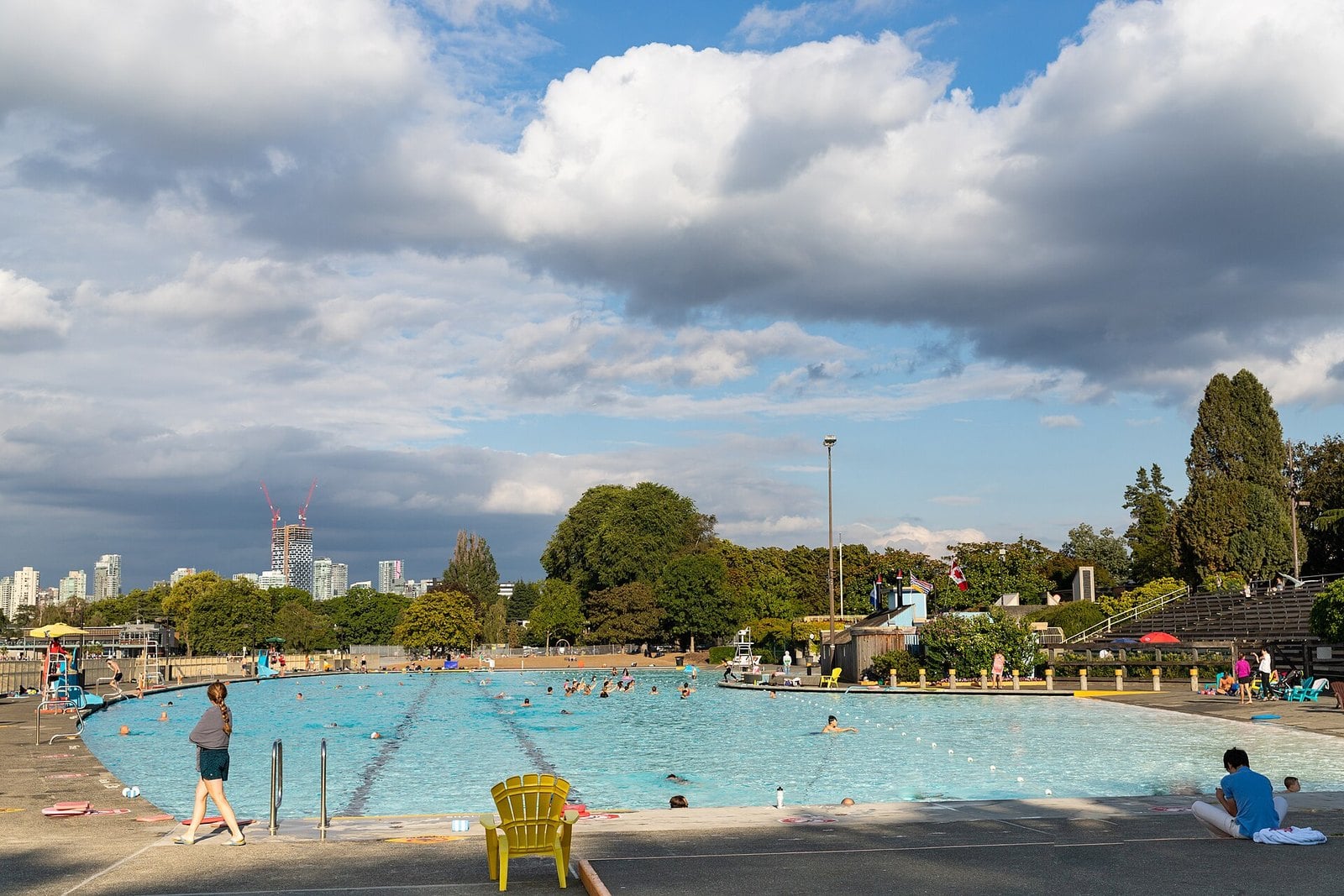
Kits Pool opened on August 15, 1931. It’s a saltwater pool filled from English Bay, and its lanes stretch 137 metres. The Globe and Mail calls it the longest saltwater pool in North America. Swimming lengths here with the ocean on the other side of the deck is a very particular Vancouver summer.
It’s showing its age. It was rebuilt in 1978, and the City now says the pool has reached the end of its service life, and in July 2026 Council approved its 2027–2030 capital plan with Kits Pool rehabilitation as a committed program, though no renewal option has been chosen yet.
It’s a summer-only pool, and the 2027 season dates aren’t posted yet. The pool is at 2305 Cornwall Avenue, at Yew Street, in Kitsilano Beach Park. Off-season, walk the seawall past the empty pool and picture the summer crowd.
18. Playland Wooden Roller Coaster (Hastings-Sunrise)
Where: PNE grounds, Playland
When: Not in operation as of November 2026
Cost: Not applicable while closed
Getting there: PNE grounds, East Hastings at Renfrew
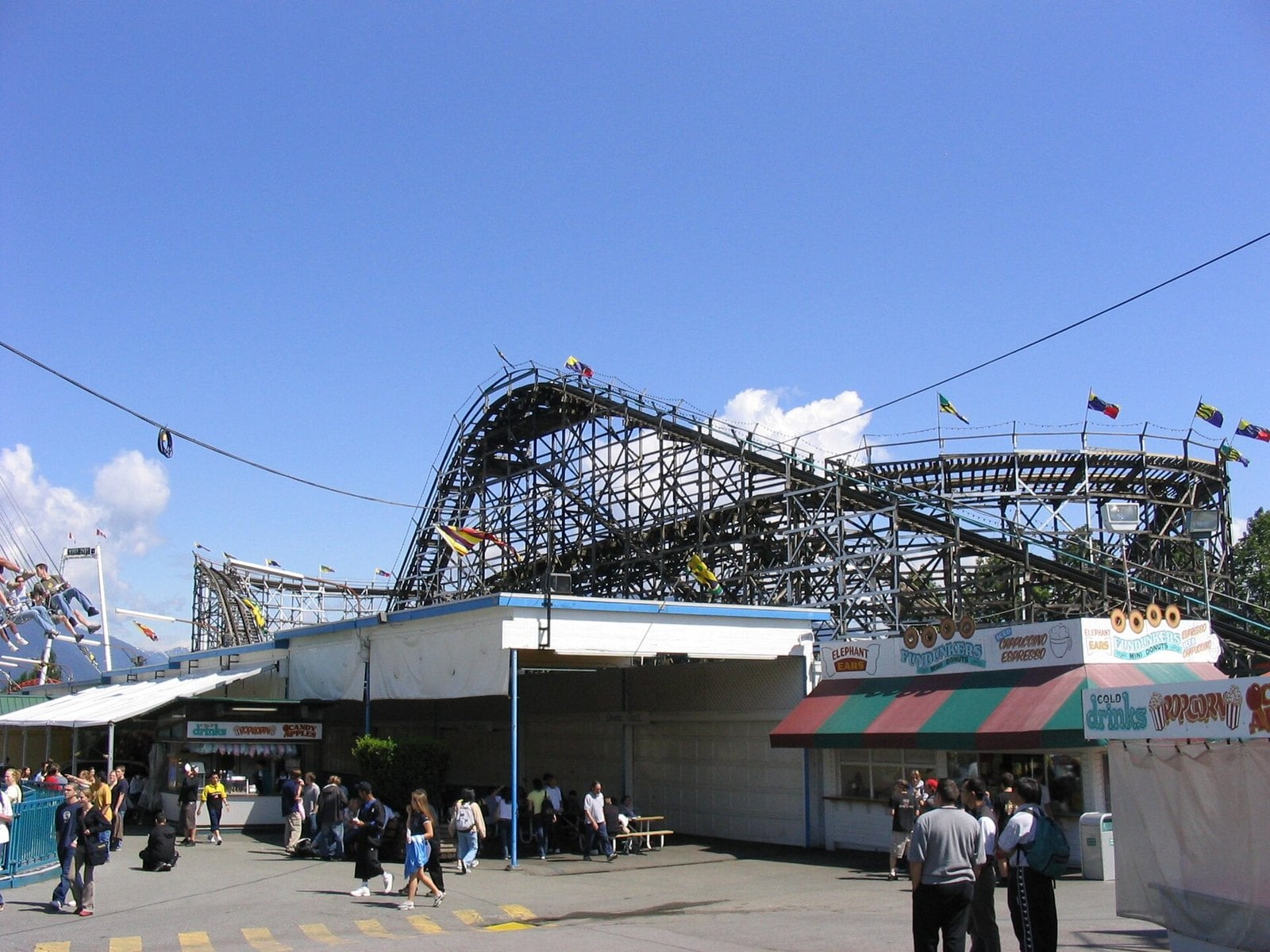
The Wooden Roller Coaster was built board by board in 1958. It has 2,840 feet of track, about 866 metres, and hits speeds up to 45 mph, about 72 km/h. American Coaster Enthusiasts named it an ACE Roller Coaster Landmark in 2009 and call it Canada’s oldest operating roller coaster.
The City has declared August 2 Playland Wooden Coaster Day. For generations of east side kids, this was the ride that proved you were old enough.
As of November 2026, the PNE lists the coaster as currently not in operation. Watch the PNE’s coaster page for a reopening date. In the meantime, you can still see it from East Hastings and from the park paths around the grounds, at East Hastings and Renfrew.
17. Byrnes Block (Gastown)
Where: 2 Water Street, Maple Tree Square
When: Year-round (exterior)
Cost: Free to view
Getting there: Water Street at Carrall
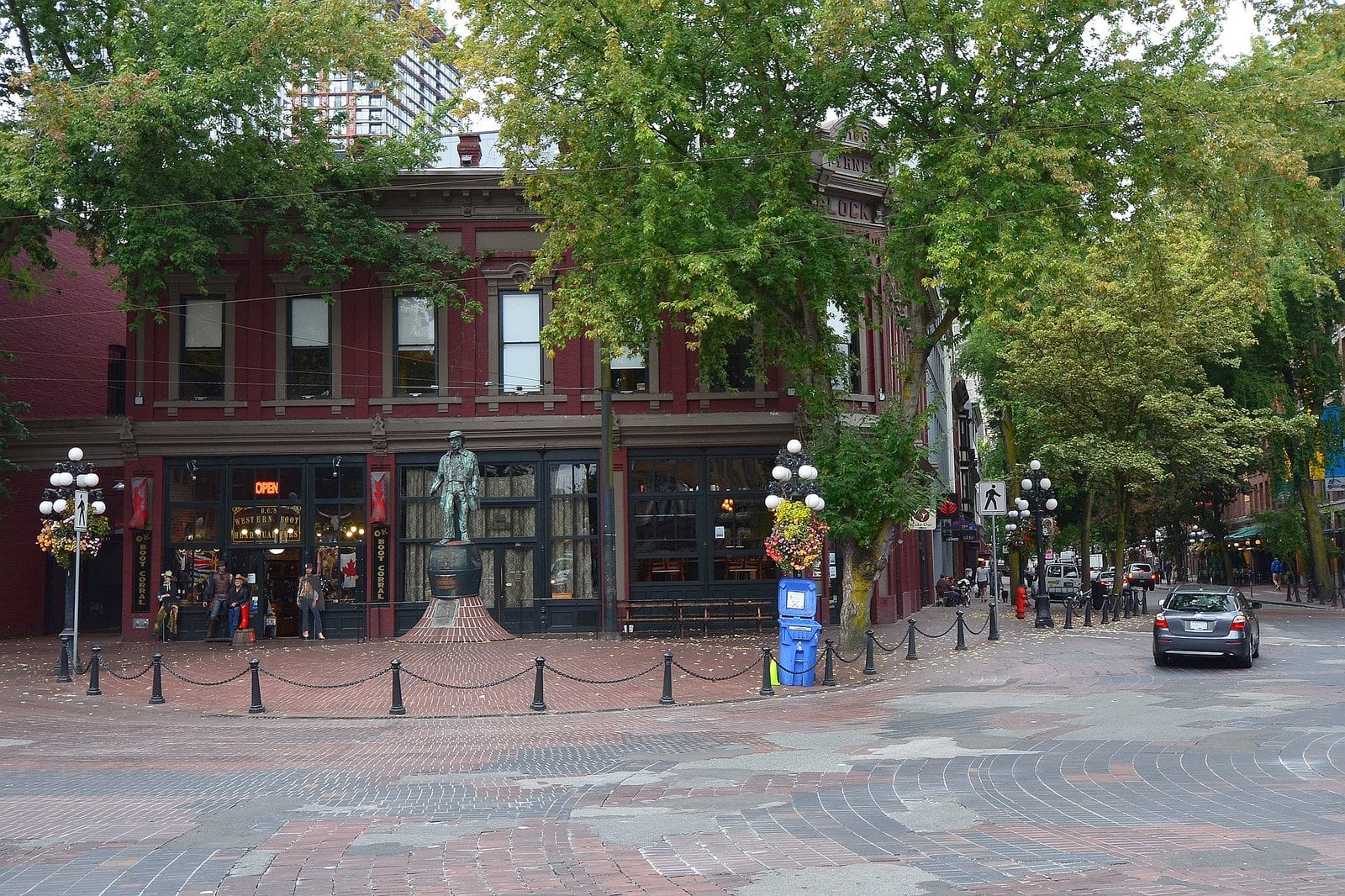
The Byrnes Block stands on the site of Deighton House, Gassy Jack Deighton’s second saloon and hotel. Its corner on Maple Tree Square is about as close to the start of the city as you can stand.
When Gastown revived in the late 1960s, this was one of the first buildings restored.
It’s at 2 Water Street, at Carrall. The exterior is free to see year-round.
16. Heritage Hall, the old Postal Station C (Mount Pleasant)
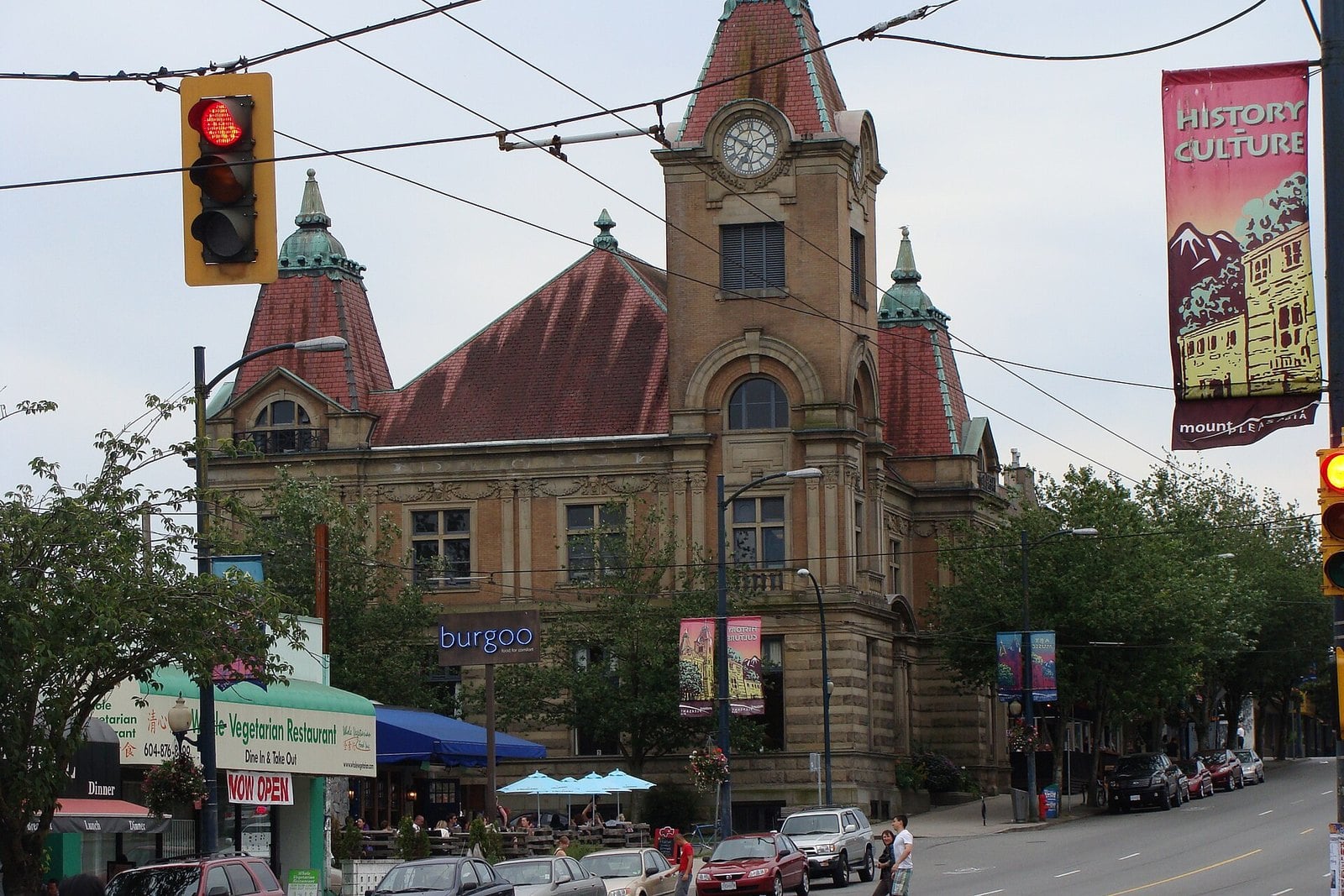
Where: 3102 Main Street at 15th Avenue
When: Exterior any time. Interior only during events
Cost: Free to view
Getting there: Main Street at 15th Avenue, about ten minutes from downtown per the hall
This Beaux Arts post office at Main and 15th went up in 1915 at a cost of $92,000. After the mail moved out, it housed the Dominion Department of Agriculture and later the RCMP.
From 1976 it sat empty and fell into disuse. In 1982 a community group formed to restore it and reopen it as a community and cultural centre. The hall’s own history page has the full timeline.
Look up. The wrought-iron cresting along the roofline is a rare survivor of wartime scrap drives, when metal like this was usually melted down. The tower clock was made in England in 1915.
The building is a rental venue, so the inside is open only during events. The outside is free to see any time. The hall describes itself as ten minutes from downtown, at 3102 Main Street.
15. Lord Strathcona Elementary (Strathcona)
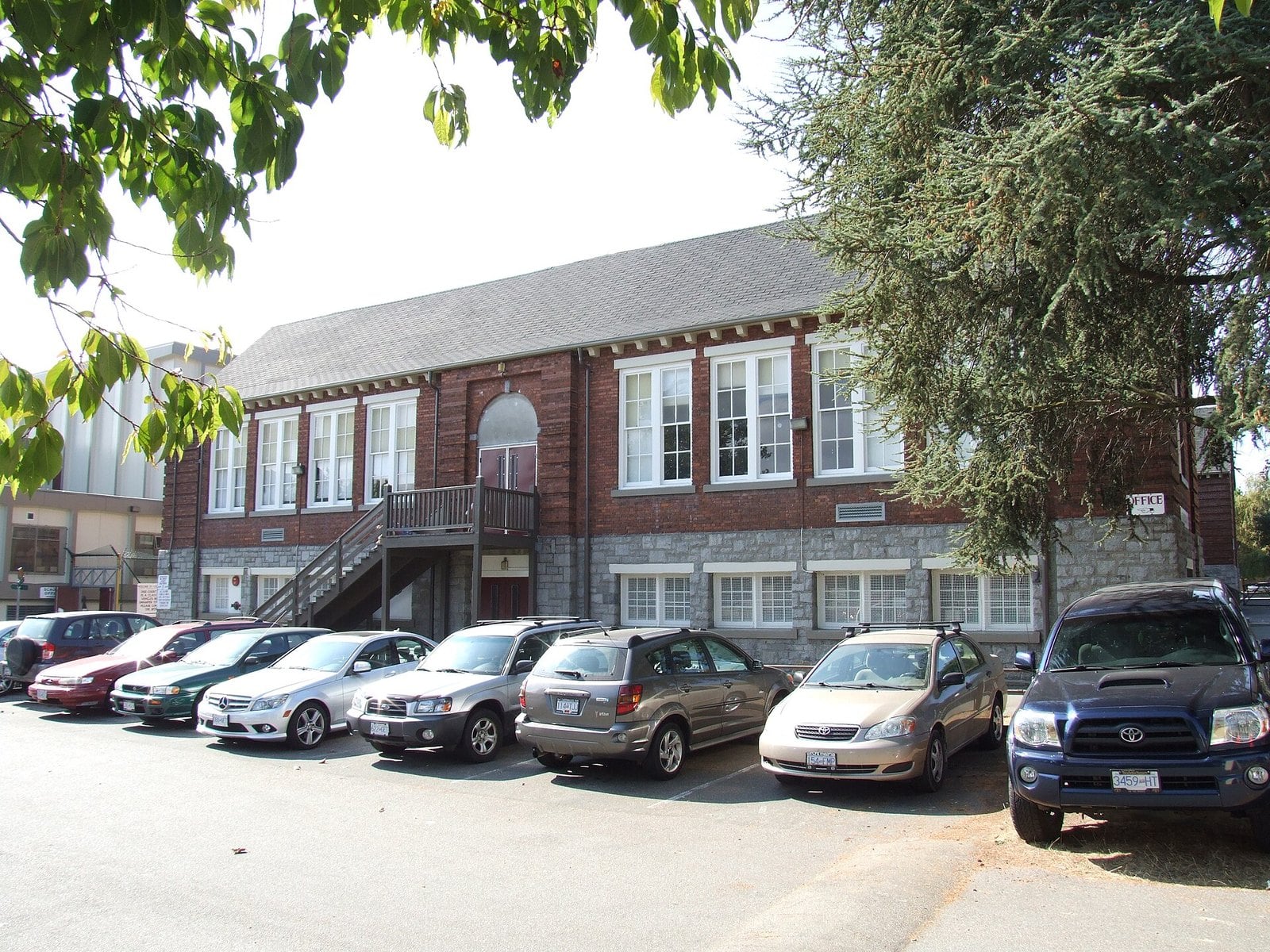
Where: 592 East Pender Street
When: Any time from the street. Stay off the grounds during school hours
Cost: Free to view
Getting there: East Pender between Jackson and Princess
Lord Strathcona opened in 1891 as the East End School. It’s Vancouver’s oldest continuously used school site, serving what is described as the city’s oldest residential neighbourhood. The buildings went up in stages between 1897 and 1972.
The clever part is invisible. For its seismic upgrade, the brick building was cut horizontally at its base and set on rubber buffers. Engineers call it base isolation. The point was to make it safer without changing its heritage look, and from the street you would never know.
It’s at 592 East Pender Street, between Jackson and Princess. This is a working school, so view it from the street and stay off the grounds during school hours. Afterward, keep walking along Pender to the Ukrainian Hall at 805 East Pender.
14. Locarno Beach (West Point Grey)
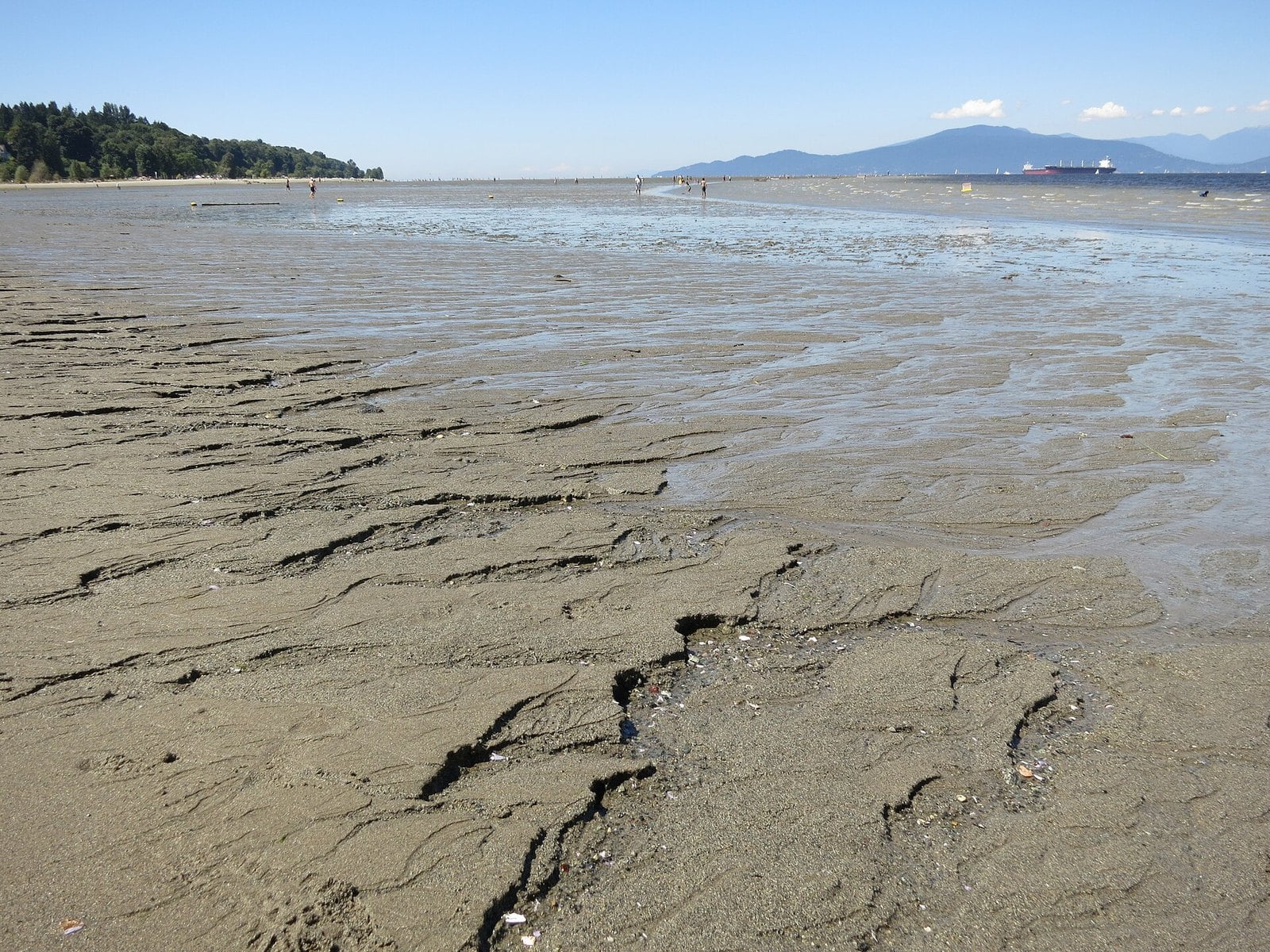
Where: NW Marine Drive, between Jericho Beach and Spanish Banks
When: Year-round for walks. Summer for swimming
Cost: Free
Getting there: West along NW Marine Drive past Jericho Beach
Locarno Beach is named after Locarno, the Swiss town where the 1925 peace treaties were negotiated.
The neighbour has a story of its own. Jericho’s name is commonly traced to logger Jeremiah ‘Jerry’ Rogers, who set up camp at the beach, and to ‘Jerry’s Cove’.
Locarno is one of Vancouver’s designated quiet beaches, so amplified music isn’t allowed. It’s the calmer neighbour of Jericho and Kits.
It works for walks in any season. Summer is for swimming. Lifeguards are seasonal, so check the Park Board’s beach page for dates before you swim. Get there by heading west on NW Marine Drive past Jericho Beach. It sits between Jericho and Spanish Banks.
13. Grandview Park and the Drive’s first name (Grandview-Woodland)
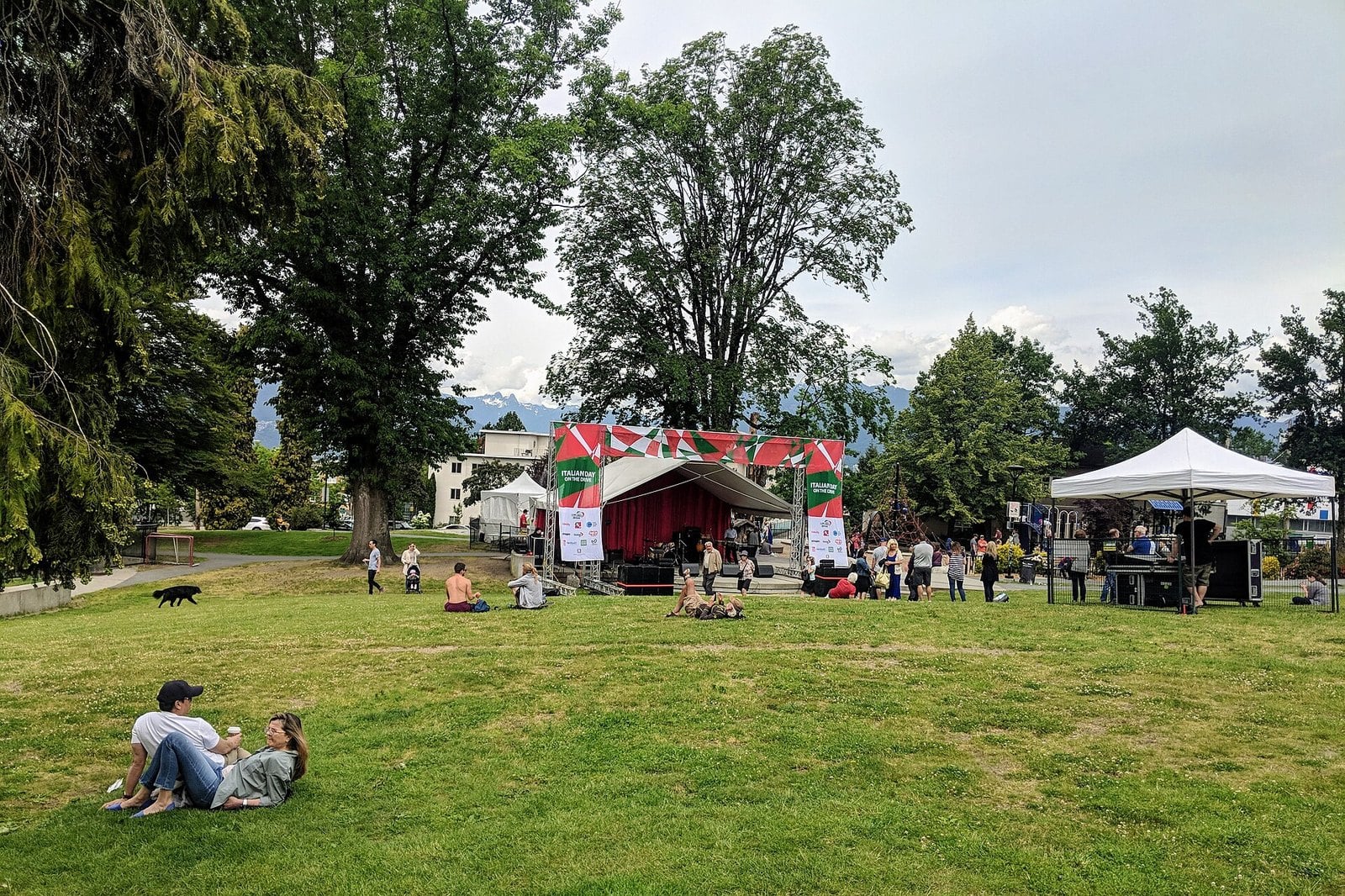
Where: Commercial Drive at William Street
When: Year-round
Cost: Free
Getting there: 1200 block of Commercial Drive
Commercial Drive started life as Park Drive. The name changed to Commercial Drive in 1911. Few people walking the 1200 block today know it ever had another name.
Grandview Park, at Commercial and William, was renewed in a City upgrade. The playground has a log ‘table’ cut from a 537-year-old cedar that blew down in Stanley Park. The park also has Vancouver’s first court built to bike polo specifications. The cenotaph area was restored in the same upgrade. Details are on the City’s park page.
It’s free and open year-round. Climb to the top of the park and turn around. You get a view back toward downtown and the mountains that most people on the Drive below never see.
12. Arbutus Greenway, the old interurban line (Kitsilano to Marpole)
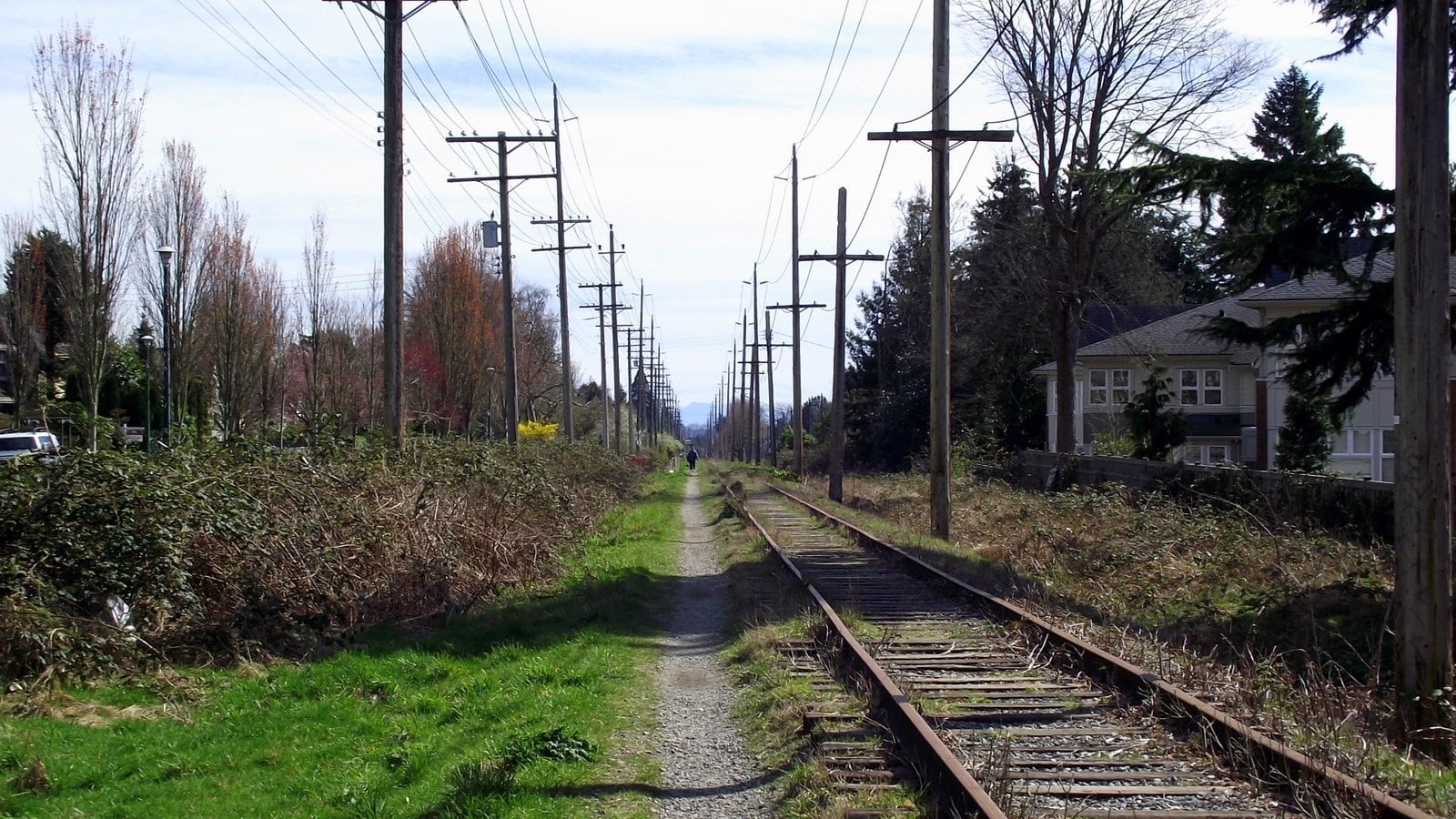
Where: Kitsilano to Marpole
When: Year-round
Cost: Free
Getting there: Runs roughly from West 5th Avenue near Fir Street south to Milton Street
The CPR built this corridor around 1900 to link Vancouver with the Fraser and Steveston. In 1905 BC Electric leased the line and started running interurban trains on it.
After years of disputes, the City bought the corridor from CPR in March 2016 for $55 million. It’s now a walking and cycling greenway. A streetcar is still part of the long-term plan, so the rail story may not be over.
The greenway runs about 9 km between False Creek and Marpole, near the Fraser River. It’s free and open year-round. Walk a section and pay attention to how straight and level it is. That’s the giveaway that trains once ran here.
11. Dude Chilling Park (Mount Pleasant)
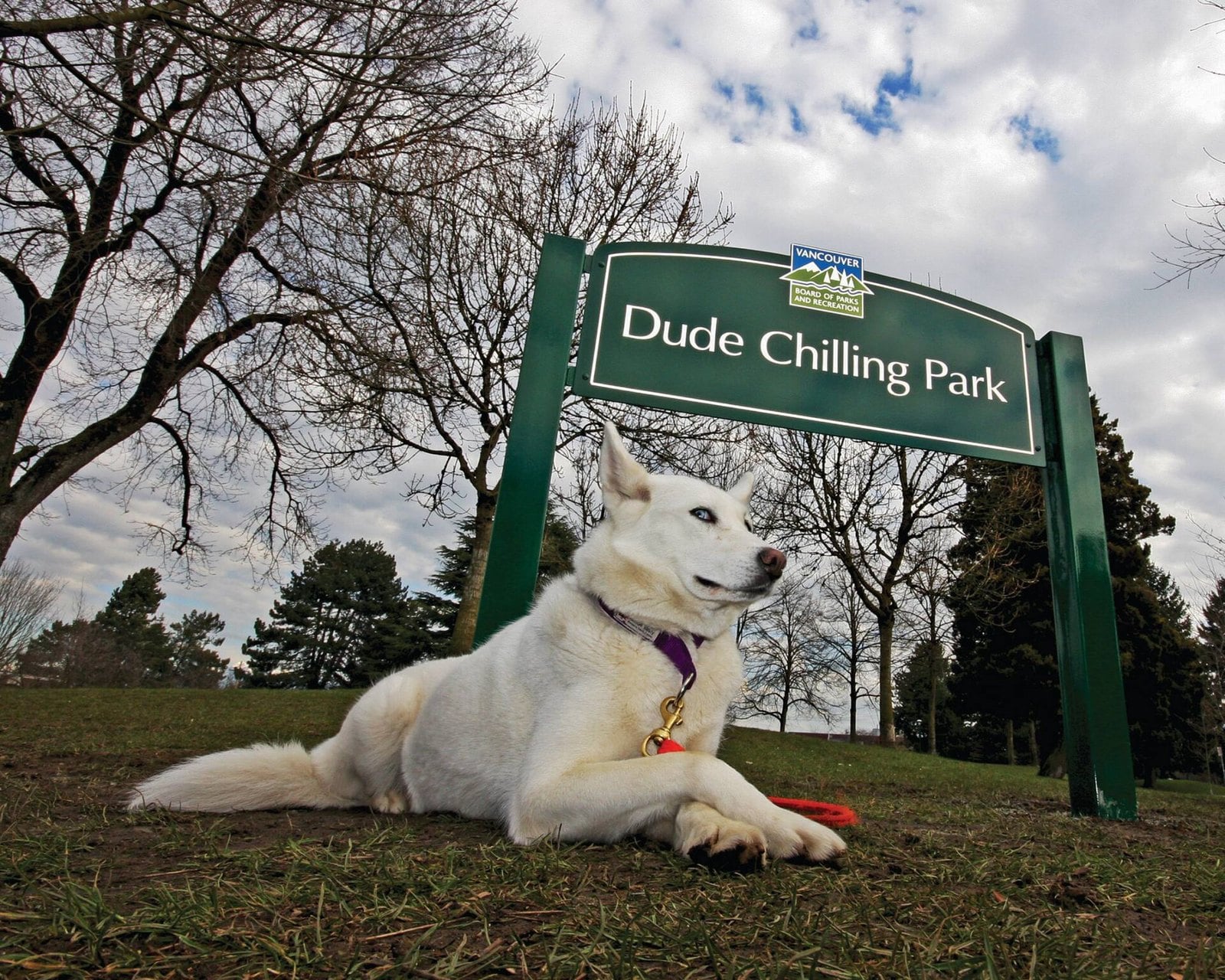
Where: Guelph Park
When: Year-round
Cost: Free
Getting there: Near East 8th Avenue and Brunswick Street
In November 2012 an artist put up an unauthorized ‘Dude Chilling Park’ sign in Guelph Park. It was a joke about the park’s 1991 sculpture, Reclining Figure, which does look like a dude chilling.
Park staff took the sign down. Residents pushed back. On February 3, 2014, the Park Board accepted the sign as a donated piece of public art. For a while Google Maps even renamed the park. The City tells the story on its Guelph Park public art page.
The official name is still Guelph Park. It’s near East 8th Avenue and Brunswick Street, free and open year-round. The sign gets stolen often, so it may be missing when you show up. The sculpture will still be there, chilling.
10. c̓əsnaʔəm, the Marpole Midden (Marpole)
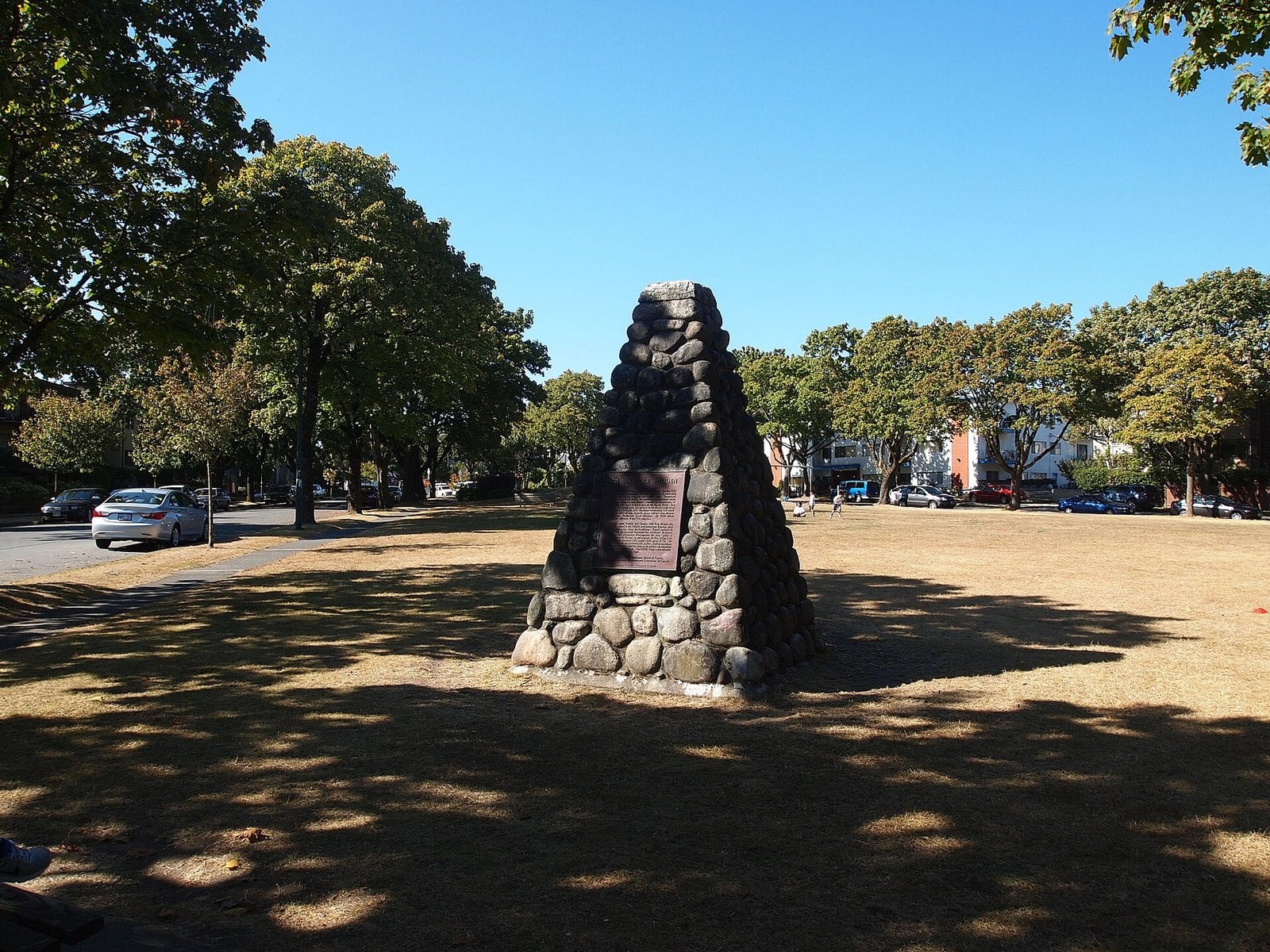
Where: Plaque in Marpole Park, 73rd Avenue at Cartier Street
When: Year-round
Cost: Free
Getting there: Marpole Park, 73rd Avenue at Cartier Street
c̓əsnaʔəm was first occupied almost 5,000 years ago. It grew into one of the largest Musqueam village sites. In 1933 it was designated a National Historic Site as one of the largest pre-contact middens on Canada’s Pacific coast.
The story didn’t end with a plaque. A community vigil of more than 200 days halted a development on the site. The Museum of Anthropology’s c̓əsnaʔəm exhibition page is a good place to start reading.
The National Historic Site plaque is in Marpole Park, at 73rd Avenue and Cartier Street. It isn’t on the village site itself. The site includes a burial ground and is sacred to Musqueam, so treat it with respect.
9. Mole Hill heritage houses (West End)
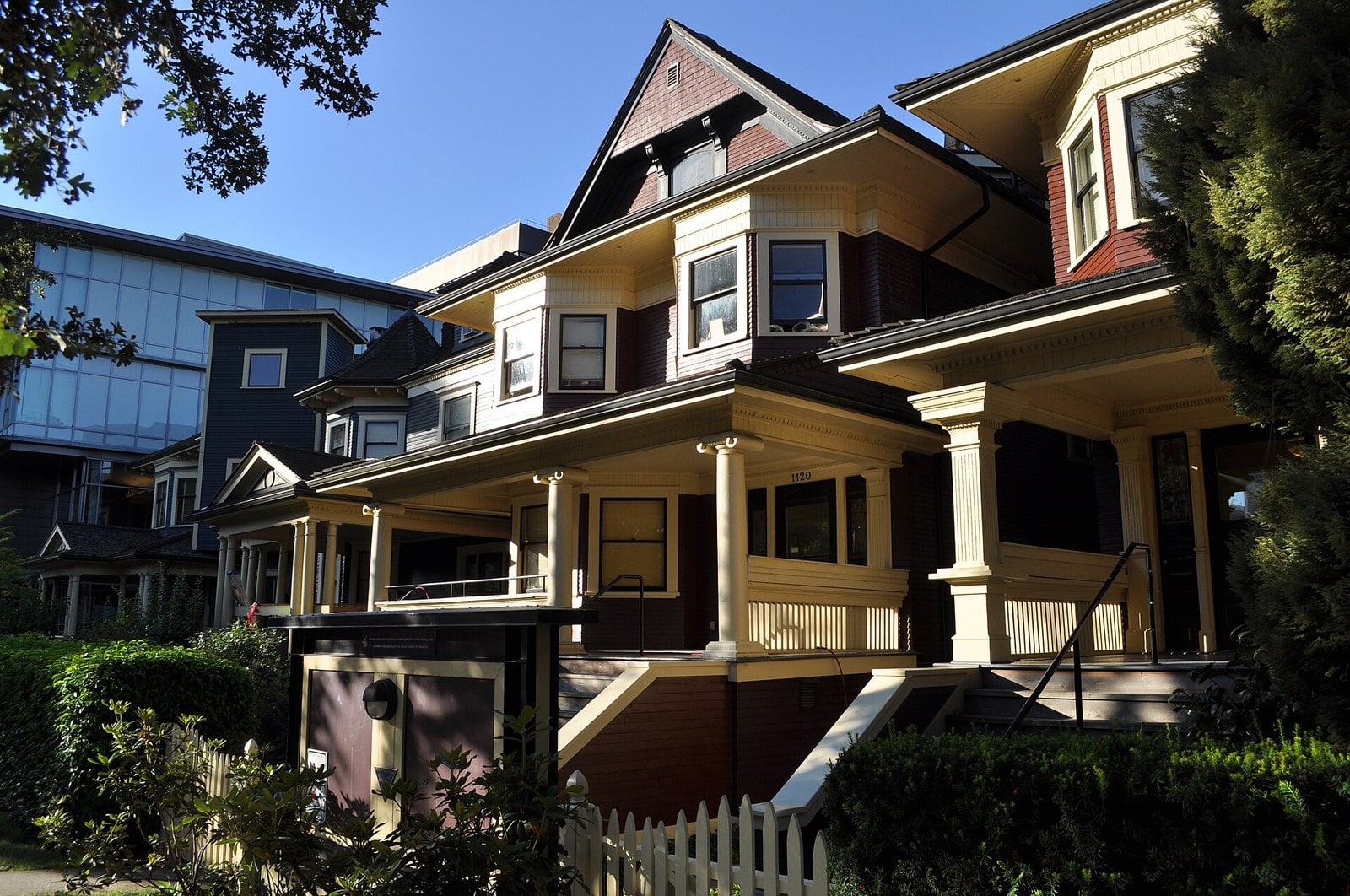
Where: Block bounded by Comox, Thurlow, Pendrell and Bute streets
When: Year-round, from the sidewalk
Cost: Free to look from public streets
Getting there: Short walk from Davie Street and Nelson Park
Mole Hill is the last surviving block of pre-First World War housing in Vancouver. It fills the block bounded by Comox, Thurlow, Pendrell and Bute streets. Thirty heritage-listed properties stand here, built between 1888 and 1908. The name goes back to Henry Mole, who arrived in the area in 1862.
The block almost didn’t make it. From 1950 on it was under threat of demolition, both for redevelopment and for plans to extend Nelson Park. The City had been buying the houses so it could clear them. Residents fought back and won. Today the Mole Hill Community Housing Society runs the block as non-market housing.
These are people’s homes, so this is a sidewalk walk, any time of year. It’s a short stroll from Davie Street and Nelson Park. Find 1160 Comox Street, built in 1888: it’s the earliest Mole Hill house still standing.
8. Hotel Europe (Gastown)
Where: 43 Powell Street at Alexander
When: Year-round (exterior only)
Cost: Free to view
Getting there: Powell at Alexander, by Maple Tree Square
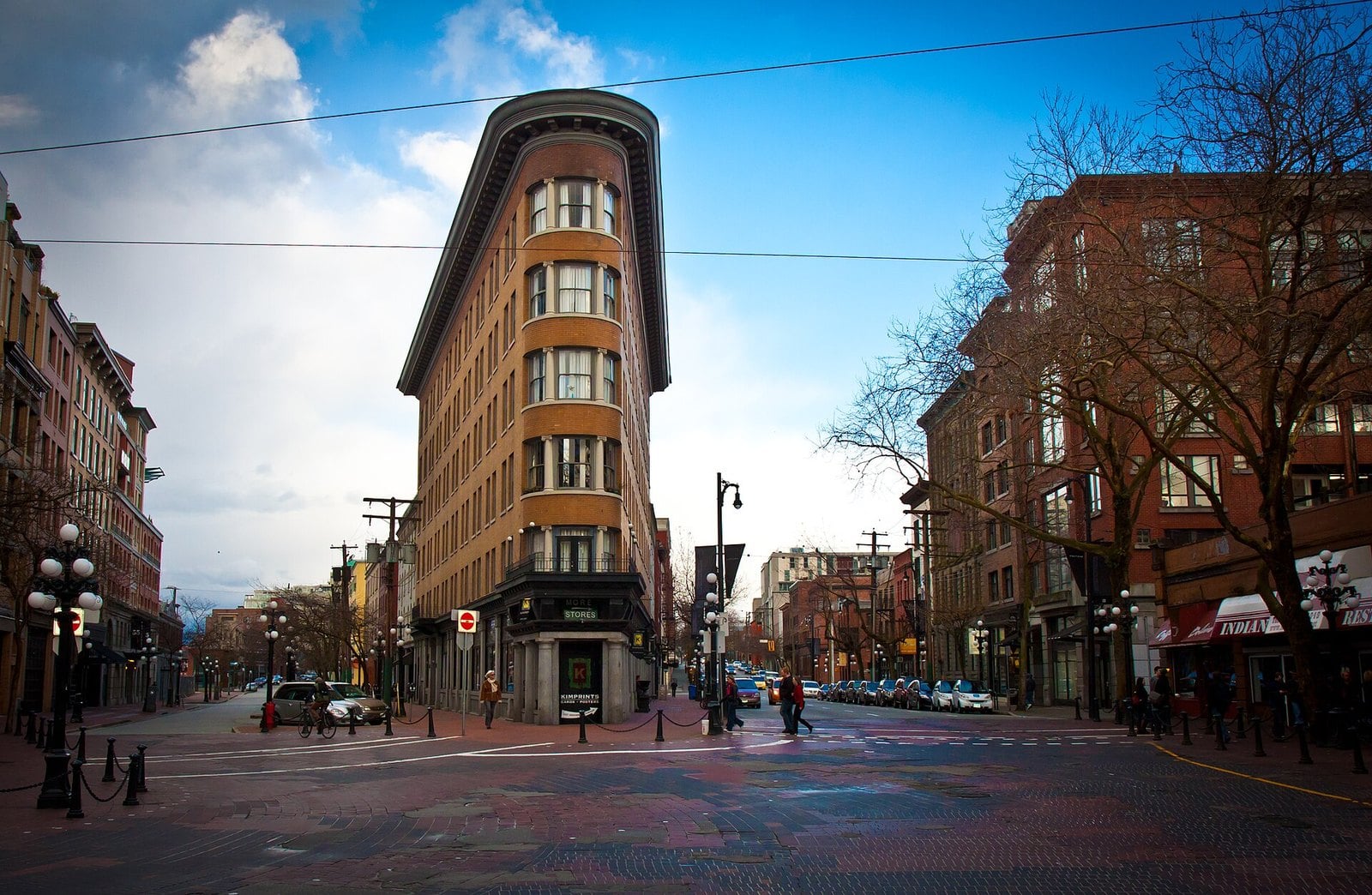
Hotelier Angelo Calori had this six-storey flatiron built in 1908 and 1909. Destination Vancouver calls it the first reinforced-concrete building in Canada. It also calls it the first fireproof hotel in Western Canada, which meant something in a city that had burned in 1886.
You may have seen it without knowing. It has been used in films including Legends of the Fall.
Today it’s affordable housing, so this is an exterior-only stop. People live here. It’s at 43 Powell Street, at Alexander, by Maple Tree Square. Stand at the point of the triangle for the classic photo.
7. Hogan’s Alley (Strathcona)
Where: Park Lane, between Union and Prior, roughly Main to Jackson
When: Year-round
Cost: Free
Getting there: Main Street at Union, near the east end of the Georgia Viaduct
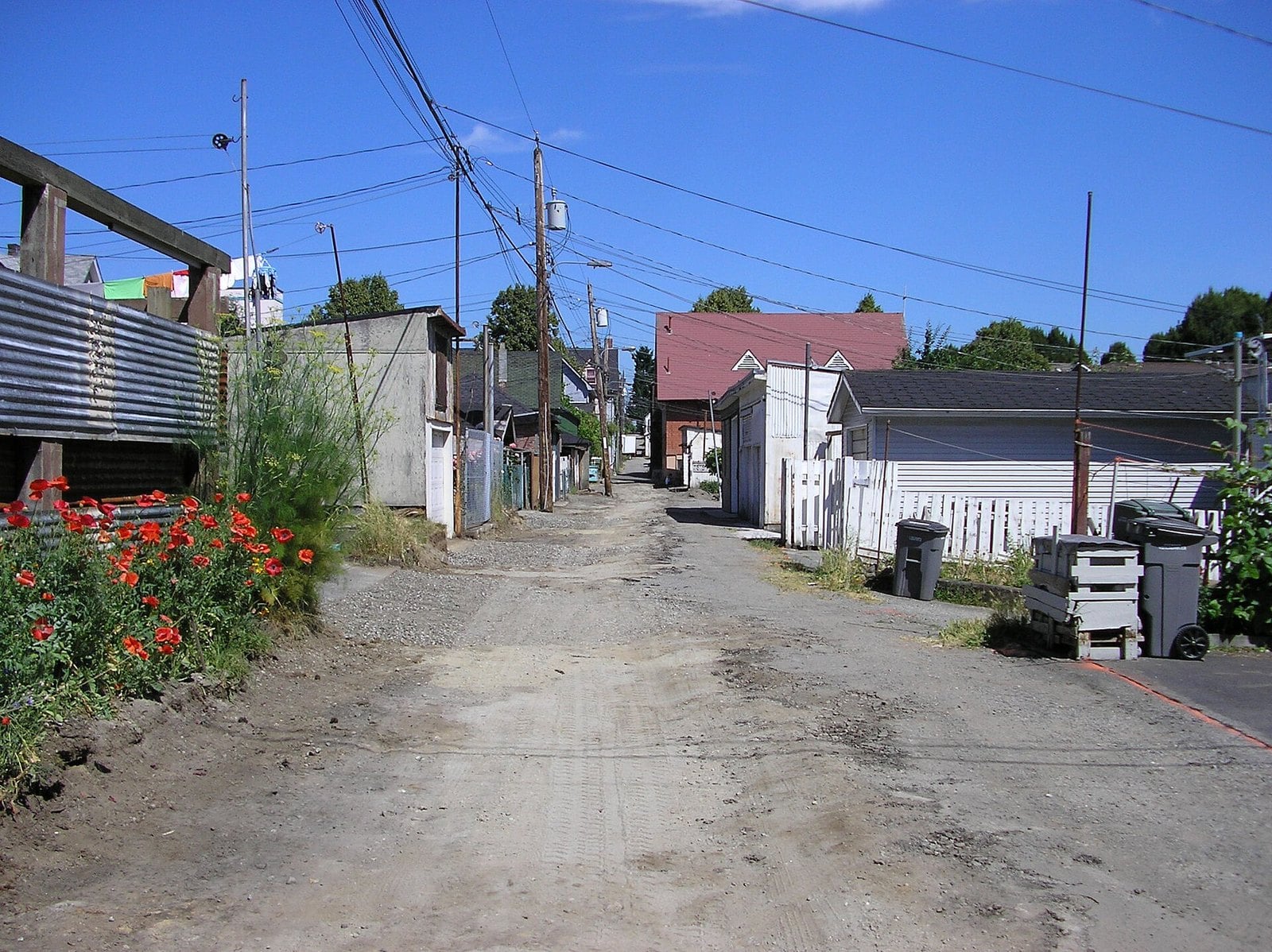
Hogan’s Alley was the local name for Park Lane in Strathcona. The lane ran between Union and Prior, roughly from Main to Jackson. It was the centre of Vancouver’s largest Black community.
The City’s own timeline shows the squeeze started long before the bulldozers. A 1931 bylaw zoned much of the area industrial instead of residential. Starting in 1967, the City levelled the western half of the alley for an interurban freeway. The Georgia Viaduct went up on the land. Community opposition stopped the rest of the freeway.
The City has since signed an MOU with the Hogan’s Alley Society for the 898 Main Street block. A city-sponsored plaque went up in 2013. The Jimi Hendrix Shrine on Union Street, once part of any visit here, has closed.
It’s free and open to walk year-round. Stand at Main and Union, near the east end of the viaduct, and picture houses where the ramps are now. Removing the viaduct has been planned since 2015, and it keeps getting delayed.
6. Engine 374 (Yaletown)
Where: Roundhouse Community Centre, Davie Street and Pacific Boulevard
When: Daily, 11 am to 3 pm (Nov to Mar); 10 am to 4 pm (Apr to Oct)
Cost: Free
Getting there: Davie Street at Pacific Boulevard
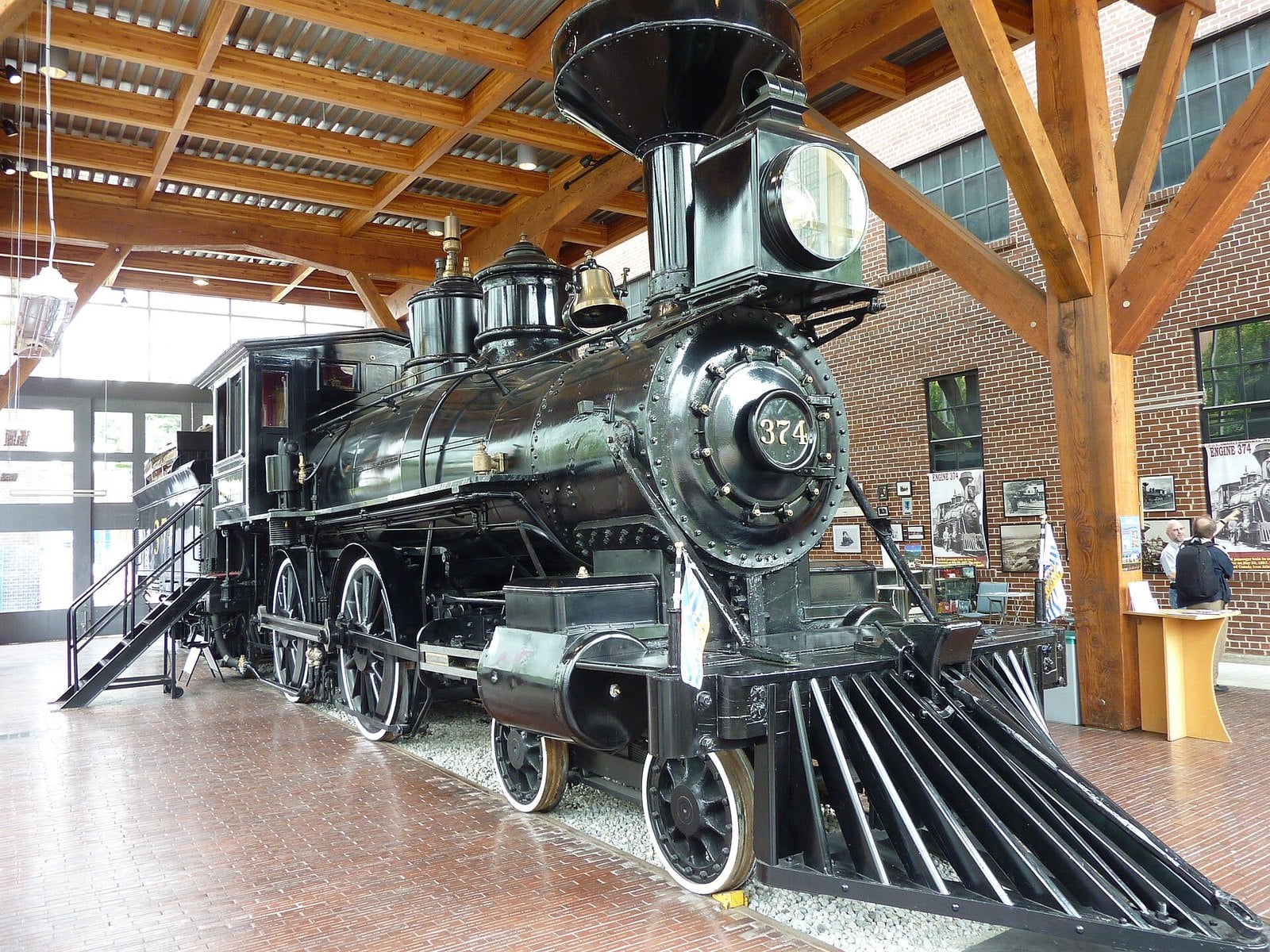
On May 23, 1887, CPR Engine 374 pulled the first transcontinental passenger train into Vancouver. It carried 150 passengers past Port Moody over the new extension to Vancouver, about 19 kilometres.
No. 374 now sits in a pavilion beside the old CPR roundhouse at the Roundhouse Community Centre.
It’s at Davie Street and Pacific Boulevard. The pavilion is free and open daily: 11 am to 3 pm from November to March, and 10 am to 4 pm from April to October. It’s run by volunteers, so hours depend on volunteer availability. A celebration is held each year around the May anniversary, so check roundhouse.ca for the date.
5. Camosun Bog (Dunbar, Pacific Spirit Regional Park)
Where: Pacific Spirit Regional Park, Dunbar edge
When: Year-round. Wet seasons for the moss
Cost: Free
Getting there: Boardwalk access from 19th Avenue at Camosun Street
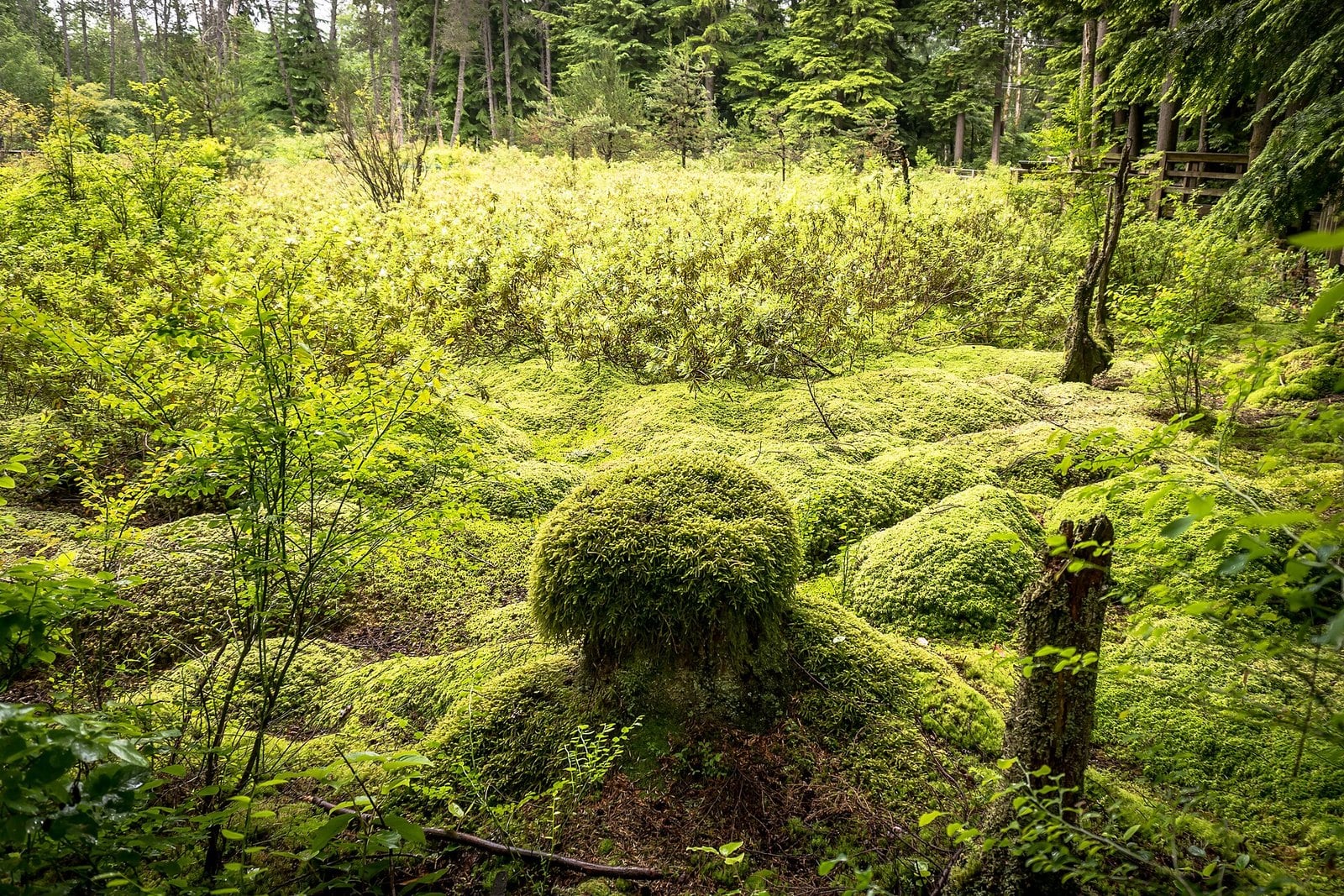
Camosun Bog is a peat bog on the Dunbar edge of Pacific Spirit Regional Park. It feels like a different place from the houses a block away.
Volunteers have been restoring the bog for years. A 300 m boardwalk winds through it, with interpretive signs, including signs on the bog’s importance to Musqueam.
Metro Vancouver asks you to stay on the boardwalk and keep dogs on-leash. The bog is fragile, and that rule is what keeps it a bog. Wet seasons are when the sphagnum moss looks its best. Wear shoes that can handle a damp boardwalk.
Access is from 19th Avenue at Camosun Street. It’s free and open year-round. The loop is short, so carry on along the Camosun trail into the forest.
4. Roedde House Museum and Barclay Heritage Square (West End)
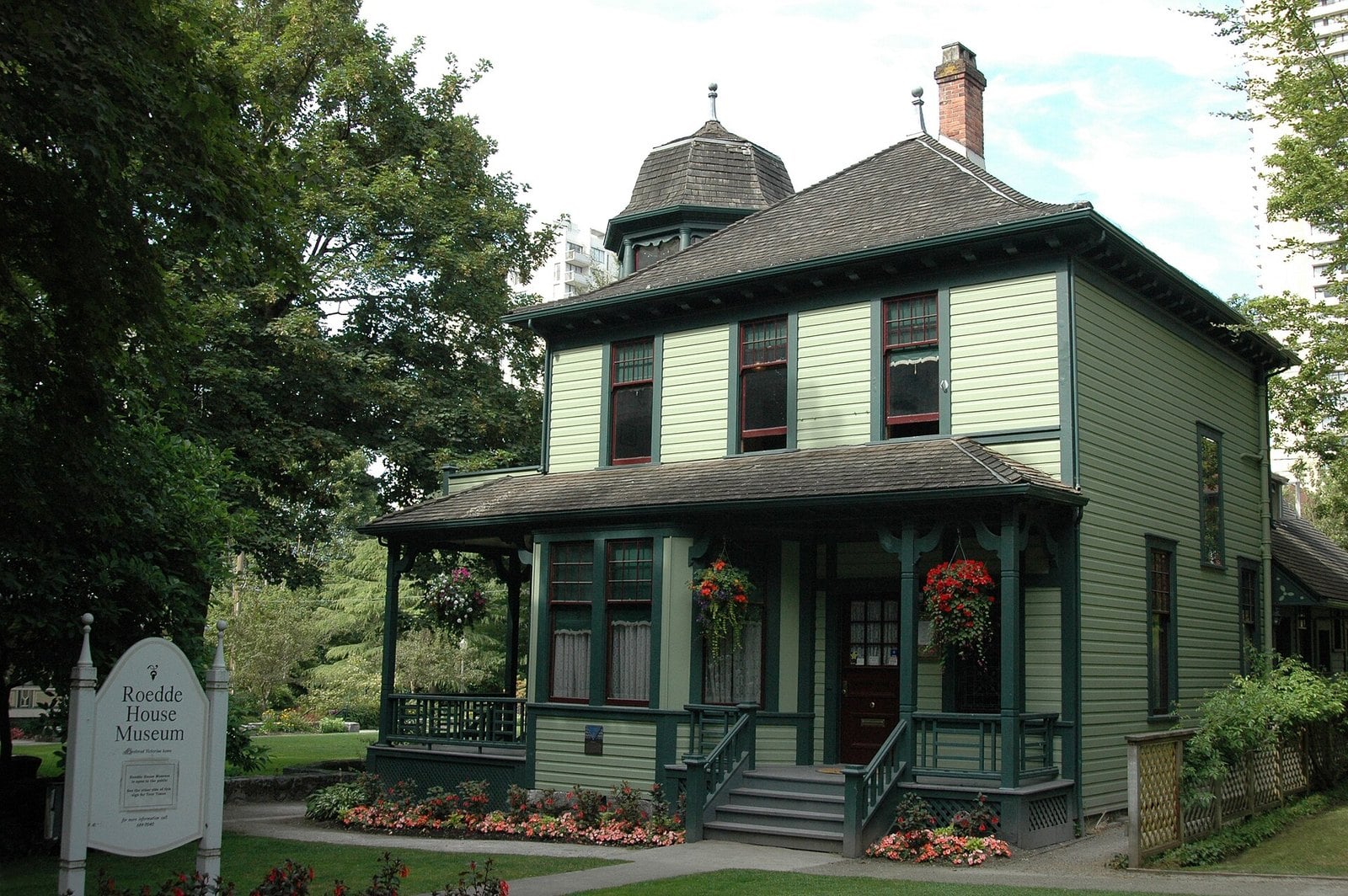
Where: 1415 Barclay Street, between Broughton and Nicola
When: Fall: Wed, Thu, Fri, Sun 1 to 4 pm. July and August: Wed to Sun 11 am to 4 pm
Cost: $10 general, $5 youth (6 to 18), 5 and under free. Tea & Tour $15 general
Getting there: West End, between Broughton and Nicola streets
Gustav Roedde, Vancouver’s first bookbinder, built this Queen Anne Revival house at 1415 Barclay Street in 1893. Inside, the rooms aren’t roped off. You can even touch some of the artefacts, which makes it easier going with curious kids than most house museums.
The City designated the house as heritage in 1976. That decision kicked off the restoration of the whole of Barclay Heritage Square around it. The City still owns the house.
Fall hours are Wednesday, Thursday, Friday and Sunday, 1 to 4 pm. The house closes for the holidays from December 21, 2026 to January 12, 2027. In July and August it opens Wednesday to Sunday, 11 am to 4 pm. General admission is $10, youth aged 6 to 18 pay $5, and children 5 and under get in free. Check the hours and admissions page before you go.
The local move is Tea & Tour on the last Sunday of the month. The next one is November 29, and there’s none in late December because of the holiday closure. You get a guided tour, then tea in the parlour, for $15 general. The house sits between Broughton and Nicola streets.
3. Wing Sang Building, Chinese Canadian Museum (Chinatown)
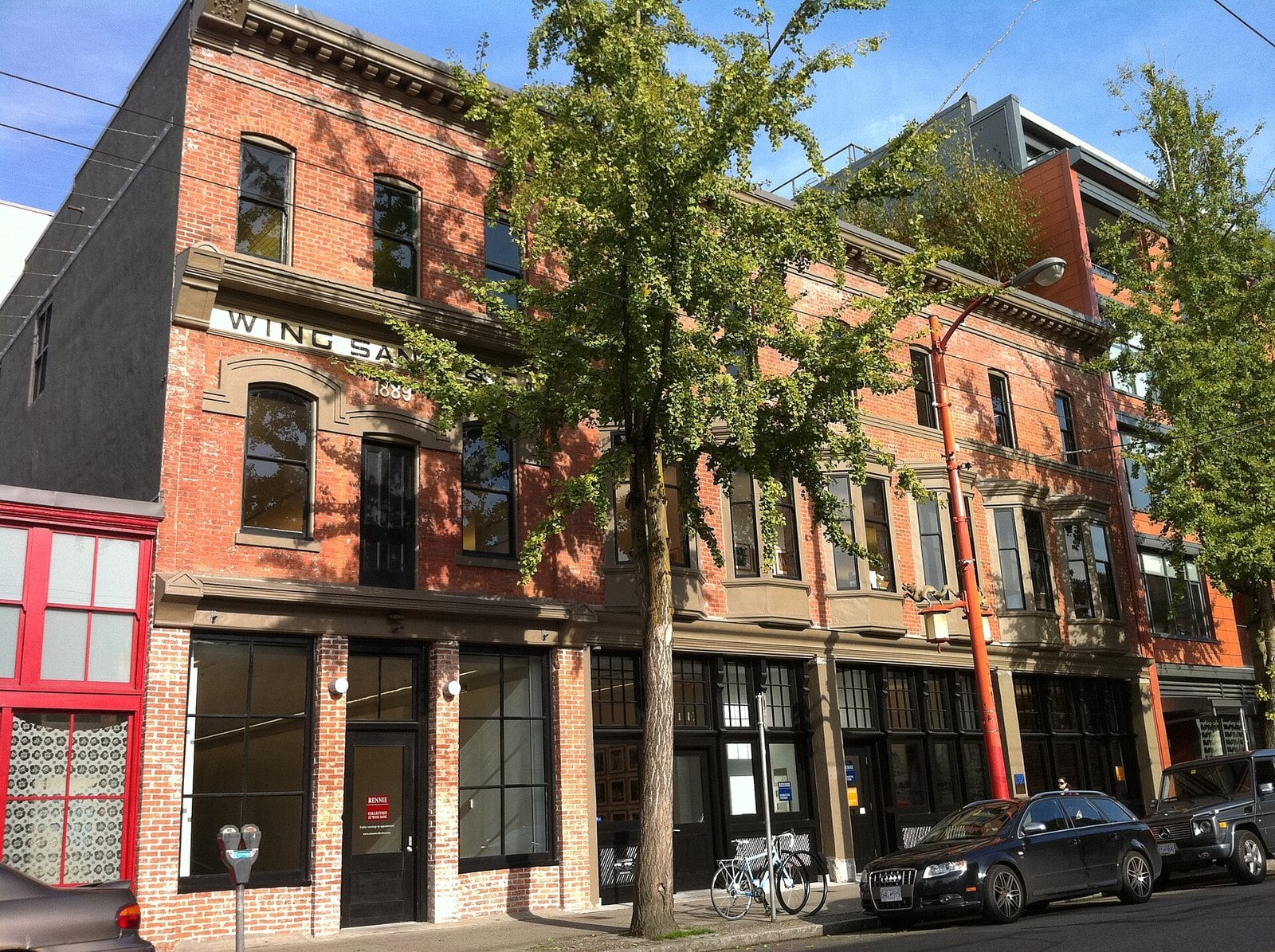
Where: 51 East Pender Street
When: Wednesday to Sunday, 10 am to 5 pm; closed Monday and Tuesday
Cost: $18 general, $12 youth (6 to 18), $14 seniors/students, 5 and under free
Getting there: East Pender near Carrall, less than a 10-minute walk from Stadium-Chinatown SkyTrain station
Merchant Yip Sang built the Wing Sang Building in 1889. It’s the oldest brick building in Chinatown and one of the earliest surviving buildings in the city. It grew in 1901 and again in 1912 to hold his business and his large family.
Since 2023 it has been home to the Chinese Canadian Museum. That means you can go inside one of the city’s oldest buildings, not just admire it from the curb.
The museum is open Wednesday to Sunday, 10 am to 5 pm, closed Monday and Tuesday. Admission is paid. Check the museum’s visit page for the current price.
It’s at 51 East Pender Street, near Carrall, and the museum says it’s less than a 10-minute walk from Stadium-Chinatown SkyTrain station. Before you go in, look for the original 1889 two-storey section in the facade. Street-level changes over the years have hidden part of it.
2. Sam Kee Building (Chinatown)
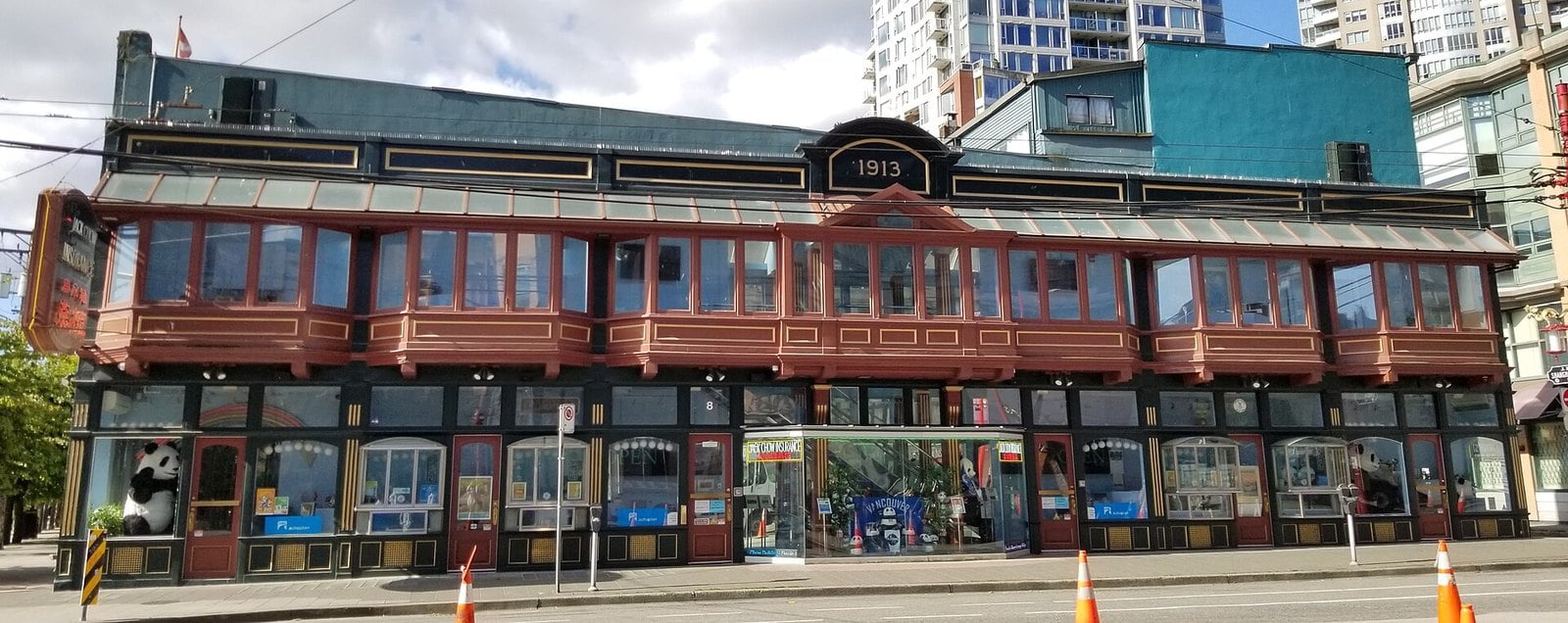
Where: 8 West Pender Street at Carrall
When: Year-round (exterior)
Cost: Free to view
Getting there: Pender at Carrall, near the Millennium Gate
Around 1912 the City widened Pender Street. It expropriated most of merchant Chang Toy’s lot and left him a strip about 1.8 metres deep. Instead of giving up, he built on it anyway.
The steel-framed building went up in 1913. The ground floor is only about 1.5 metres deep. Even so, it once held 13 businesses. Guinness World Records lists it as the world’s narrowest commercial building, according to the building’s current occupant.
It’s at 8 West Pender Street, at Carrall, near the Millennium Gate. The exterior is free to see year-round. Look at the bay windows. The upper floor sticks out over the sidewalk to claw back a little space.
1. Old Hastings Mill Store Museum (Point Grey)
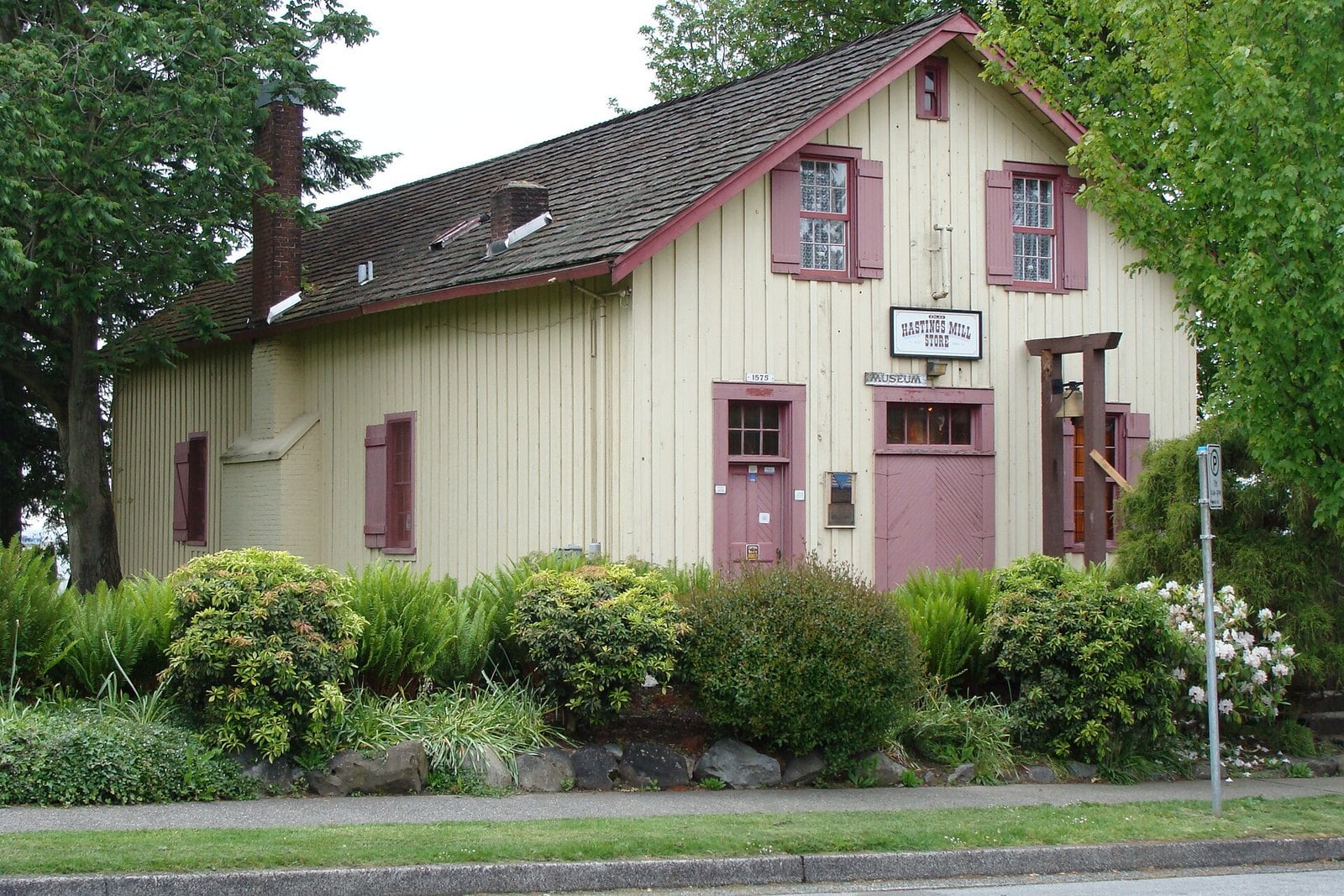
Where: 1575 Alma Street, Hastings Mill Park
When: Mid-February through November, Sat and Sun 1 to 4 pm. Closed December and January. 2027 reopening not yet posted
Cost: By donation
Getting there: Corner of Alma Street and Point Grey Road, by the seaside path toward Jericho Beach
This plain wooden store is widely called Vancouver’s oldest building. It was one of the very few buildings to come through the Great Fire of 1886. It didn’t start in Point Grey. It first stood on Burrard Inlet, and in 1930 it was moved to its present site where Alma Street meets Point Grey Road.
It is staffed by members of the Native Daughters of British Columbia. Admission is by donation, so pay what you can.
The regular season runs mid-February through November, Saturdays and Sundays, 1 to 4 pm. It closes in December and January. As of mid-November 2026, these are its last open weekends of the year. The 2027 reopening date isn’t posted yet. For comparison, it reopened on February 14 in 2026. Watch the museum’s visit page.
You’ll find it at 1575 Alma Street, at Point Grey Road, beside the seaside path toward Jericho Beach. Kids can burn energy on the log playground in Hastings Mill Park. Then walk west to Jericho and on to Locarno.
| Year | Event |
|---|---|
| 1931 | Bylaw zoned much of the area industrial rather than residential |
| 1939 | Area labelled undesirable and a health hazard |
| 1950s–60s | City stopped granting building and development permits |
| 1957 | Redevelopment study named Strathcona one of the worst areas |
| 1967 | Vancouver Transportation Study presented to Council |
| 1967–72 | Land acquired through sales or expropriations |
| Place | Cost |
|---|---|
| Old Hastings Mill Store Museum | By donation |
| Roedde House Museum | $10 adult / $5 youth / under 6 free |
| Camosun Bog, Arbutus Greenway, Grandview Park, Dude Chilling Park | Free |
What’s open right now (mid-November 2026)
- The Old Hastings Mill Store Museum is open weekends, 1 to 4 pm, through November. It closes for December and January, and the 2027 reopening date isn’t posted yet.
- Roedde House is on fall hours: Wednesday, Thursday, Friday and Sunday, 1 to 4 pm, until it closes for the holidays from December 21, 2026 to January 12, 2027.
- The Chinese Canadian Museum is open Wednesday to Sunday, 10 am to 5 pm.
- Kits Pool is summer-only, and 2027 dates aren’t posted yet.
- The PNE Wooden Roller Coaster is listed as not in operation.
When to go
Most of this list is outdoors and free, so it works in any season. The streetscapes in Gastown, Chinatown, Strathcona and the West End are as good on a grey November afternoon as in July. Camosun Bog is at its best in the wet months, when the moss fills out. Locarno and Kits Pool are summer places. Roedde House is on fall hours now (Wednesday, Thursday, Friday and Sunday, 1–4 pm); check roeddehouse.org for the summer schedule. Plan the Hastings Mill Store for a weekend between mid-February and the end of November.
Etiquette and safety
- Mole Hill and Hotel Europe are homes. Lord Strathcona is a working school. Look from the sidewalk and stay off school grounds during school hours.
- c̓əsnaʔəm is a Musqueam burial site. The plaque is in Marpole Park. Treat the site itself with respect.
- At Camosun Bog, stay on the boardwalk and keep dogs on-leash, as Metro Vancouver asks. The bog is fragile.
- Locarno is the beach locals pick for a quiet day. Leave the speaker at home.
- If you carry on into the Pacific Spirit forest from the bog, go prepared for wet ground and dress for the weather.
A one-day route on the east side
Many of the stops cluster close together, so you can string them into one day on foot. Start in Gastown at the Byrnes Block and Hotel Europe, both around Maple Tree Square. Head to Chinatown for the Sam Kee Building and the Wing Sang Building. Time the Wing Sang for Wednesday to Sunday if you want to go inside. Carry on into Strathcona to stand at Main and Union for Hogan’s Alley, then walk East Pender to Lord Strathcona School. Finish in Mount Pleasant with Heritage Hall at Main and 15th, and Dude Chilling Park near East 8th and Brunswick. Give yourself a full day and don’t rush it.
West side pairings
The Hastings Mill Store sits on the seaside path toward Jericho Beach, so pair it with a walk west to Jericho and Locarno. Camosun Bog is a short loop, so add a stretch of the Camosun trail. The Arbutus Greenway links Kitsilano and Marpole, which makes it an easy spine for a ride or walk. You can end near Marpole Park and the c̓əsnaʔəm plaque.
What to bring
- Shoes that can handle a wet boardwalk and a forest trail if Camosun Bog is on your list.
- Something to put in the donation box at the Hastings Mill Store.
- Admission money for Roedde House and the Chinese Canadian Museum.
- A layer for the beaches. The wind off the water at Locarno in shoulder season is real.
Getting there
The Chinese Canadian Museum is at 51 East Pender Street in Chinatown. Heritage Hall describes itself as ten minutes from downtown. The east side stops are close enough together to walk between. For the west side, Locarno is reached by heading west on NW Marine Drive past Jericho, and Camosun Bog is entered from 19th Avenue.
| Place | Days | Hours | Season |
|---|---|---|---|
| Roedde House Museum | Wed, Thu, Fri, Sun | 1 to 4 pm | Fall |
| Roedde House Museum | Wed to Sun | 11 am to 4 pm | July and August |
| Roedde House Tea & Tour | Last Sunday of the month | Check roeddehouse.org | Monthly |
| Old Hastings Mill Store Museum | Sat and Sun | 1 to 4 pm | Mid-February through November. Closed December and January |
| Chinese Canadian Museum (Wing Sang Building) | Wed to Sun | 10 am to 5 pm, last entry 4:30 pm | Year-round |
Most of these places don’t need a ticket booth to be worth the stop. A store floated across the water on a barge and a building cut free at its base to ride out an earthquake are both right here. So is a beach named for a treaty signed in Switzerland. Next time you’re on Pender, Barclay or the Drive, look up from your phone for a block. Some of the city’s best stories are printed on a plaque at eye level, and most people walk right past.
Get the weekend plan in your inbox. Burrard Bulletin is a free email on what’s actually on from Vancouver to Whistler. Sign up here.
Photo credits
- Vancouver – Mole Hill 07.jpg by Joe Mabel, CC BY-SA 3.0 (combined into a montage, cropped). Via Wikimedia Commons.
- Roedde House 01.jpg by Torecles, CC BY-SA 3.0 (combined into a montage, cropped). Via Wikimedia Commons.
- Hastings Mill Store.JPG by Iota 9 at en.wikipedia, CC BY-SA 3.0 (combined into a montage, cropped). Via Wikimedia Commons.
- Sand textures at Locarno Beach (14781467872).jpg by Ruth Hartnup from Vancouver, Canada, CC BY 2.0 (combined into a montage, cropped). Via Wikimedia Commons.
- Kitsilano Pool Vancouver (44672948392).jpg by dronepicr, CC BY 2.0 (resized). Via Wikimedia Commons.
- Hogan’s Alley, 2006.jpg by Mike W. (SqueakyMarmot on Flickr), CC BY-SA 2.0 (resized). Via Wikimedia Commons.
- Lord Strathcona School 01.JPG by Xiao23, CC BY-SA 3.0 (resized). Via Wikimedia Commons.
- Heritage Hall.JPG by Iota 9 at en.wikipedia, CC BY-SA 3.0 (resized). Via Wikimedia Commons.
- Dude chilling dog.jpg by GlobalWikiDude, CC BY-SA 4.0 (resized). Via Wikimedia Commons.
- Italian Days at Grandview Park.jpg by Northwest, CC BY-SA 4.0 (resized). Via Wikimedia Commons.
- Marpole Midden monument.JPG by Holbytlan, CC BY-SA 3.0 (resized). Via Wikimedia Commons.
- Bog and Moss.jpg by Los Paseos, CC BY-SA 2.0 (resized). Via Wikimedia Commons.
- Arbutus Corridor – panoramio (1).jpg by Kiwibirdman, CC BY 3.0 (resized). Via Wikimedia Commons.
- Sam Kee Building, 16 May 2024.jpg by 李月文, CC BY-SA 4.0 (resized). Via Wikimedia Commons.
- Wing sang building, vancouver, b.c..JPG by Ann Marie Fleming, CC BY-SA 3.0 (resized). Via Wikimedia Commons.
- Byrnes Block.jpg by Alain Limoges from Vancouver, BC, Canada, CC BY-SA 2.0 (resized). Via Wikimedia Commons.
- Hotel Europe Gastown (1).jpg by Abhinaba Basu from Redmond, United States, CC BY 2.0 (resized). Via Wikimedia Commons.
- CPR Steam engine No 374 2011.jpg by Nils Öberg, CC BY-SA 3.0 (resized). Via Wikimedia Commons.
- TheCoasterPlayland.JPG by ThePointblank, CC BY-SA 3.0 (resized). Via Wikimedia Commons.
