Where to Watch the Salmon Run Near Vancouver Right Now
For most people who grew up here, salmon season meant the Capilano River Hatchery on the Shore. This fall it’s off the list. Metro Vancouver says the hatchery is closed to the public for construction from October 1, 2026. DFO says it’s closed until further notice.
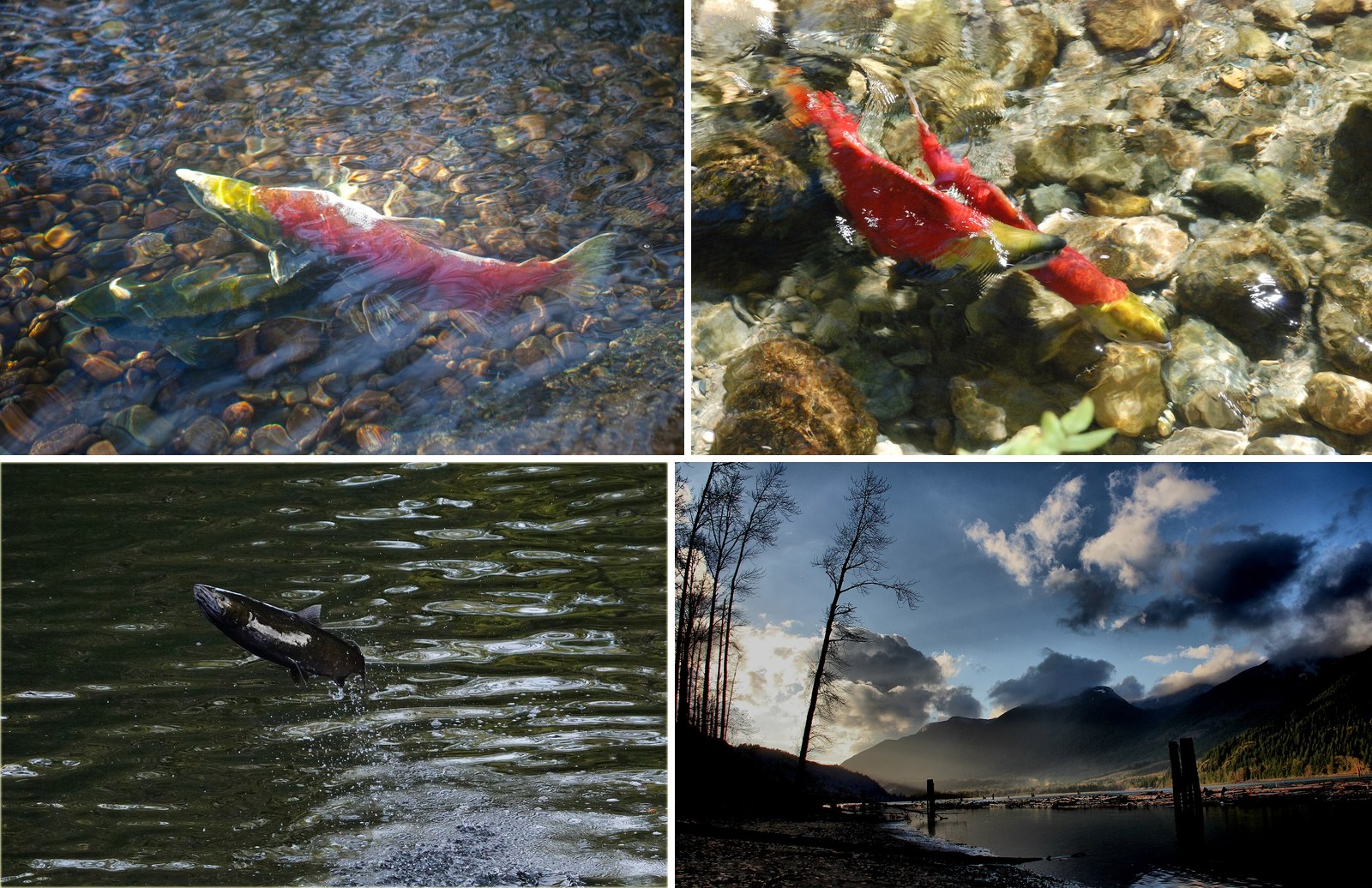
The fish are still coming. Sockeye are in the Weaver Creek Spawning Channel near Harrison Mills, where the usual peak runs October 15 to 25. Chum and coho are pushing into creeks in Coquitlam, Maple Ridge and Port Moody. In November the bald eagles in Brackendale start following the chum up the Sea to Sky.
This guide covers where to go now, where to go next month, what each place actually offers and what’s closed. Hours and run timing come from DFO, BC Parks, Metro Vancouver and the City of Coquitlam. Drive times are routing estimates from downtown with no traffic, so add time on a weekend.
11. Capilano River Regional Park (North Vancouver, hatchery closed)
Where: 4500 Capilano Park Road, North Vancouver
When: Park 7 am to 7 pm until Nov 2 (check Metro Vancouver for hours after that). Hatchery closed from Oct 1, 2026
Cost: Regional park entry free
Getting there: About 11 km, roughly 20 min. Accessible by transit
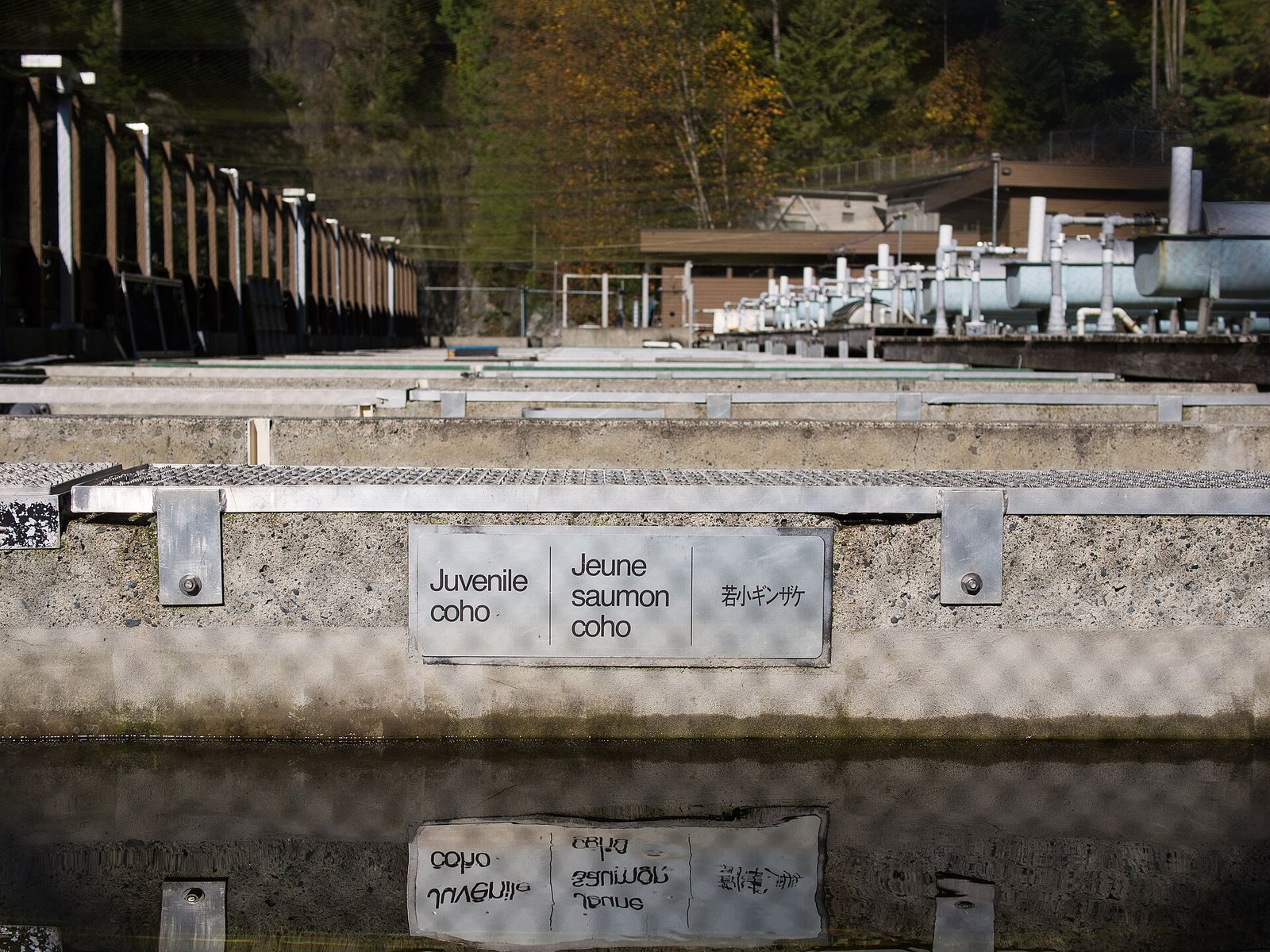
DFO built the Capilano River Hatchery in 1971 after the Cleveland Dam hit Capilano salmon stocks. It normally gets almost 250,000 visitors a year. This fall it’s closed. Metro Vancouver says it’s closed to the public for construction from October 1, 2026, and DFO says it’s closed until further notice while it’s modernized.
The regional park around it stays open, including the 1 km Coho Loop Trail that starts near the hatchery. Metro Vancouver warns of intermittent delays and temporary closures on that trail because of work at the Cable Pool platform. DFO lists adult coho in the Capilano from June to November and chinook in October and November. Without the hatchery’s viewing windows, don’t expect the close-up look of past years.
The park is about 20 minutes from downtown and Metro Vancouver says it’s accessible by transit. Listen for the river alarms. Water released over Cleveland Dam can raise the river quickly.
10. Brackendale Eagle Run (Squamish)
Where: Eagle Run dyke, across from 41015 Government Road, Brackendale
When: Eagles Nov to Feb, peak Nov to Dec. Park closed to recreation Oct 1 to Mar 31
Cost: No fee mentioned by BC Parks
Getting there: About 69 km, roughly 75 min via the Sea to Sky
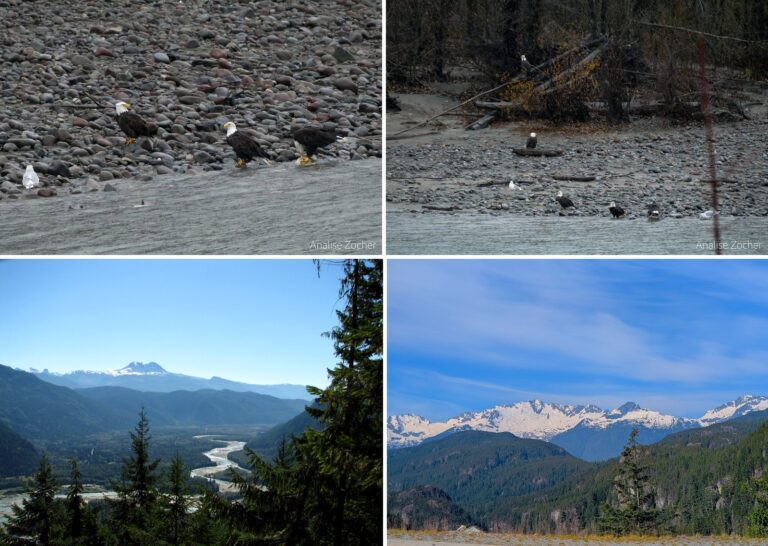
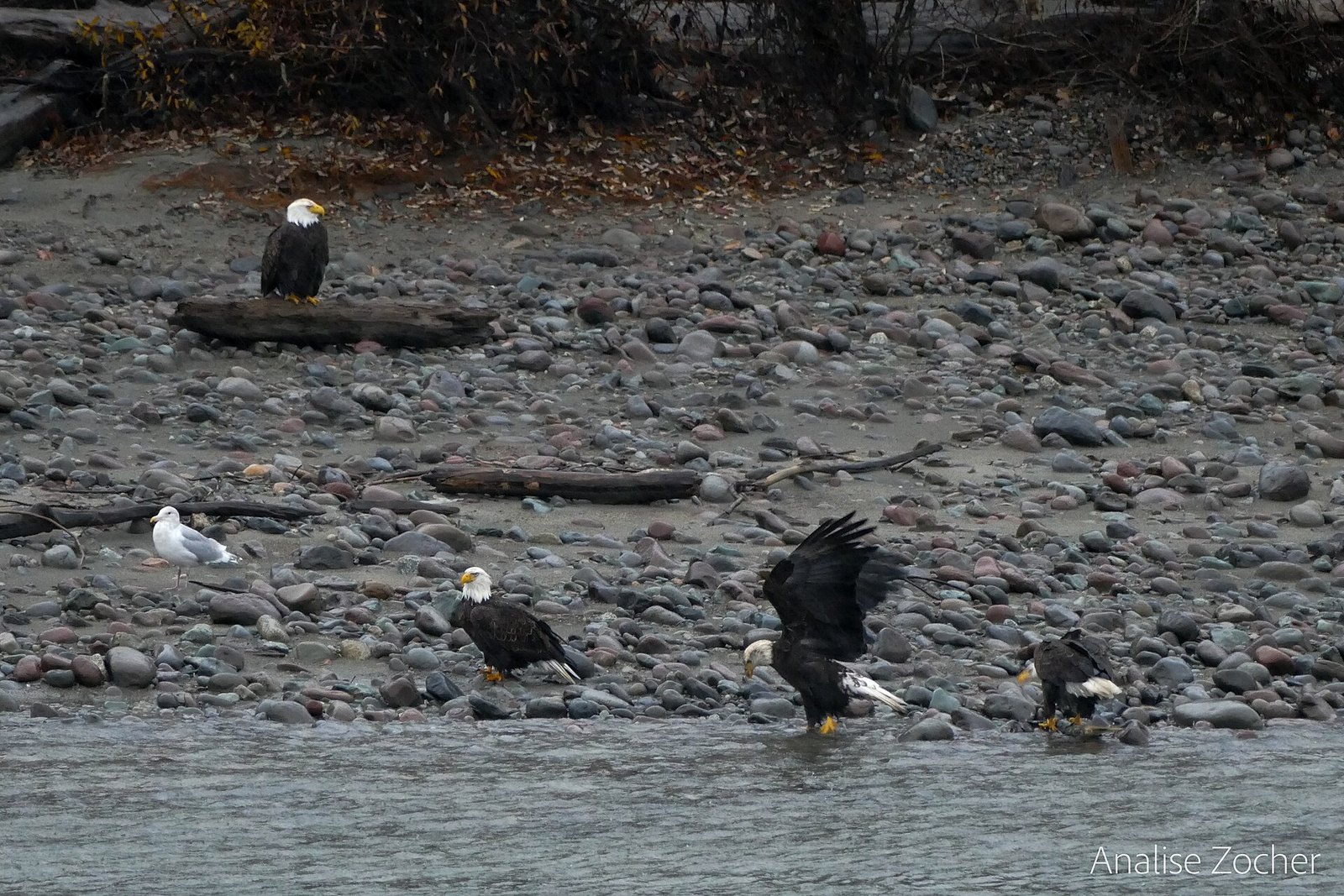
This is where the salmon run turns into an eagle count. BC Parks says chum runs in the Squamish, Cheakamus and Mamquam rivers draw bald eagles from across the Pacific Northwest and the BC Interior from November to February. In the 1994 winter count, Squamish set a world record of 3,769 eagles.
Brackendale Eagles Provincial Park is viewed from across the river. It’s closed to recreation, except fishing, from October 1 to March 31. You watch from the municipal viewing facilities on the Eagle Run dyke, across from the Easter Seals Camp at 41015 Government Road.
BC Parks says viewing peaks in November and December, and large numbers can stay into January. Late October is still early. Mid-November onward is the safer bet. Bring binoculars, because the birds sit across the river.
9. Goldstream Provincial Park (Vancouver Island)
Where: 16 km northwest of Victoria, off Trans-Canada Highway 1
When: Best viewing late October through November
Cost: No day-use fee mentioned by BC Parks
Getting there: BC Ferries to Swartz Bay, then drive to Highway 1 at Finlayson Arm Road
This one takes a ferry, but Goldstream is one of BC’s most popular chum spawning shows, drawing thousands of visitors a year according to BC Parks. BC Parks describes an annual run of thousands of chum, with riverside trails and observation platforms. Bald eagles come in to feed on the spawned-out fish. Park naturalists run interpretive programs at the Freeman King Visitor Centre.
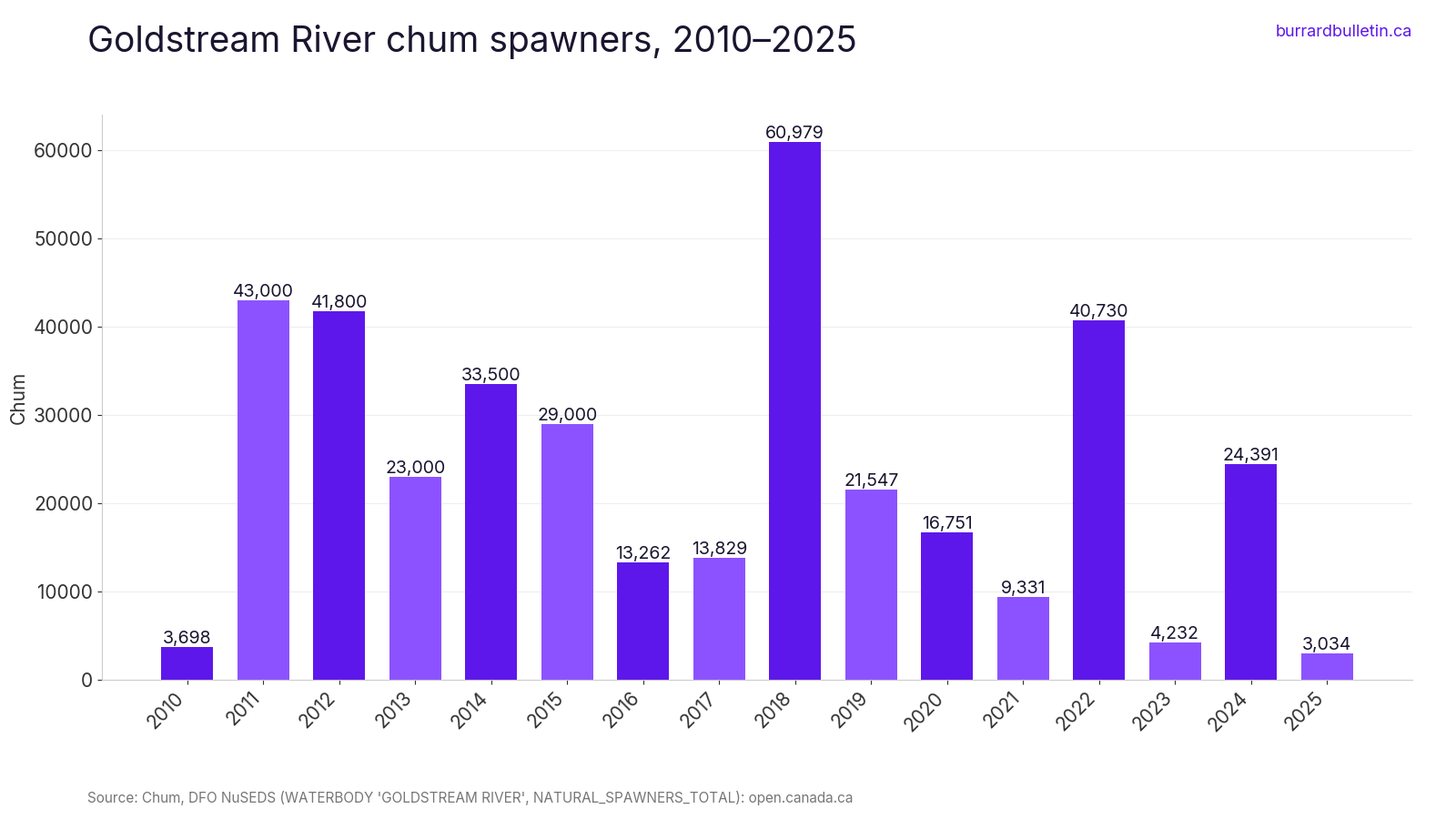
Runs vary enormously. DFO’s records show 60,979 chum in 2018 but only 3,034 in 2025, a weak year. The chart below shows how much it swings.
The best viewing is late October through November. Take BC Ferries to Swartz Bay and drive to the day-use entrance at the junction of Highway 1 and Finlayson Arm Road, 16 km northwest of Victoria. BC Parks warns of congestion on Highway 1 at the entrance during the run.
Keep pets leashed and out of the water. Watch from the trails and platforms, since BC Parks lists slippery riverbanks as a hazard. Fishing isn’t allowed in the park.
8. Tenderfoot Creek Hatchery (Brackendale)
Where: 1000 Midnight Way, Brackendale (Squamish)
When: 8 am to 3 pm daily. Chum in November, coho Nov to Jan
Cost: No admission fee listed on DFO’s page
Getting there: About 80 km, roughly 1.5 hours via Highway 99 and Squamish Valley Road
Tenderfoot is DFO’s hatchery for coho, pink, chum and chinook in the Squamish River watershed. It releases more than 3.3 million smolts a year. DFO points out that keeping these runs going also helps sustain the area’s bald eagles, which is the link between this stop and the Eagle Run nearby.
The season here starts later than in the Fraser Valley. Adult chum are listed for November and adult coho from November to January. There are self-guided tours with information signs. Guided tours happen when operations allow, so call ahead.
Hours are 8 am to 3 pm daily. DFO’s page, last updated in 2023, says public washrooms are closed, so plan for that.
Take the Sea to Sky north and turn left onto Squamish Valley Road just before Alice Lake Provincial Park. Drive 4 km to Cheekye, take the right fork for 4 km, then turn right on Midnight Way for 1 km. Go in late November or December and add the Eagle Run.
7. Mossom Creek and Noons Creek Hatcheries (Port Moody)
Where: Port Moody (Ioco area; Noons Creek at 300 Ioco Road)
When: Mossom: Sundays (hours not confirmed). Noons Creek: Saturdays 9 to 11 am
Cost: Not stated
Getting there: Noons Creek about 24 km, roughly 35 min. Mossom Creek about 29 km, roughly 45 min
Port Moody has two volunteer-run hatcheries. Mossom Creek Hatchery and Education Centre, run by the Burrard Inlet Marine Enhancement Society, is one of the longest-running community hatcheries in BC. It marks 50 years in 2026. In 2023 it earned the Rick Hansen Foundation’s Gold Accessibility Certification.
Mossom welcomes volunteers and visitors every Sunday, though current visiting hours aren’t confirmed. The Noons Creek hatchery at 300 Ioco Road, run by the Port Moody Ecological Society, enhances coho and chum. Its volunteers invite people to drop in Saturday mornings from 9 to 11.
Neither group lists formal fall viewing hours or a fall 2026 event. These are working hatcheries, not attractions. Go during the volunteer times and ask what’s in the creek that week.
6. Inch Creek Hatchery (Dewdney)
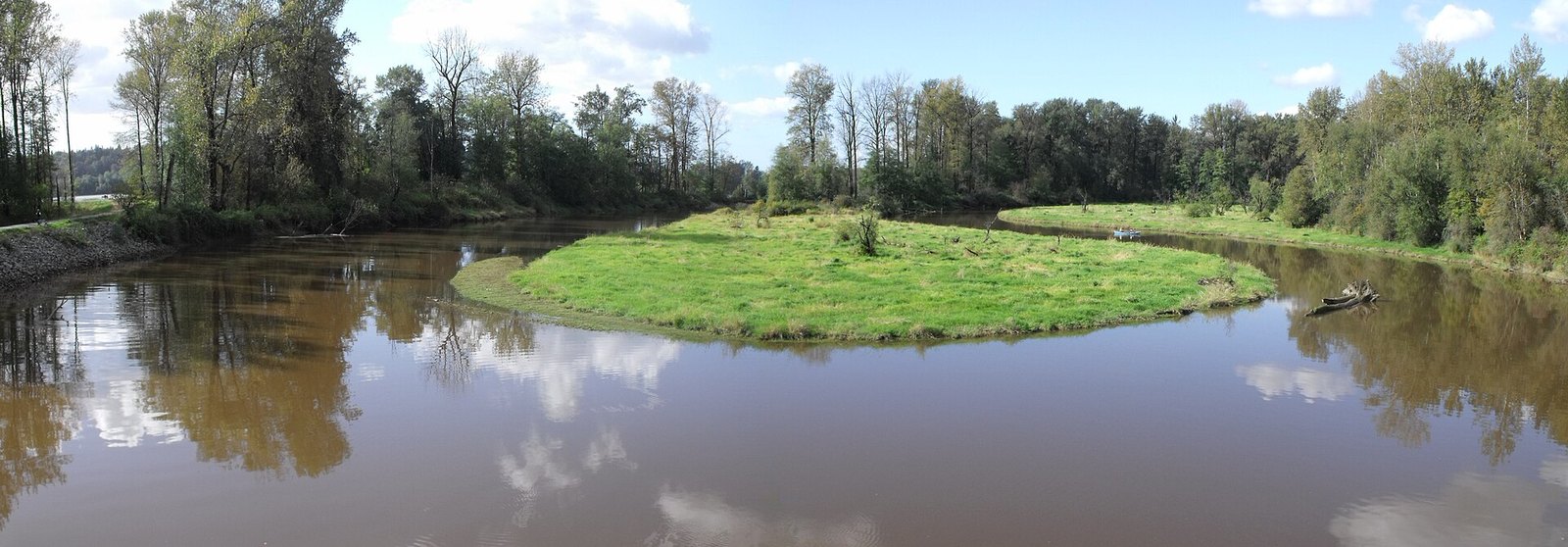
Where: 38620 Bell Road, Dewdney (east of Mission)
When: 9 am to 3 pm daily. Coho and chum adults in November
Cost: No admission fee listed on DFO’s page
Getting there: About 81 km, roughly 1.5 hours. Highway 7 to Dewdney, Hawkins Pickle Road to Bell Road, about 3 km
Inch Creek raises coho, sockeye, chum and steelhead for Fraser River tributaries such as the Pitt and Stave rivers. The whole operation runs on groundwater from wells next to the site.
This is a November stop. DFO lists both adult coho and adult chum for November, so it picks up as Weaver winds down.
The hatchery is a host site for the Fraser Valley Bald Eagle Festival, which DFO says takes place in mid-November, with displays on salmon and wildlife. The 2026 festival dates aren’t posted yet, so check the DFO Inch Creek page before you plan around it.
Drive about 10 km east of Mission on Highway 7 to Dewdney, turn at Hawkins Pickle Road, which becomes Bell Road, and follow hatchery signs about 3 km. It’s on the way to Harrison Mills, so it fits a November loop with Chehalis.
5. Kanaka Creek Regional Park and Bell-Irving Hatchery (Maple Ridge)
Where: Kanaka Creek Regional Park, 256 Street area, Maple Ridge
When: Park 7 am to 7 pm until Nov 2, then 7 am to 6 pm to Dec 31. Open house Sun Nov 8, 11 am to 2 pm
Cost: Regional park entry free. Open house admission not stated
Getting there: About 51 km, roughly 1 hour
The Bell-Irving Hatchery has been a partnership between the community group KEEPS, Metro Vancouver Regional Parks and DFO since 1983. KEEPS calls it the largest community partnership hatchery in the Lower Mainland. Its licensed quota is 325,000 chum and 80,000 coho a year. Pinks are only raised in odd-numbered years, so 2026 isn’t a pink year here.
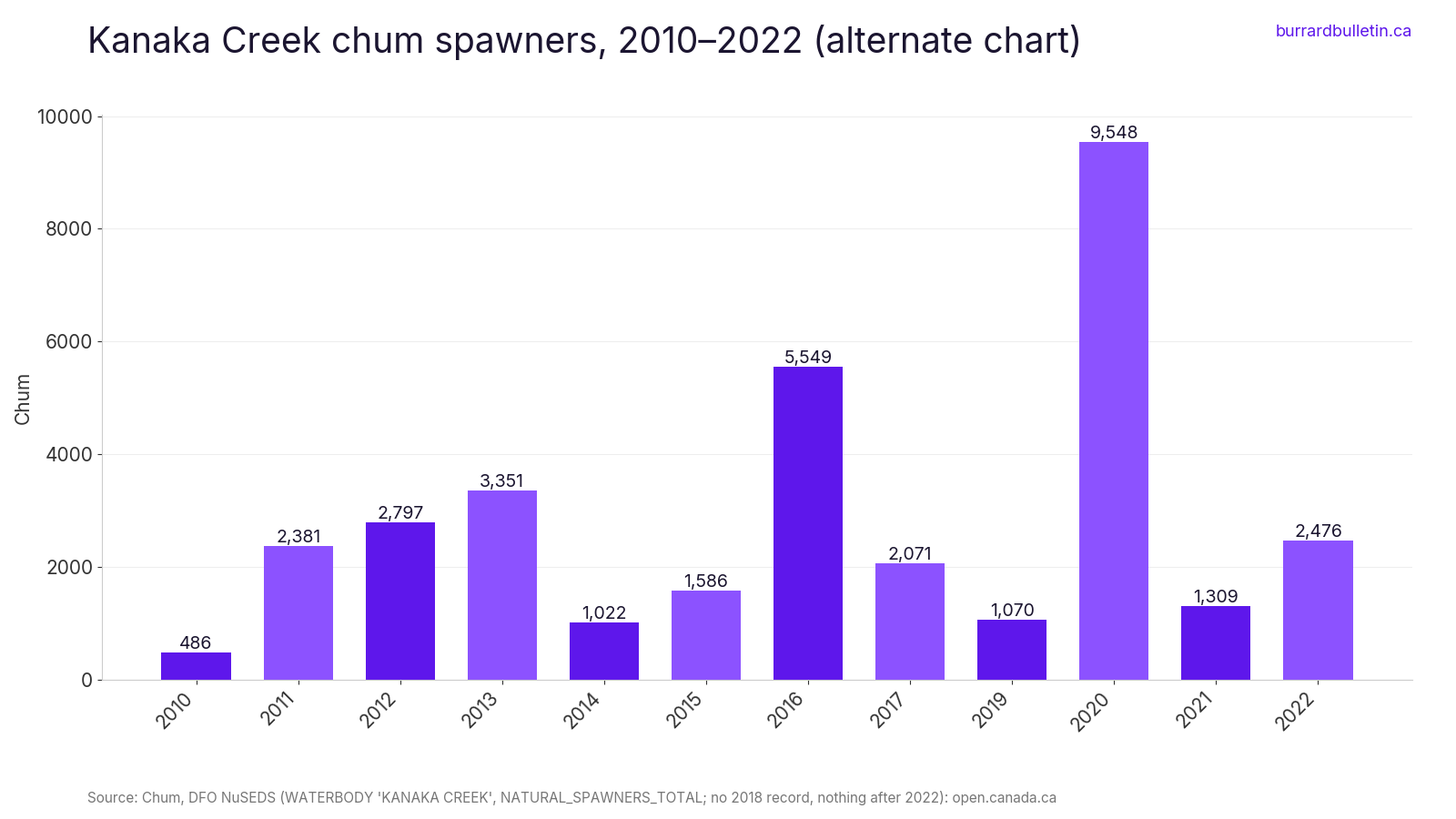
October through December, the hatchery’s work centres on the returning spawners. Metro Vancouver says the hatchery and its fish fence support chum, coho and cutthroat trout in Kanaka Creek. Returns vary a lot. DFO’s records show Kanaka chum ranging from 486 in 2010 to 9,548 in 2020, as the chart below shows. The Return of the Salmon event at the fish fence already happened on October 18.
The next date is the Bell-Irving open house on Sunday, November 8, 11 am to 2 pm, at the Kanaka Creek Watershed Stewardship Centre, 11484 256th Street. You can watch thousands of salmon eggs being fertilized. Admission for the open house isn’t stated.
Dogs are allowed on leash. The hatchery is accessible with assistance because of gravel areas. If you walk to the falls, stay back from the cliff edges and out of the canyon. Park hours are on Metro Vancouver’s Kanaka Creek page.
4. Chilliwack River Hatchery (Chilliwack River Valley)
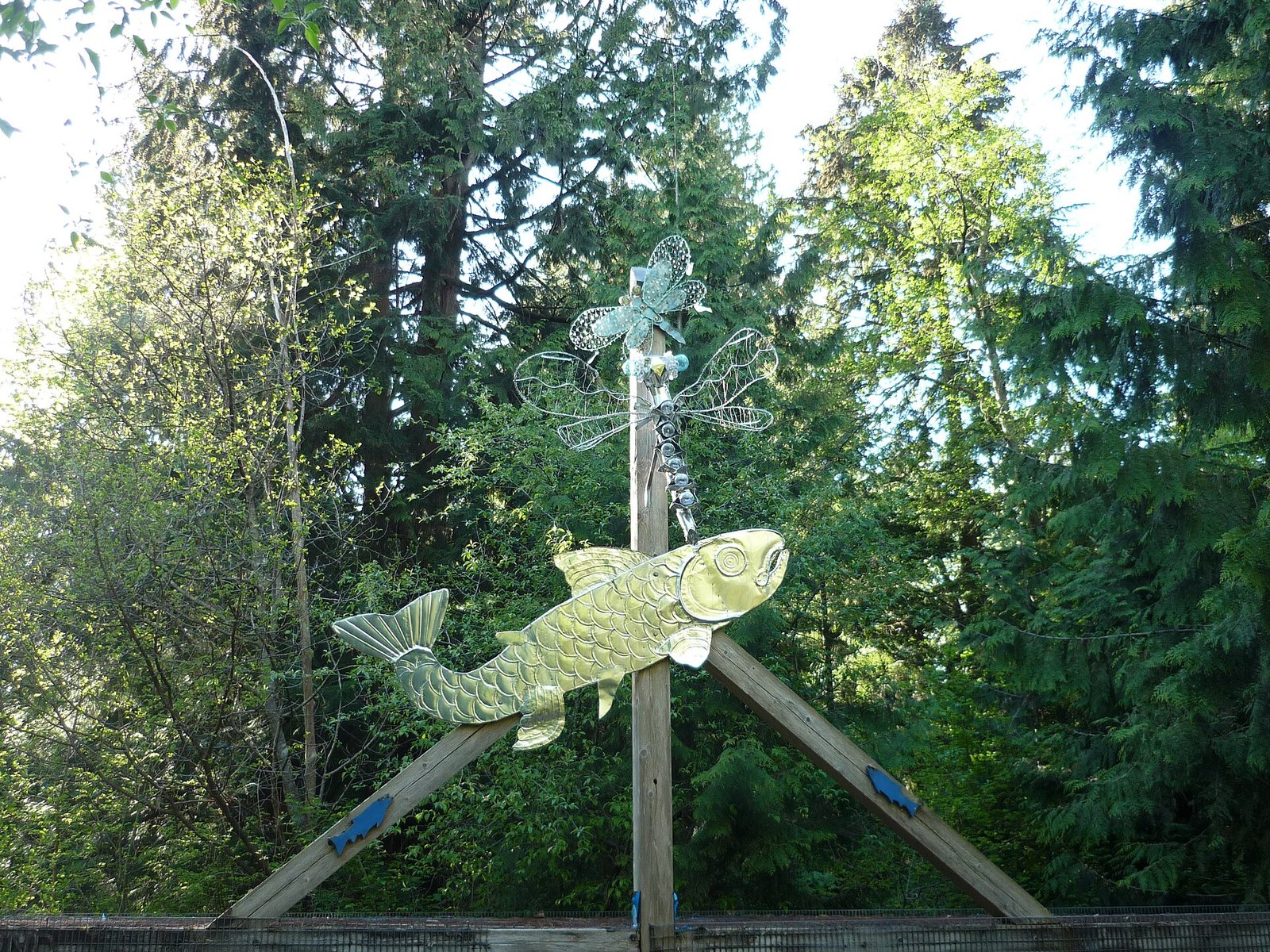
Where: 55205 Chilliwack Lake Road, Chilliwack River Valley
When: 8 am to 4 pm daily. Chinook Aug to Nov, coho Oct to Dec
Cost: No admission fee listed on DFO’s page
Getting there: About 118 km, roughly 1 hr 55 min. Highway 1 exit 119, Vedder Road, then 20 km up Chilliwack Lake Road
DFO built this hatchery in 1981 to help bring local salmon back toward historic levels. Adult chinook are on site from August to November and adult coho from October to December. A visit in late October or November can catch both species.
The public tour is a self-guided loop of about 30 minutes. The site is paved, with lots of parking, wheelchair access and washrooms beside the Egg Take Shelter. Groups can phone ahead to arrange viewing of adult salmon being trapped, sorted and spawned, which is the closest you’ll get to seeing how a hatchery actually works.
Getting there is part of the trip. Take Highway 1 to exit 119, head south on Vedder Road, turn left onto Chilliwack Lake Road before the Vedder Crossing Bridge, then drive 20 km along the river to just past the Slesse Creek Bridge. Hours are 8 am to 4 pm daily, and DFO asks you to call to confirm holiday hours.
Public parking is 100 m past the hatchery on the main road. Parking for visitors with disabilities is through the main gate.
3. Chehalis River Hatchery (Harrison Mills)
Where: 16250 Morris Valley Road, near Harrison Mills
When: 8 am to 3 pm daily. Best adult viewing mid-October through November
Cost: No admission fee listed on DFO’s page
Getting there: About 106 km, roughly 1 hr 55 min. Highway 1 to exit 92 for Mission, about 20 minutes east on Highway 7, then 6 km up Morris Valley Road from the Sasquatch Inn
DFO built the Chehalis hatchery in 1982 to boost salmon stocks in the Chehalis and Harrison rivers. Today it raises coho, chinook, chum and pink salmon, plus steelhead and sea-run cutthroat trout. It works with the Chehalis First Nation.
The tour is self-guided. You follow numbered display panels around the site, and the loop takes about half an hour. The site is paved, with lots of parking, wheelchair access and public washrooms by the main building, which makes it one of the easier stops for strollers and anyone with mobility needs.
DFO says the best time to see adult salmon is mid-October through November, and adult coho are listed September to November. That gives Chehalis a longer window than Weaver, so it still works after the sockeye peak is over. DFO’s page still carries a “closed to the public until further notice” line in its code, though it appears to be disabled, and the page lists daily hours of 8 am to 3 pm. Call 604-796-2281 before you go to confirm it’s open.
It closes an hour before Weaver. Do Chehalis first, then drive the extra 6 km or so up Morris Valley Road.
2. Hoy Creek Hatchery and Salmon Come Home (Coquitlam)
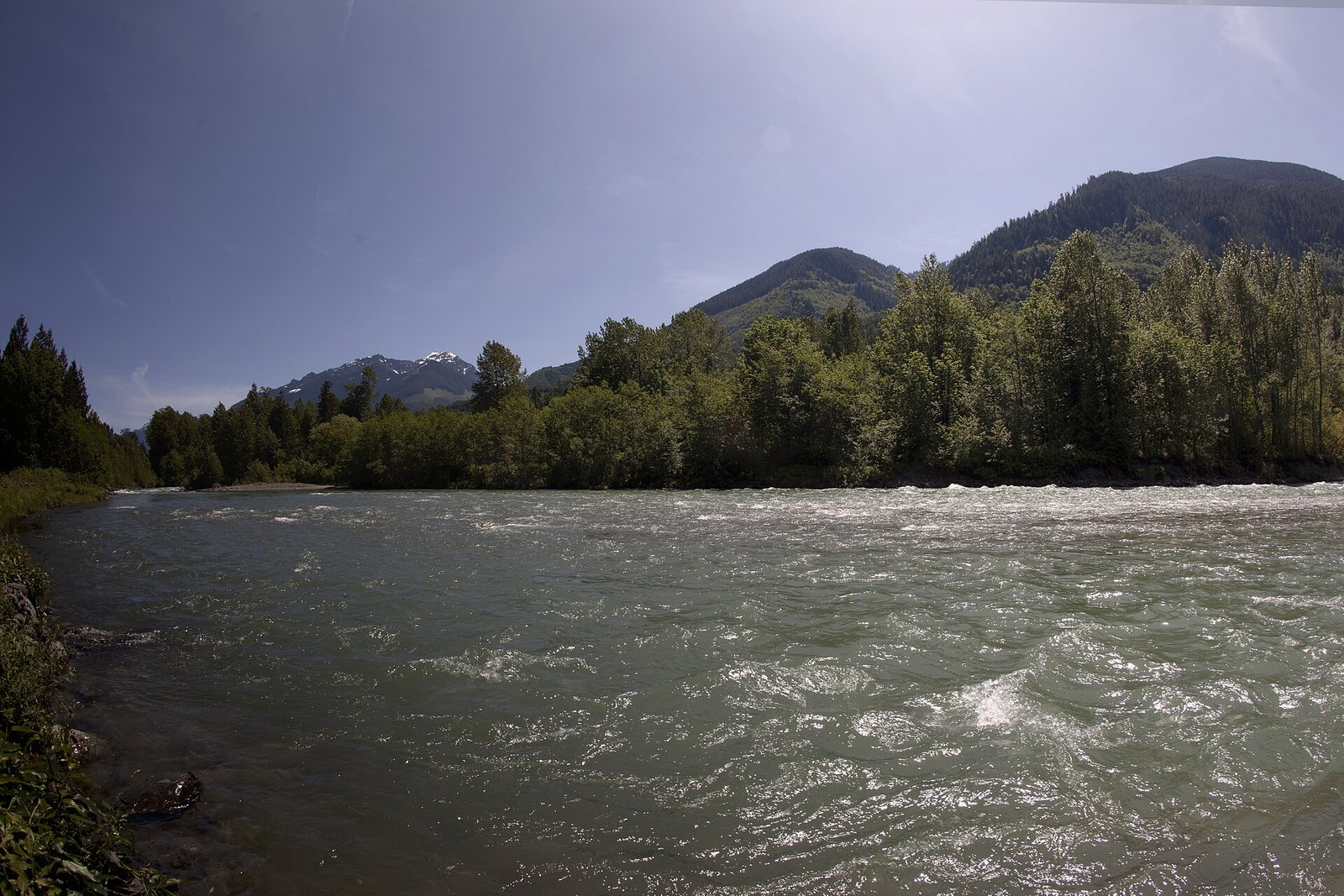
Where: Hoy Creek Linear Park, Coquitlam Town Centre
When: Event Sun Oct 25, 11 am to 3 pm. Chum early Oct to mid-Nov, coho late Oct to mid-Dec
Cost: Free
Getting there: About 32 km, roughly 40 min. SkyTrain Millennium Line to Lafarge Lake-Douglas Station
Every fall the City of Coquitlam and the Hoy-Scott Watershed Society celebrate the salmon coming back to local creeks. The City calls Hoy Creek Linear Park one of the best viewing spots it has. It’s also one of the closest salmon walks to downtown, and an easy one to reach by SkyTrain.
This year’s Salmon Come Home event is Sunday, October 25, 11 am to 3 pm, at the Hoy Creek Hatchery. It’s free. The program includes salmon talks with Fisheries and Oceans Canada, along with family activities and performances listed on the City’s event page.
You don’t need the event to see fish. Chum usually run here from early October to mid-November and coho from late October to mid-December. The City posts a printable trail map and a nature scavenger hunt, which help with kids.
Take the Millennium Line to Lafarge Lake-Douglas Station, cross Pinetree Way and follow Guildford Way to the trailhead. Parking near the trail is limited. On Sundays there’s free parking in the City staff lot by City Hall, off Burlington Drive, plus Town Centre Park. The City warns that bears are active along salmon streams right now, so talk or clap near the creek and keep dogs leashed.
1. Weaver Creek Spawning Channel (Harrison Mills)
Where: Morris Valley Road, near Harrison Mills (Fraser Valley)
When: Oct 1 to Dec 31, 8 am to 4 pm daily. Sockeye Oct 6 to Nov 1, peak Oct 15 to 25
Cost: No admission fee listed on DFO’s page
Getting there: About 112 km, roughly 2 hours. Highway 7 east from Mission about 30 km to Harrison Mills, then about 12 km north on Morris Valley Road
DFO built this channel in 1965 beside Weaver Creek to give sockeye more room to spawn. It runs 3 km. Mostly sockeye use it, with smaller numbers of chum and pink, and they lay their eggs naturally in the gravel. Tours are self-guided, so you walk the channel at your own pace. There’s a picnic area, public parking and portable toilets.
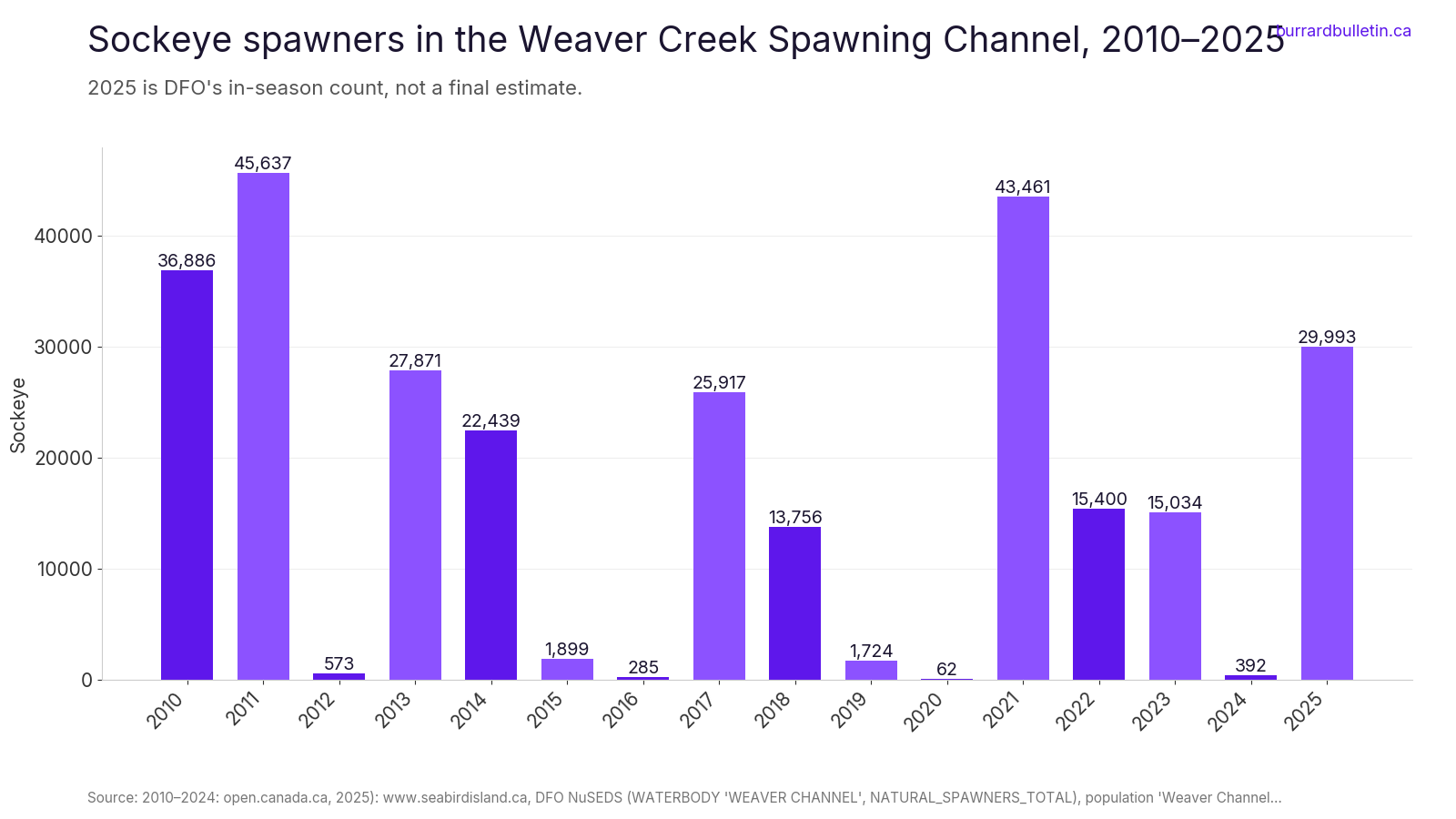
The numbers are the story here. The channel holds about 45,000 spawning adults, and returns swing hard on sockeye’s four-year cycle. DFO’s records show 36,886 sockeye in 2010, 15,400 in 2022 and just 392 in 2024. In 2025, DFO’s in-season count had 29,993 sockeye loaded into the channel. This year sits on the same cycle as 2010, 2014, 2018 and 2022, which you can see in the chart below. One caution: Weaver sockeye are a late-run Fraser stock, and on August 18, 2026 the Fraser Panel downgraded the late run to 1 million fish after it tracked below forecast.
Timing is tight. Spawning sockeye are usually in the channel October 6 to November 1, with the peak October 15 to 25, so late October is the tail end of the best window. The site is open October 1 to December 31, 8 am to 4 pm daily. This fall DFO lists it as open with limited access because of low water, and warns it may close on short notice.
Call the channel’s voicemail at 604-796-9444 before you leave town. Then pair it with the Chehalis River Hatchery on the same road.
| Site | Species timing | Hours | Status 2026 | Drive est |
|---|---|---|---|---|
| Weaver Creek Spawning Channel | Sockeye Oct 6 to Nov 1 (peak Oct 15 to 25) | Oct 1 to Dec 31: 8 am to 4 pm daily | Open, limited access (low water) | 112 km / ~2 h |
| Chehalis River Hatchery | Chinook Aug to Oct; coho Sep to Nov; best adult viewing mid-Oct to Nov | 8 am to 3 pm daily | Open | 106 km / ~1 h 55 |
| Chilliwack River Hatchery | Chinook Aug to Nov; coho Oct to Dec | 8 am to 4 pm daily | Open | 118 km / ~1 h 55 |
| Inch Creek Hatchery | Coho Nov; chum Nov | 9 am to 3 pm daily | Open | 81 km / ~1 h 30 |
| Tenderfoot Creek Hatchery | Chinook Jul to Sep; chum Nov; coho Nov to Jan | 8 am to 3 pm daily | Open (washrooms closed) | 80 km / ~1 h 30 |
| Hoy Creek (Coquitlam) | Chum early Oct to mid-Nov; coho late Oct to mid-Dec | Trail; event Sun Oct 25 11 am to 3 pm | Open | 32 km / ~40 min |
| Brackendale Eagle Run | Eagles Nov to Feb (peak Nov to Dec) | Dyke viewing area | Park closed Oct 1 to Mar 31, dyke open | 69 km / ~1 h 15 |
| Capilano River Hatchery | Chinook Oct to Nov; coho Jun to Nov | Park 7 am to 7 pm (to Nov 2) | HATCHERY CLOSED from Oct 1, 2026 | 11 km / ~20 min |
| Goldstream (Vancouver Island) | Chum; best late Oct to Nov | Provincial park | Open | Ferry required |
When to go
- Late October: the last of the Weaver Creek sockeye peak (October 15 to 25), with chum building in Coquitlam creeks.
- November: chum and coho at Inch Creek, chum at Tenderfoot, adults at Chehalis, and the best of Goldstream.
- Late October to mid-December: coho in Coquitlam creeks and at the Chilliwack hatchery.
- November to December: peak eagle viewing in Brackendale.
Dates on the calendar for 2026
- Sunday, October 25, 11 am to 3 pm: Salmon Come Home at Hoy Creek Hatchery, Coquitlam. Free.
- Sunday, November 8, 11 am to 2 pm: Bell-Irving Hatchery open house, Kanaka Creek, Maple Ridge, with egg fertilization.
- Already happened: Return of the Salmon at Kanaka Creek’s fish fence on October 18.
- Not posted yet: 2026 dates for the Fraser Valley Bald Eagle Festival (DFO says mid-November) and the Hyde Creek Salmon Festival.
Closed or off-limits this fall
- Capilano River Hatchery: closed to the public from October 1, 2026, for construction. The regional park stays open.
- Seymour River Hatchery in the Lower Seymour Conservation Reserve: the access road isn’t open to the public.
- Brackendale Eagles Provincial Park: closed to recreation October 1 to March 31. Watch from the Eagle Run dyke.
- Weaver Creek: open with limited access because of low water, and may close on short notice. Call 604-796-9444 first.
Getting there
Transit directions are only published for Hoy Creek, via the Millennium Line to Lafarge Lake-Douglas Station, and Capilano River Regional Park. Plan on driving to the rest. Drive times in this guide are routing estimates from downtown with no traffic, and real weekend times will be longer. The Fraser Valley sites are reached on Highway 1 or Highway 7. Tenderfoot and Brackendale are off the Sea to Sky. Goldstream needs a ferry to Swartz Bay.
What to bring
- Binoculars, especially for Brackendale, where the eagles sit on the far bank.
- A leash. Kanaka Creek and Goldstream require one, and it’s a sensible precaution at Hoy Creek, where the City warns bears are active along the creek this time of year.
- A plan for washrooms. Weaver has portable toilets, and DFO’s page says Tenderfoot’s washrooms are closed.
- Lunch for the Harrison Mills day. Weaver has a picnic area.
Etiquette and safety
- Stay on trails and platforms and out of the water. Keep pets leashed and out of the creek.
- Bears feed on spawning salmon. Make noise near streams by talking or clapping, and keep at least 100 m away if you see one.
- River edges and canyons are slippery. On the Capilano, alarms warn when water released from Cleveland Dam is about to raise the river.
- Fishing rules are separate from viewing, and fishing isn’t allowed at all in Goldstream Provincial Park.
Making a day of it: the Harrison Mills loop
Chehalis (8 am to 3 pm) and Weaver (8 am to 4 pm) are both on Morris Valley Road, about 6 km apart. Do Chehalis first because it closes earlier. Inch Creek (9 am to 3 pm) is on Highway 7 at Dewdney, on the way out from Mission. In late October, Weaver’s sockeye are the reason to go. In November, Weaver’s sockeye are done by the 1st, so lean on Chehalis and Inch Creek instead.
| Site | Tour style | Washrooms | Accessibility | Dogs |
|---|---|---|---|---|
| Weaver Creek Spawning Channel | Self-guided, picnic area | Portable toilets | Not stated | Not stated |
| Chehalis River Hatchery | Self-guided panels, about 30 min | By the main building | Paved, wheelchair access | Not stated |
| Chilliwack River Hatchery | Self-guided loop, about 30 min; groups can book spawning viewing | Beside the Egg Take Shelter | Paved, wheelchair access, accessible parking through main gate | Not stated |
| Inch Creek Hatchery | Group tours by advance booking | Not stated | Not stated | Not stated |
| Tenderfoot Creek Hatchery | Self-guided signs; guided as operations allow | Listed as closed (page updated 2023) | Not stated | Not stated |
| Hoy Creek Linear Park | Self-guided trail, printable map | Not stated | Not stated | On leash |
| Kanaka Creek / Bell-Irving | Hatchery visit; open house Nov 8 | Not stated | Hatchery accessible with assistance; Cliff Falls not wheelchair accessible | On leash |
| Mossom Creek Hatchery | Sunday visits | Not stated | Rick Hansen Foundation Gold certification (2023) | Not stated |
| Goldstream Provincial Park | Trails, platforms, visitor centre programs | Not stated | Not stated | On leash, out of the water |
Losing Capilano for a season means a longer drive for most people, but the run itself hasn’t gone anywhere. If you only have one weekend in late October, make it Weaver and Chehalis while the sockeye peak lasts. If you’d rather stay close, Hoy Creek is a SkyTrain ride away. Come November, follow the chum up the Sea to Sky to Tenderfoot and the Eagle Run. Check the site pages before you go, because Weaver can close on short notice.
Get the weekend plan in your inbox. Burrard Bulletin is a free email on what’s actually on from Vancouver to Whistler. Sign up here.
Photo credits
- Spawning Sockeye and Chum Salmon.tif by Kissmykumbaya, CC BY 4.0 (combined into a montage, cropped). Via Wikimedia Commons.
- MaleFemaleSockeyeSpawning.jpg by William Rosmus, CC BY-SA 4.0 (combined into a montage, cropped). Via Wikimedia Commons.
- Leaping salmon (52428743863).jpg by marneejill from Canada, CC BY-SA 2.0 (combined into a montage, cropped). Via Wikimedia Commons.
- Fraser River, Chilliwack, BC – Salmon Run.jpg by Todd Gordon Brown, CC BY-SA 3.0 (combined into a montage, cropped). Via Wikimedia Commons.
- Chilliwack River Provincial Park 03.jpg by Ginaima, CC BY-SA 4.0 (resized). Via Wikimedia Commons.
- Hoy Creek art (34353628442).jpg by Niall Williams from Coquitlam, Canada, CC BY-SA 2.0 (resized). Via Wikimedia Commons.
- Kanaka Creek Oxbow – panoramio.jpg by Kiwibirdman, CC BY 3.0 (resized). Via Wikimedia Commons.
- Bald eagles eating salmon (39714815601).jpg by Analise Zocher, CC BY 2.0 (resized). Via Wikimedia Commons.
- Capilano Salmon Hatchery – Vancouver BC.jpg by eekim, CC BY 2.0 (resized). Via Wikimedia Commons.