16 Canucks Moments Vancouver Fans Still Talk About
Every Canucks fan has their own version of the argument. Best goal. Worst night. The trade that changed everything. Most of those stories come back to a short list of dates, and you can still visit many of the places where they happened.
This list covers the moments that keep coming up. It starts with a 3-1 loss to the Los Angeles Kings on opening night in 1970 and ends with Pavel Bure’s banner going up in 2013. Some are goals. Some are banners. Two are riots, because the city’s hockey history includes those too. For each one you get the date and the story. Where the place still exists, you also get how to see it.
The team has reached the Stanley Cup Final three times and has not won it yet. That goes a long way to explaining why memories run so long here. Practical notes along the way cover getting to Rogers Arena and the Pacific Coliseum, where the artifacts are kept, and how to handle a big game night downtown.
16. The 1994 riot (Robson and Thurlow, downtown)
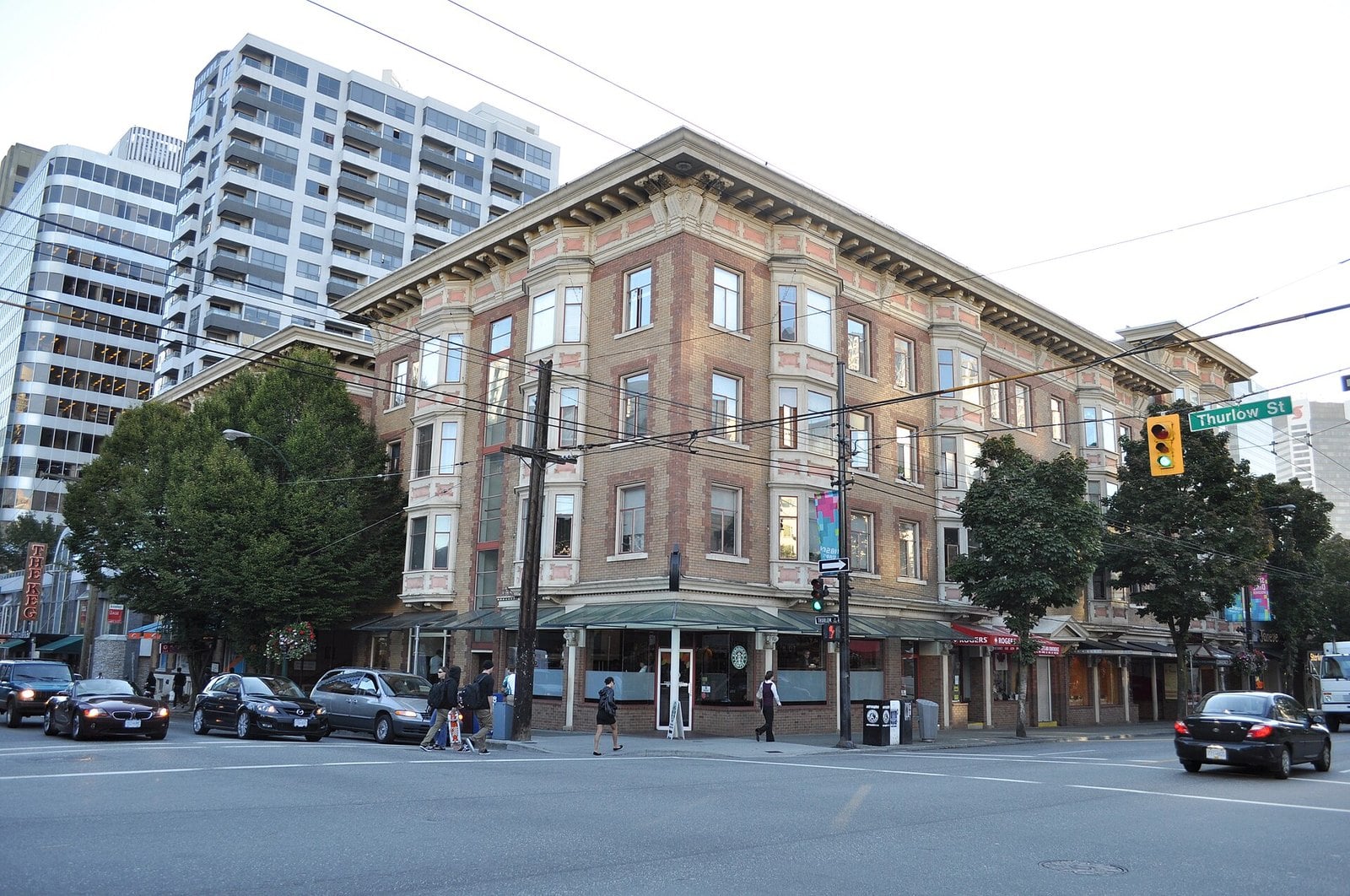
Where: Robson Street at Thurlow Street, downtown Vancouver
When: June 14, 1994
The 1994 run ended with a loss in the Final. On the night of June 14, a planned street party at Robson and Thurlow turned into a riot.
CBC’s summary of the night: 50,000 to 70,000 people in the streets and a total cost of $1.1 million.
Most fans would rather forget this one. It belongs on the list because of what came after. The investigation that followed produced recommendations that shaped how the city planned for big crowds in 2011.
15. The Ring of Honour begins (Rogers Arena)
Where: Rogers Arena
When: Launched in the 2010-11 season
Cost: Event ticket needed to go inside
Getting there: Expo Line to Stadium-Chinatown
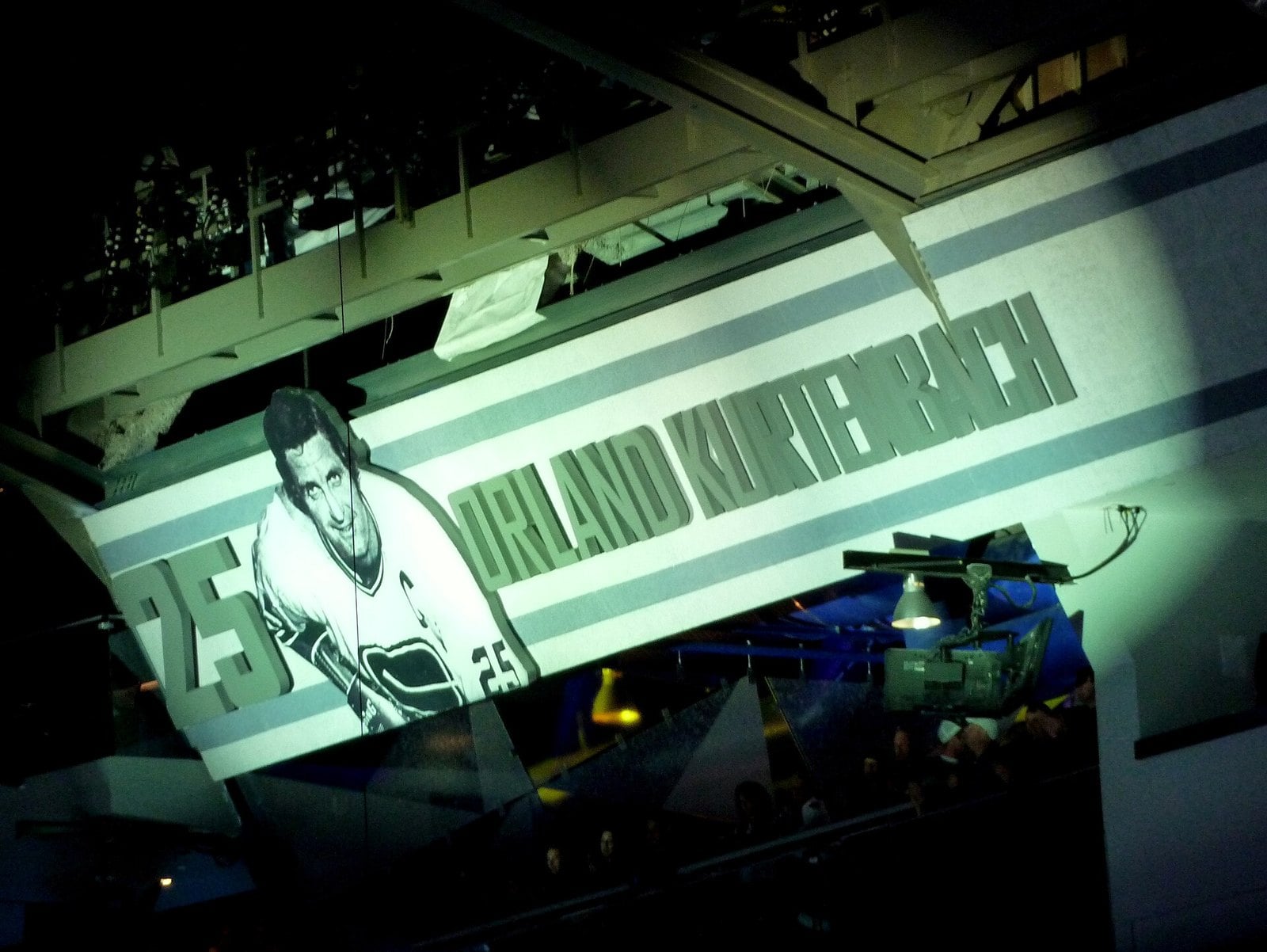
The Ring of Honour started in the 2010-11 season. It is the club’s second-highest honour, after retiring a number.
The first four members went in over two years: Orland Kurtenbach and Kirk McLean in 2010, then Thomas Gradin and Harold Snepsts in 2011. Pat Quinn followed in 2014. Mattias Ohlund, Alex Burrows and Roberto Luongo came after.
Tip: Kirk McLean, the goalie of the 1994 run, was the second person inducted.
14. Markus Naslund’s No. 19 and the Hall of Heroes (Rogers Arena)
Where: Rogers Arena
When: December 11, 2010
Cost: Event ticket needed to go inside
Getting there: Expo Line to Stadium-Chinatown
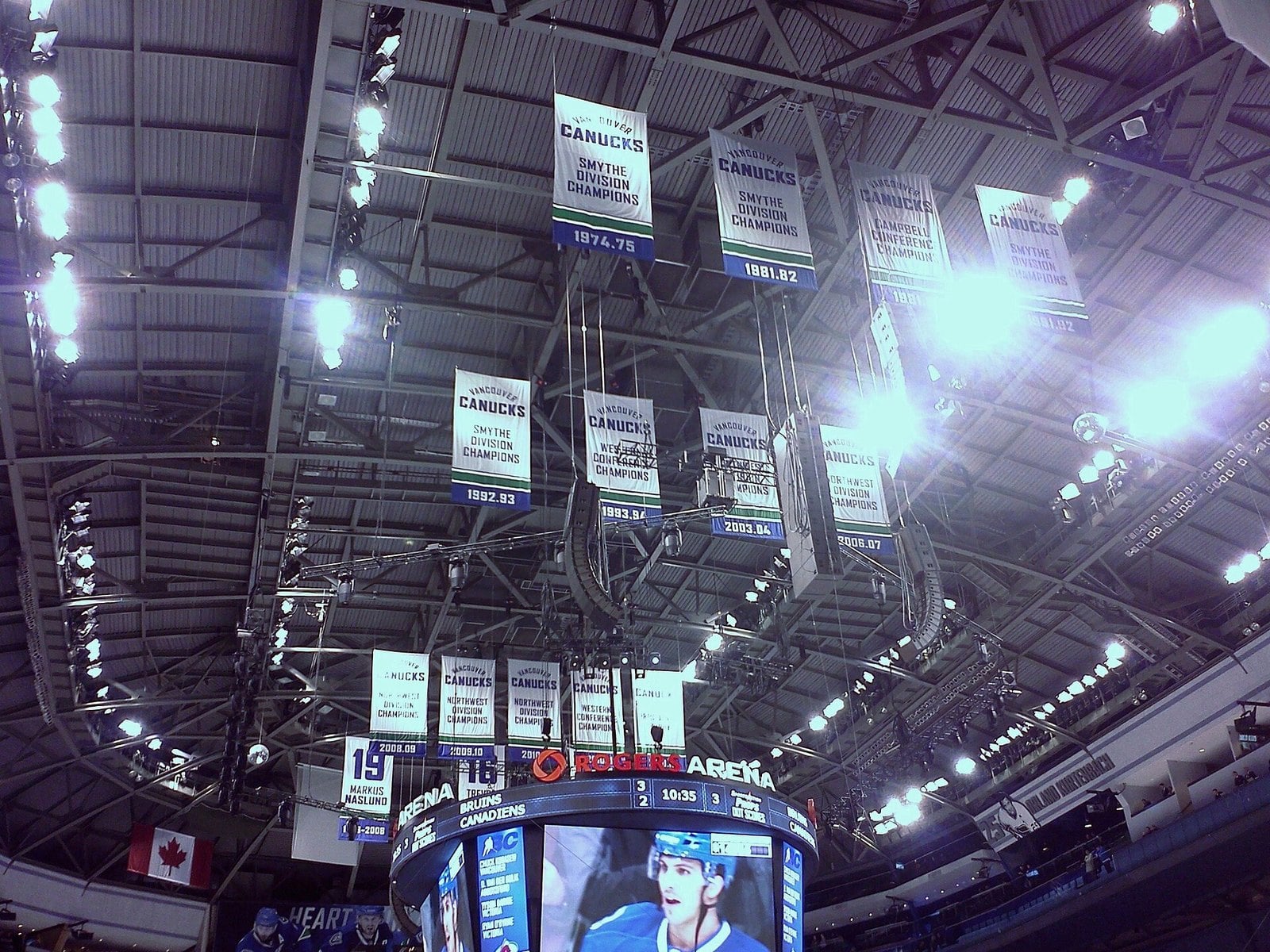
On December 11, 2010, before a home game, Markus Naslund’s No. 19 was retired. He was the third Canuck to get a banner, after Smyl and Linden.
He retired after the 2008-09 season as the club’s all-time points leader with 756. He also helped the young Sedins settle in.
Earlier that same day, the team unveiled its Hall of Heroes, an interactive display at Rogers Arena about the players whose numbers are retired. It may not still be there in its 2010 form, so ask arena staff on an event night if you want to find it.
13. Moving downtown: GM Place, now Rogers Arena (800 Griffiths Way)
Where: 800 Griffiths Way, downtown Vancouver
When: Opened 1995; Canucks home since the 1995-96 season
Cost: Ticketed venue
Getting there: Expo Line to Stadium-Chinatown (exit across from Gate 10); Lot 987 off Griffiths Way, 2 m height limit
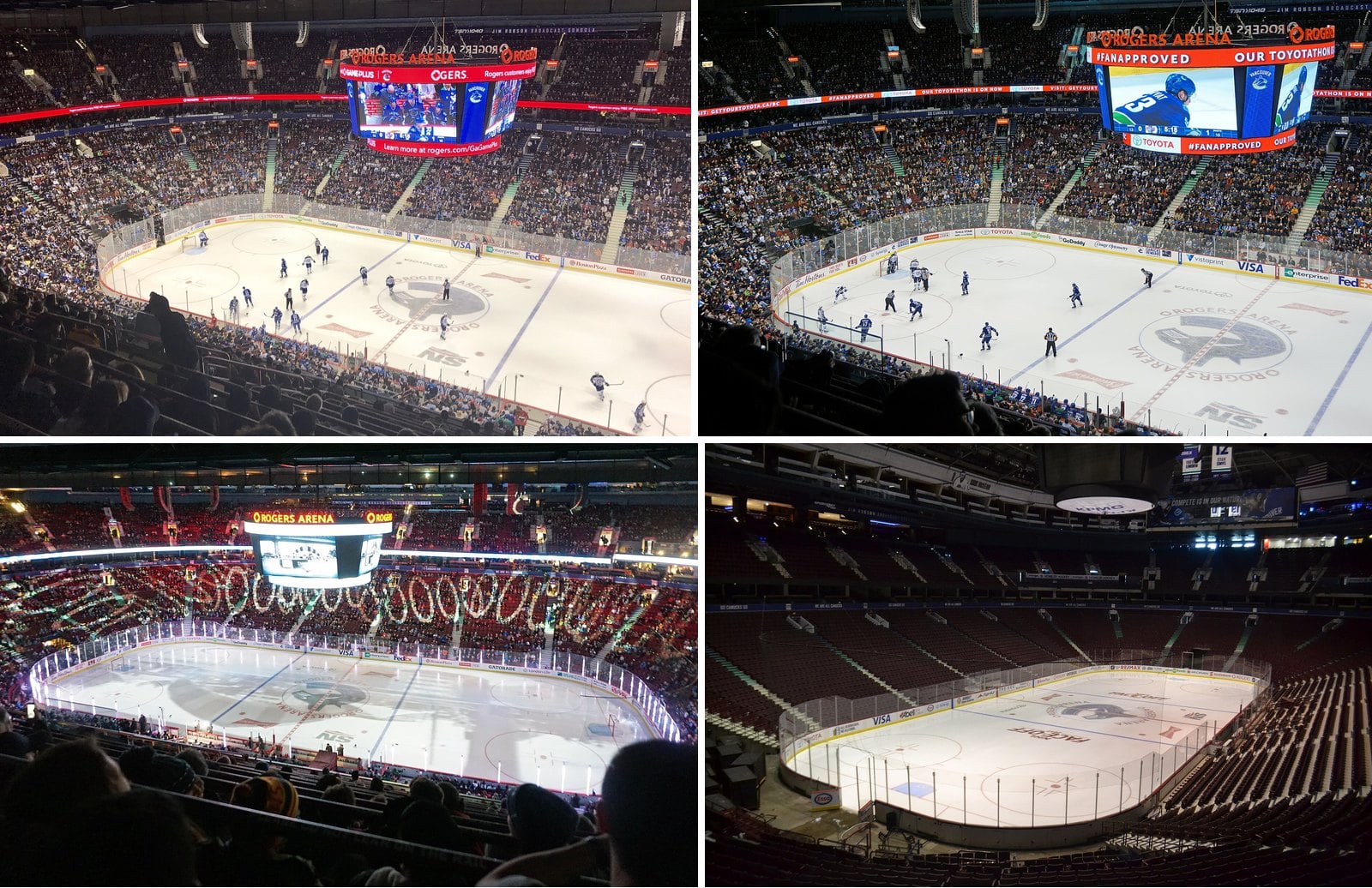
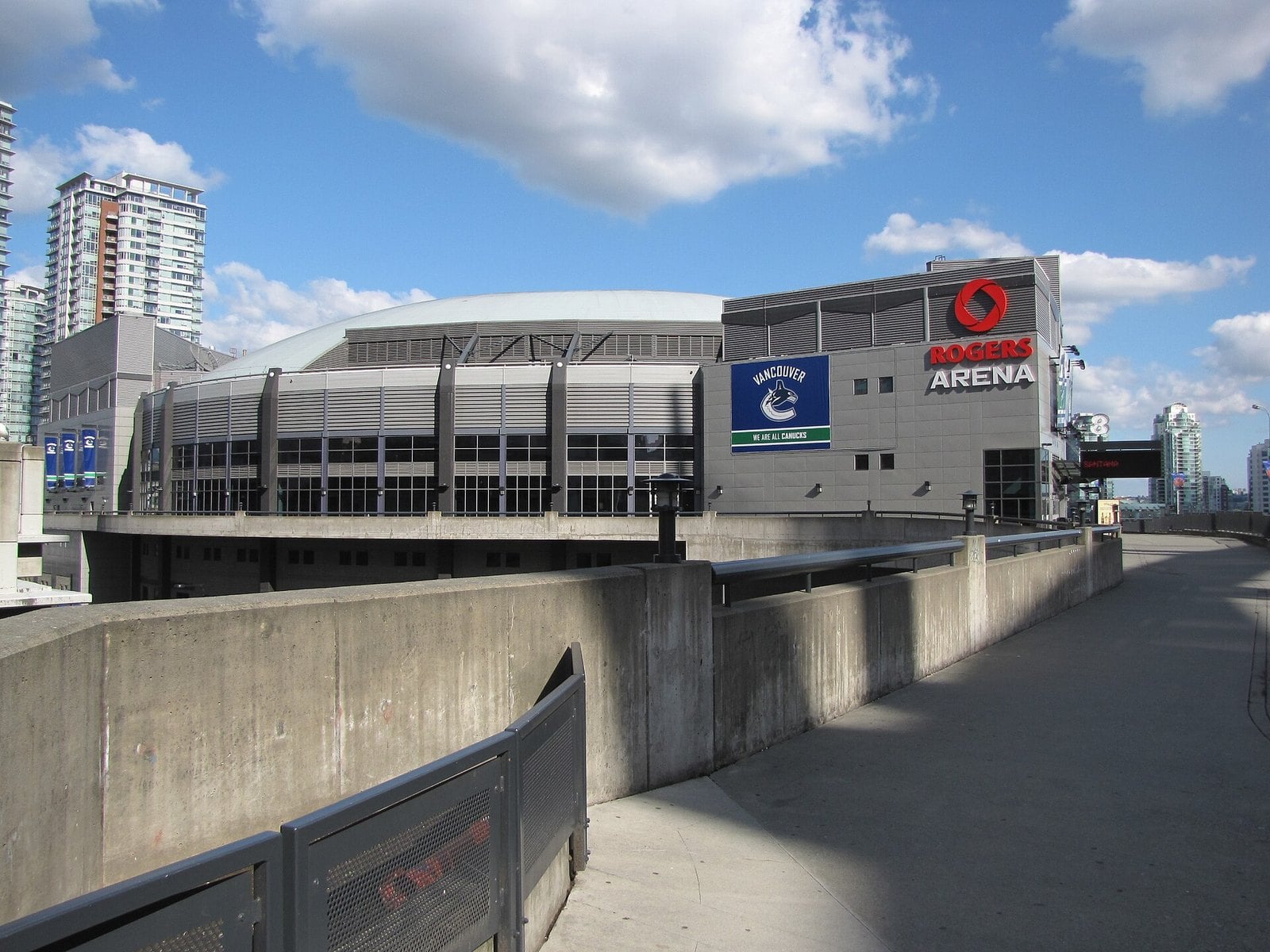
In 1995 the Canucks left the Coliseum for General Motors Place downtown. Fans called it The Garage. It is now Rogers Arena, and every Canucks banner hangs here.
The 2011 Final was played in this building. So was the 2010 Olympic men’s gold-medal game, when the arena went by another name.
SkyTrain is the easy way in. Stadium-Chinatown station on the Expo Line sits right next to the arena on Expo Boulevard. Use the Stadium entrance/exit across from Gate 10. Full details are on the arena’s parking and directions page.
Driving takes more planning. The underground parkade, Lot 987, is off Griffiths Way and has a 2 m height limit. For most events it opens to ticket holders no earlier than 15 minutes before doors, but the arena says it is not open to the public during Canucks games (only a limited number of reserved accessible stalls). On game nights, transit is the simpler choice.
12. The Pacific Coliseum is still in use (Hastings Park)
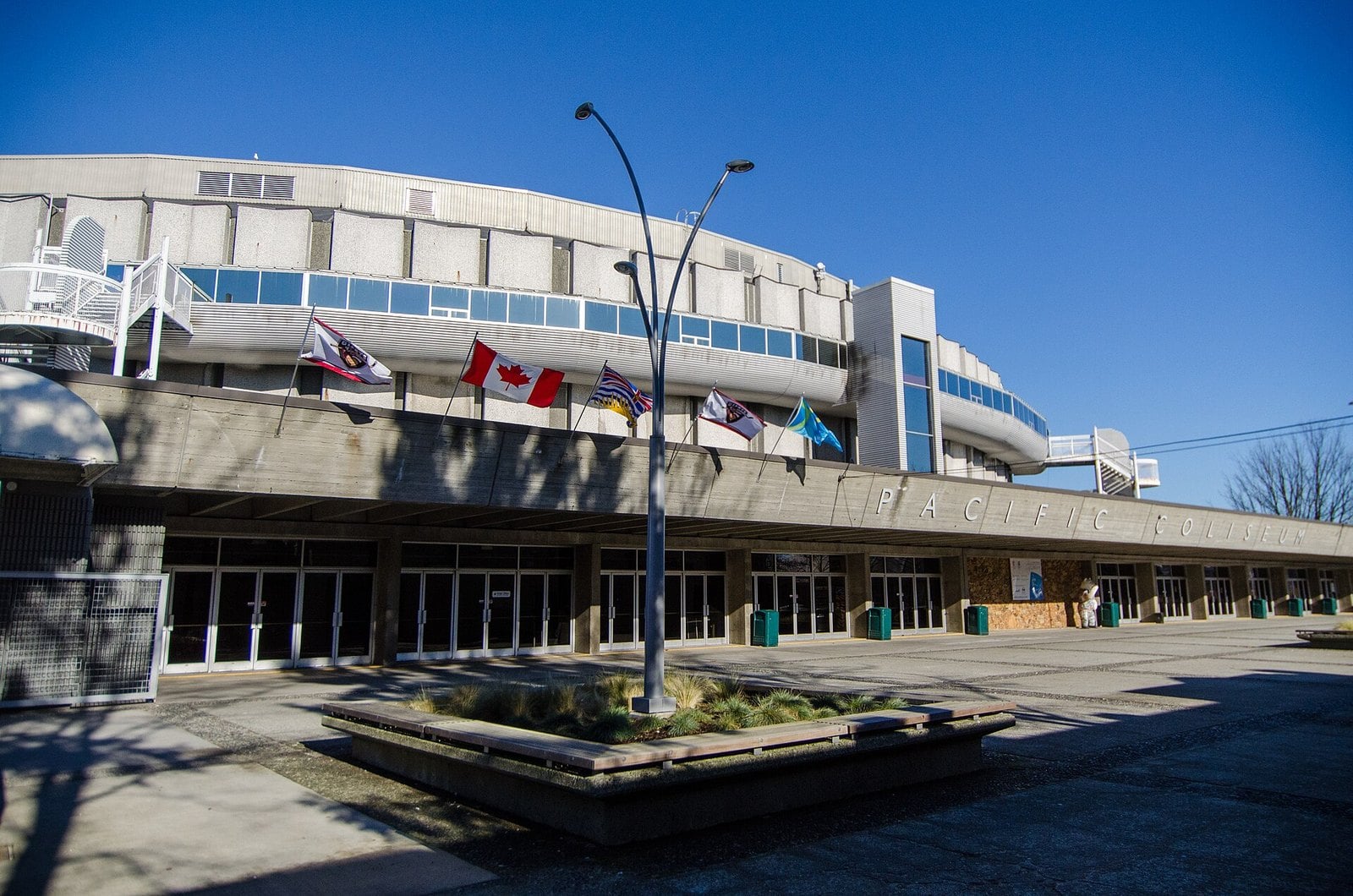
Where: Hastings Park (PNE), East Vancouver
When: Opened 1968. Goldeneyes home opener: Saturday, December 5, 2026, 1:00 pm PST vs Seattle
Cost: Single-game tickets on sale; see thepwhl.com for prices
Getting there: Hastings Park, East Vancouver
The Coliseum opened in 1968 and cost $6 million to build. The Canucks played there until 1995, when they moved downtown. For a quarter century, this was where Vancouver went to watch NHL hockey.
Today it is home to the PWHL’s Vancouver Goldeneyes. Their 2026-27 home season opens at the Coliseum on Saturday, December 5, 2026, at 1:00 pm PST against Seattle. Other listed home dates include December 12 against Las Vegas, December 22 against the Boston Fleet and January 2 against the New York Sirens. Check the PNE’s Goldeneyes schedule or the team page at thepwhl.com for the full list.
Single-game tickets are on sale through thepwhl.com, so check prices before you plan the day. Tip: a Goldeneyes game is the simplest way to stand inside the building where Towel Power took hold.
11. Stan Smyl’s No. 12 becomes the first retired number (Pacific Coliseum)
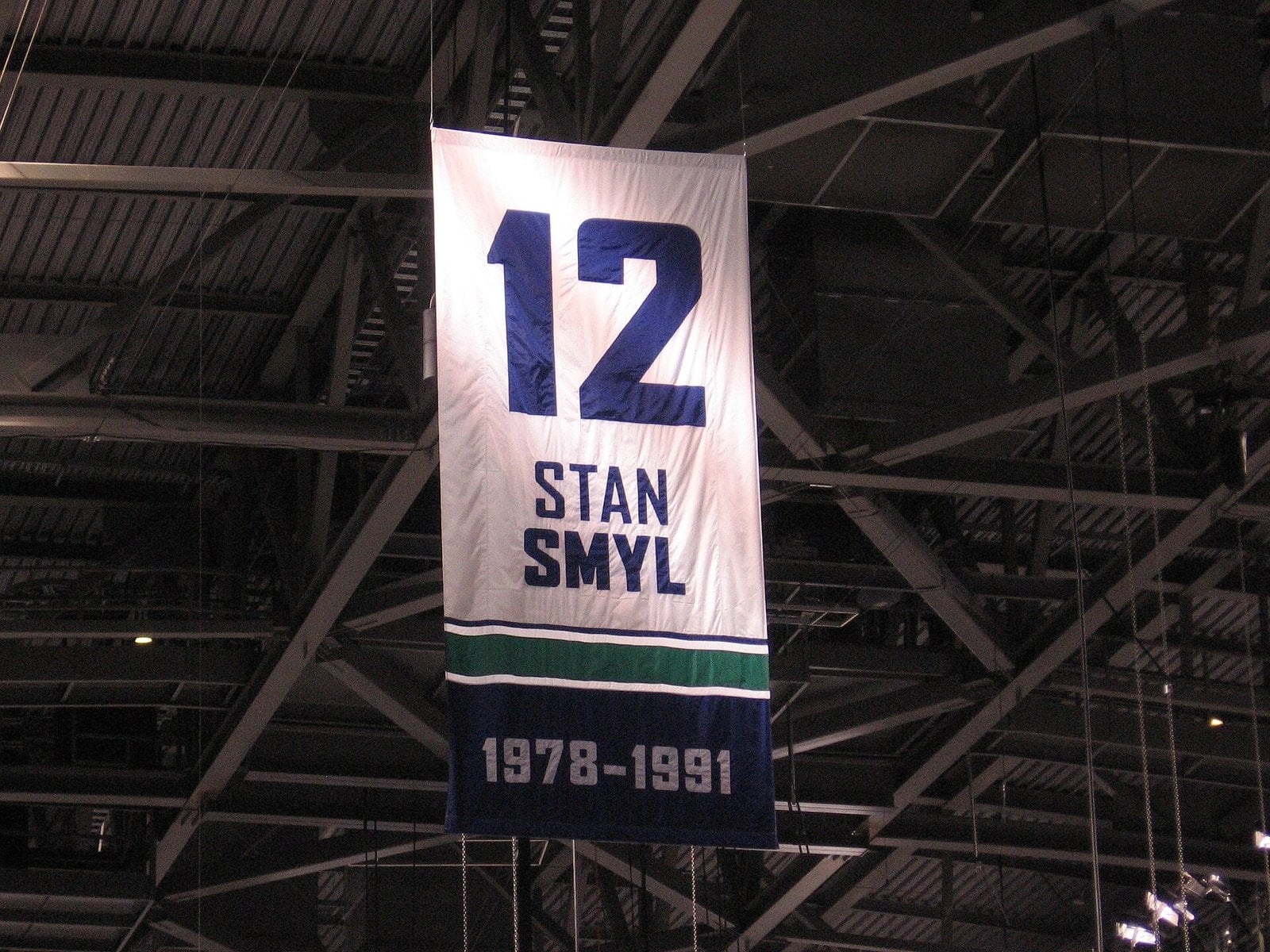
Where: Raised at the Pacific Coliseum; now at Rogers Arena
When: November 3, 1991
Cost: Event ticket needed to see the banner
Getting there: Rogers Arena, Expo Line to Stadium-Chinatown
Stan Smyl, the team’s longtime captain, was the first Canuck to have his number retired. The ceremony took place before a game at the Pacific Coliseum on November 3, 1991.
When the team moved downtown for the 1995-96 season, the banner moved with it. For 17 years, No. 12 was the only retired number in the rafters. No one joined it until 2008.
That makes Smyl’s the only banner first raised at the Coliseum. Every other one went up downtown. It now hangs at Rogers Arena, so you need an event ticket to see it. The team’s uniform numbers guide lists the retirement dates.
10. Opening night: the first NHL Canucks game (Pacific Coliseum)
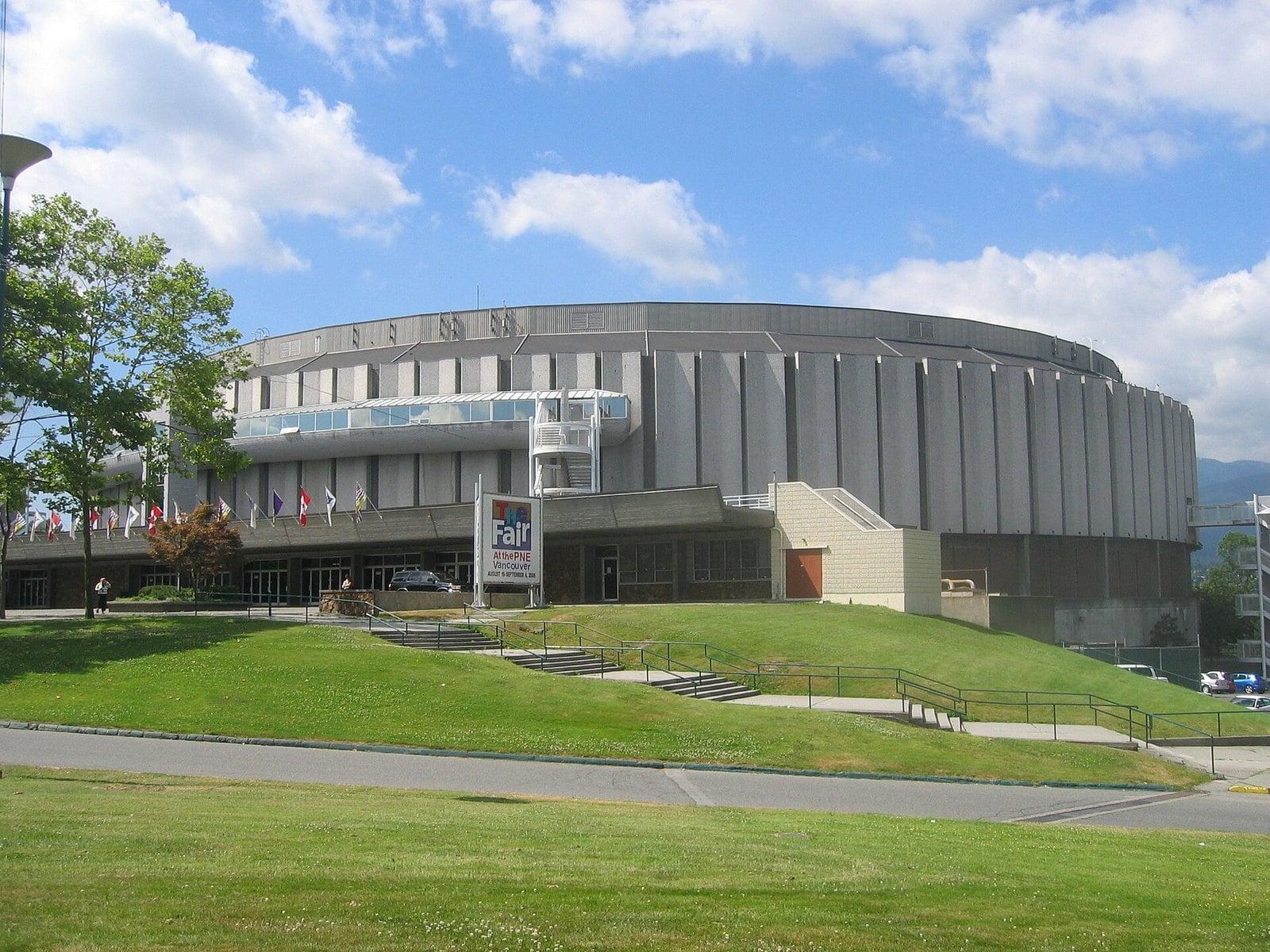
Where: Pacific Coliseum, Hastings Park, East Vancouver
When: October 9, 1970
Cost: Event ticket needed to go inside
Getting there: Hastings Park (PNE fairgrounds), East Vancouver
Vancouver’s NHL story starts with a loss. On October 9, 1970, the Los Angeles Kings beat the brand-new Canucks 3-1 at the Pacific Coliseum. The PNE’s own history records that the Canucks scored their first goal in the building against those same Kings.
It took the city two tries to get a team. Vancouver lost its bid in the NHL’s first expansion in 1967. It won in the second round in 1970. The Coliseum had been built partly to attract a franchise, so the arena was ready before the team was. The name wasn’t new either. Canucks had belonged to a minor-league Western Hockey League club.
The building still stands at Hastings Park in East Vancouver, home of the PNE fairgrounds. It is a working arena, so you need a ticket to an event to get inside. Tip: PWHL games are the easiest way in. They put you under the same roof the 1970 crowd sat under.
9. The 2011 riot and the plywood boards (downtown and the Museum of Vancouver)
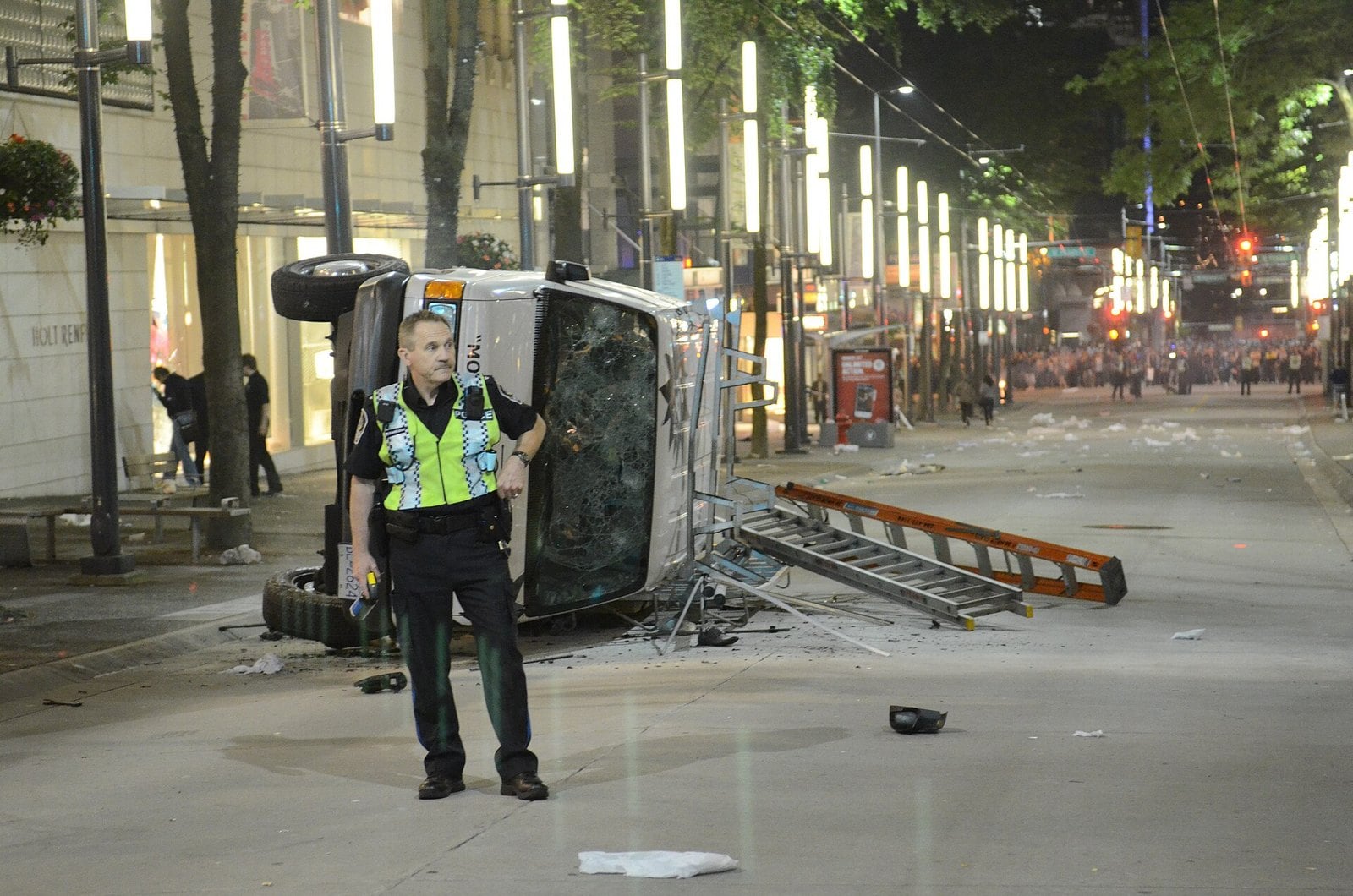
Where: Downtown Vancouver; boards held by the Museum of Vancouver, Vanier Park
When: June 15-16, 2011
Cost: Check with the Museum of Vancouver for admission and current displays
Getting there: Museum of Vancouver, Vanier Park
The 2011 Final ended in a loss on home ice, and a riot broke out downtown that night.
The next day is the part many locals prefer to remember. Thousands of residents came downtown to help clean up. They covered the plywood over smashed windows with messages saying the riot didn’t represent the real Vancouver.
Those boards were kept. The Museum of Vancouver took 86 of them into its permanent collection. Some were also displayed outside the Vancouver Art Gallery. The museum is in Vanier Park. The museum showed 15 of the boards in a 2012 exhibition. See the Museum of Vancouver’s riot boards page, and contact the museum before you go to ask whether any are on display now and what admission costs.
8. The twins win back-to-back scoring titles (NHL awards)
Where: NHL awards
When: 2009-10 and 2010-11 seasons
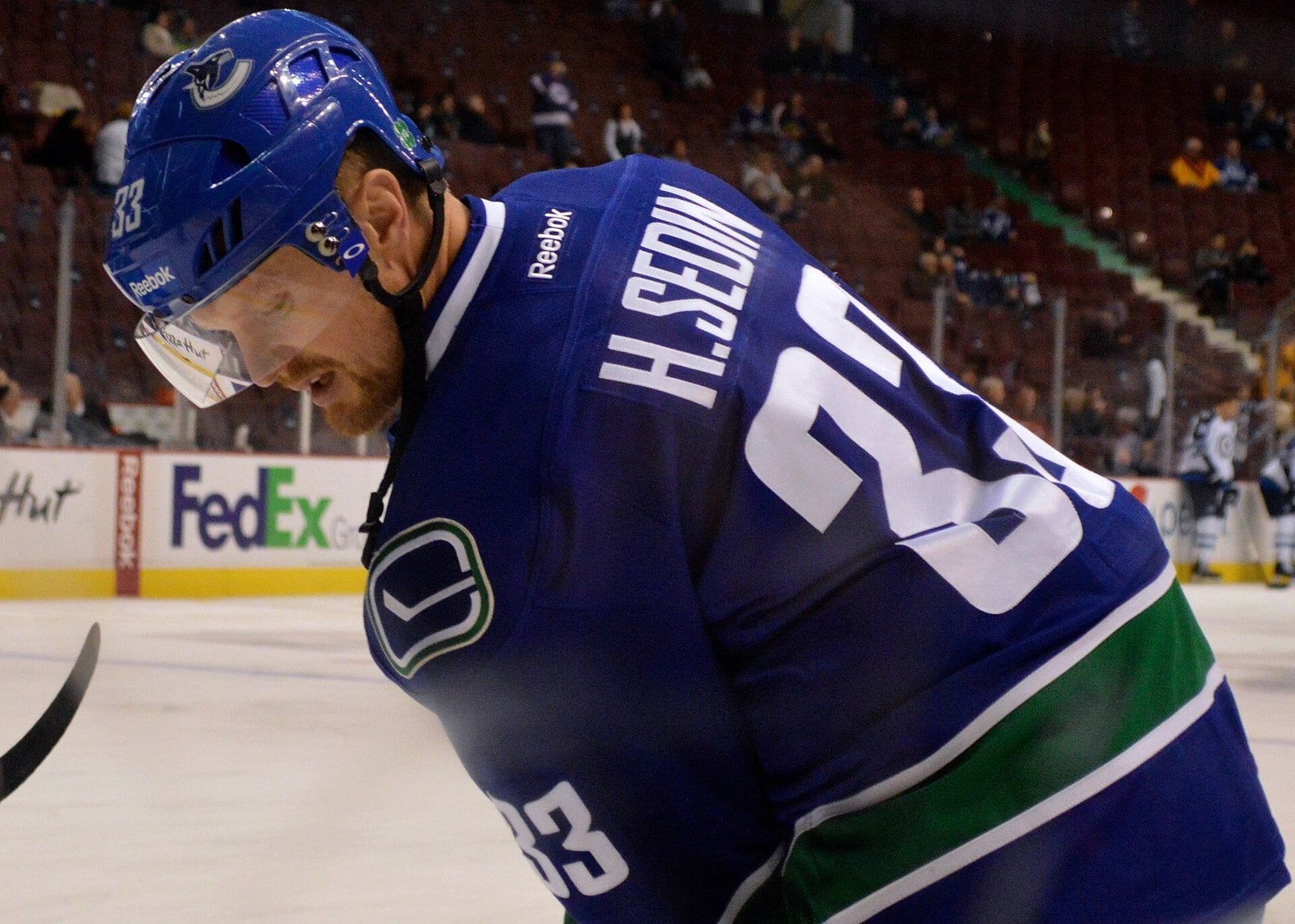
In 2009-10, Henrik Sedin won the Art Ross Trophy as the NHL’s top scorer. He also won the Hart Trophy as league MVP.
A season later, Daniel won the Art Ross. It was the first time brothers had won it in consecutive years.
The team rose with them. The 2010-11 Canucks won the franchise’s first Presidents’ Trophy, for the league’s best regular-season record, with a team-record 117 points. They won it again in 2012.
7. Burke’s draft-day deals land both Sedins (1999 NHL Entry Draft, Boston)
Where: 1999 NHL Entry Draft, Boston
When: 1999
General manager Brian Burke went to the 1999 draft in Boston already holding the third overall pick. One pick wasn’t going to land both Sedin twins.
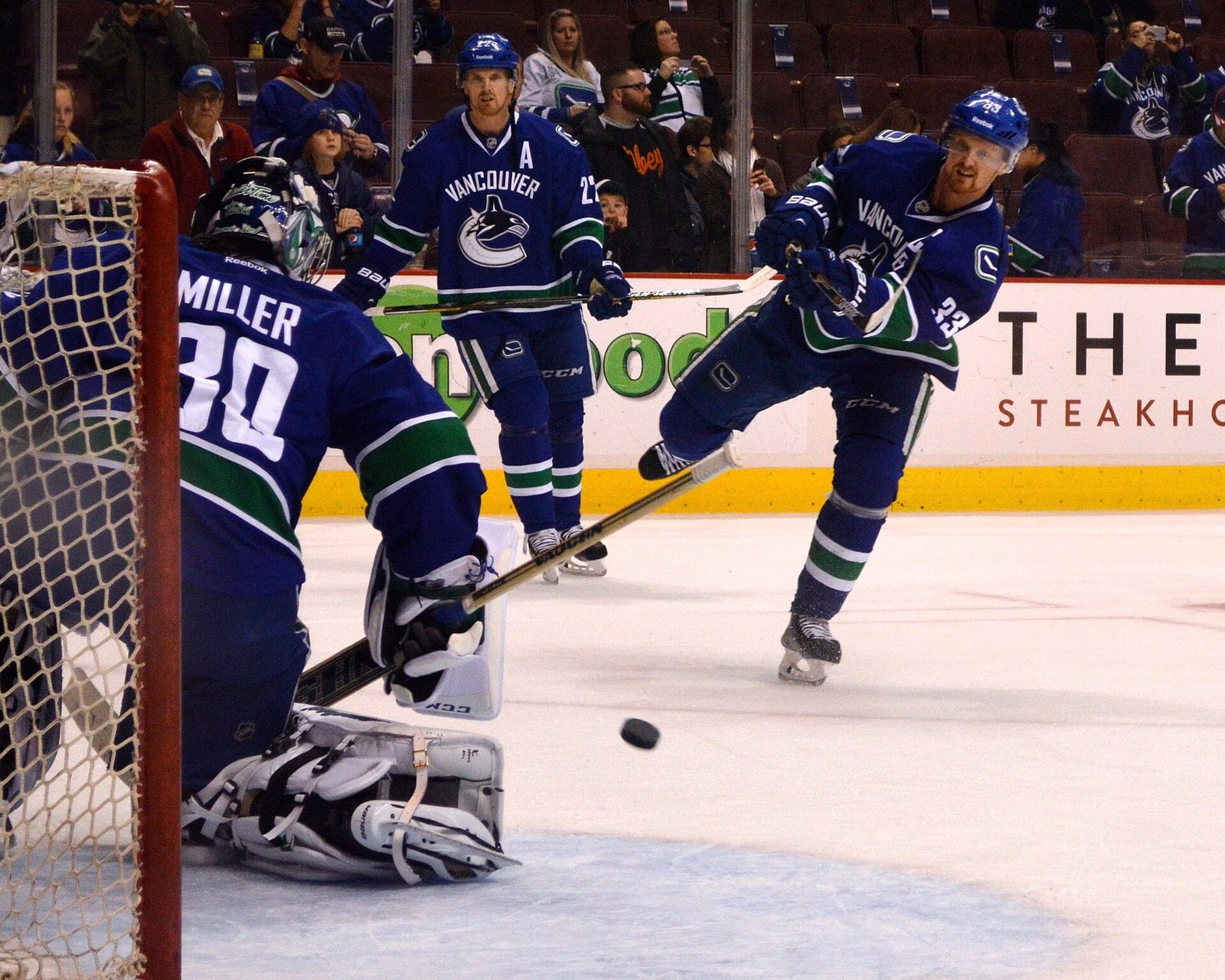
The dealing started the night before the draft. Burke made a series of trades that ended with Vancouver sending the first overall pick to Atlanta. Atlanta agreed to take Patrik Stefan. That left Daniel and Henrik Sedin available at second and third, and Vancouver took both.
The payoff took years to arrive. The twins spent their entire NHL careers in Vancouver. A lot of the later moments on this list run through them.
6. The Russian Rocket’s No. 10 is retired (Rogers Arena)
Where: Rogers Arena
When: November 2, 2013
Cost: Event ticket needed to see the banner
Getting there: Expo Line to Stadium-Chinatown
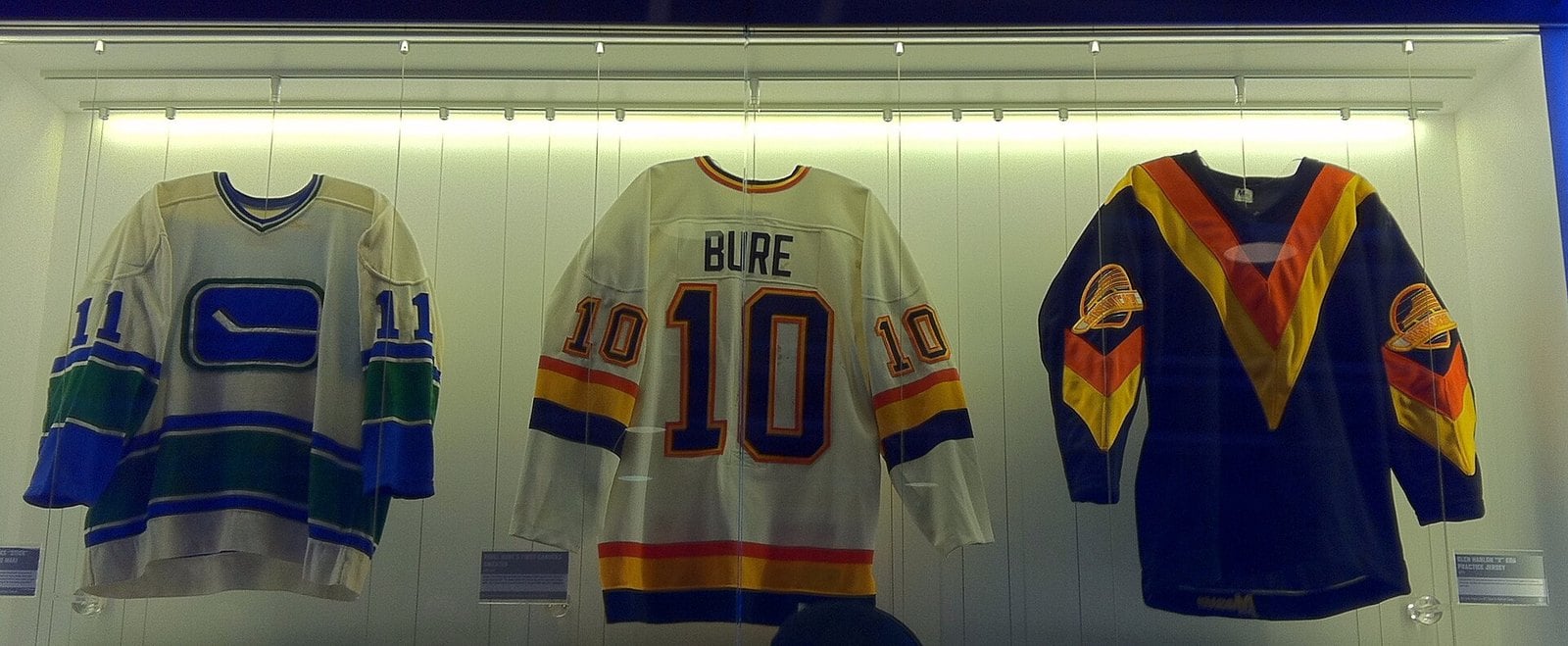
Pavel Bure left Vancouver on bad terms. Fans forgave him anyway. On November 2, 2013, his No. 10 went up before a game against the Leafs, and the crowd chanted his name.
The case was easy to make. In 2012 Bure became the first player elected to the Hockey Hall of Fame primarily as a Canuck. In the 1994 playoffs he led the team with 16 goals and 31 points in 24 games.
Trivia for the next argument: Bure briefly wore No. 96 from 1995 to 1997 before switching back to 10.
5. Luongo and the Golden Goal (Canada Hockey Place, now Rogers Arena)
Where: Canada Hockey Place (now Rogers Arena)
When: February 28, 2010
Getting there: Expo Line to Stadium-Chinatown
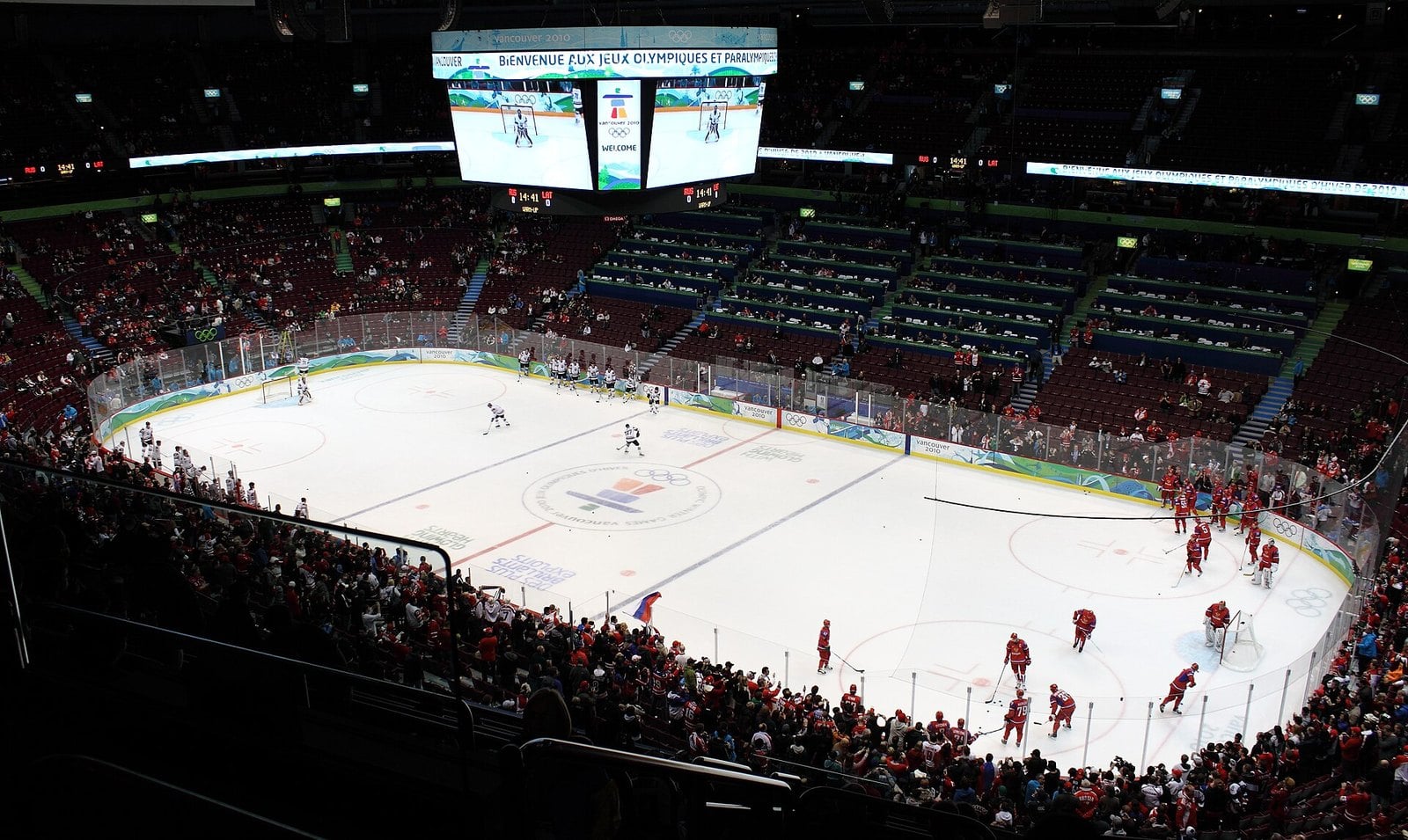
For the 2010 Winter Games, the Canucks’ arena was renamed Canada Hockey Place. On February 28, 2010, it hosted the men’s gold-medal game between Canada and the United States.
The Canucks connection was in the crease. Roberto Luongo was in net for Canada. The Americans tied the game after a scramble in front of him. Sidney Crosby scored the overtime winner.
The win sent the city into the streets to celebrate. Technically, it wasn’t a Canucks game. But it was the Canucks’ building and the Canucks’ goalie, and Luongo won Olympic gold in his home rink.
4. Trevor Linden’s No. 16 goes up (GM Place, now Rogers Arena)
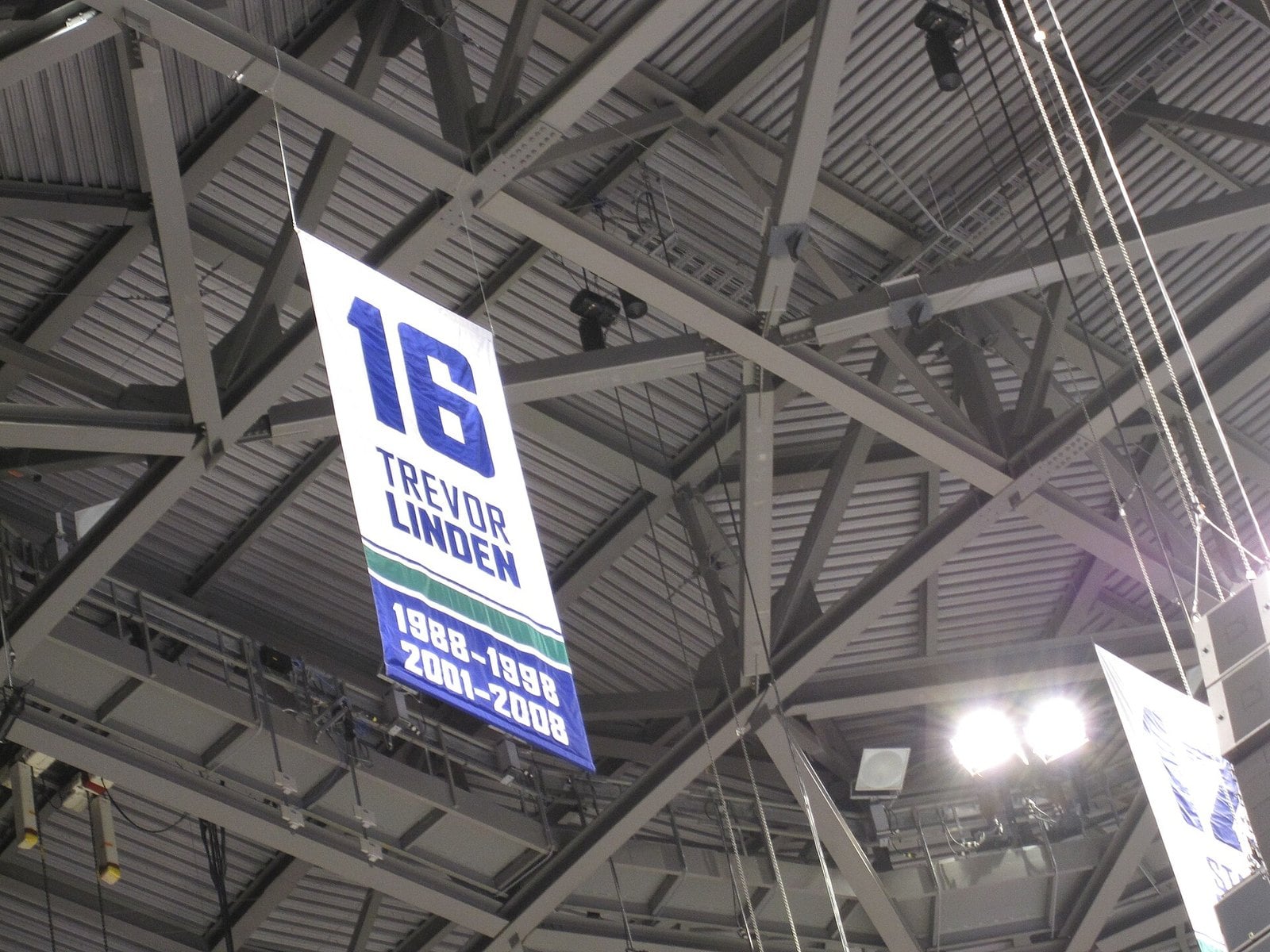
Where: GM Place (now Rogers Arena)
When: December 17, 2008
Cost: Event ticket needed to see the banner
Getting there: Expo Line to Stadium-Chinatown
On December 17, 2008, before a game against Edmonton, Trevor Linden’s No. 16 went to the rafters. He was the second Canuck to have his number retired and the first at GM Place.
The numbers explain why. Linden played 16 of his 19 NHL seasons in Vancouver. He became the team’s youngest captain at 21. He left as the franchise leader in regular-season games (1,140) and assists (415).
If you’re counting, 17 years separate the first two banners. That gap says a lot about how high the bar sits.
3. Eleven seconds: Burrows’ wraparound in the Final (Rogers Arena)
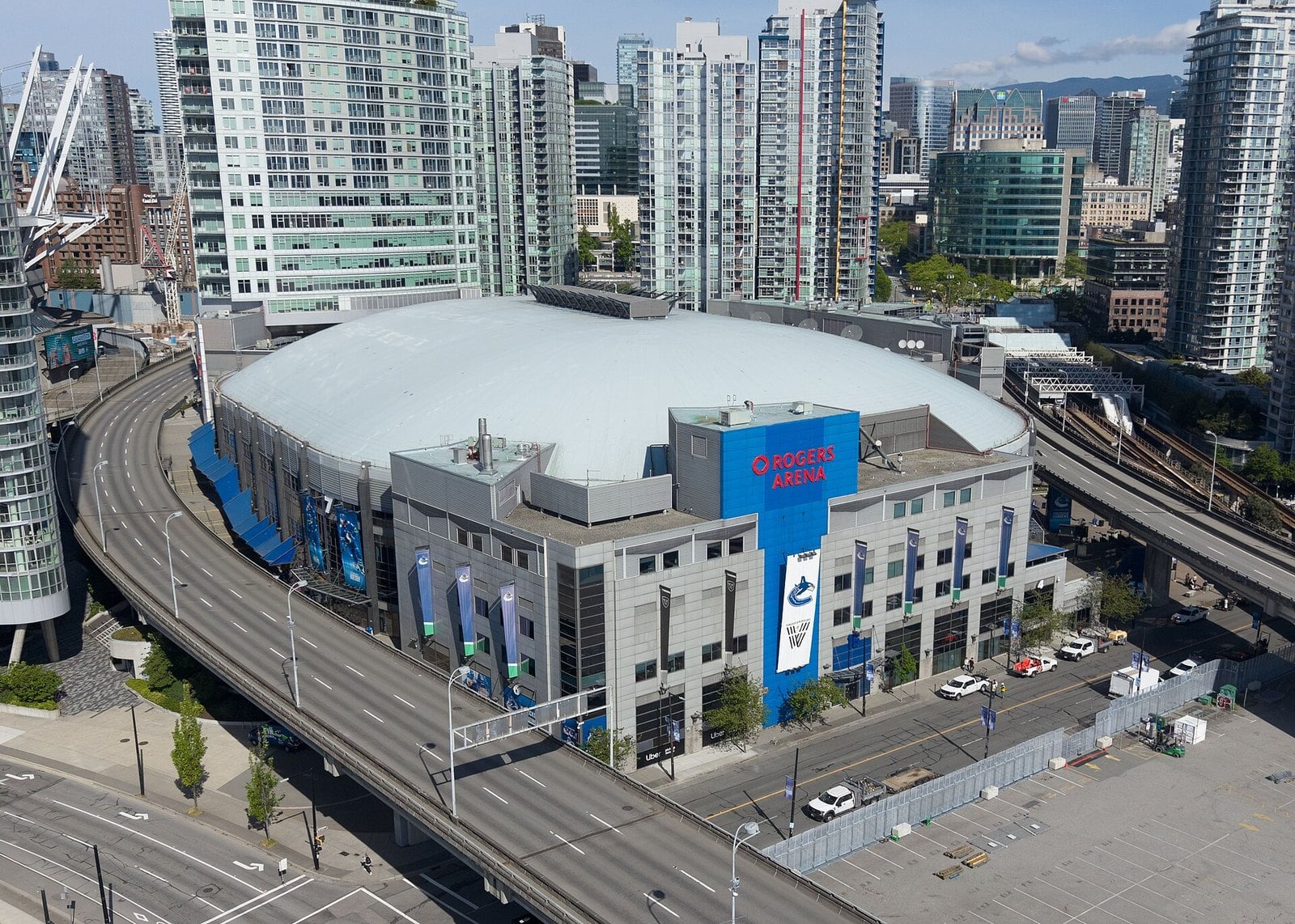
Where: Rogers Arena; fans filled the downtown core
When: June 4, 2011
Getting there: Expo Line to Stadium-Chinatown
Game 2 of the 2011 Final, June 4, against Boston. Alex Burrows scored on a wraparound 11 seconds into overtime.
It was the second-fastest overtime goal in Final history. The 3-2 win put Vancouver up 2-0 in the series.
The building was only part of it. CBC estimated 100,000 fans were roaming the downtown core.
2. Bure buries the Flames in double overtime (Olympic Saddledome, Calgary)
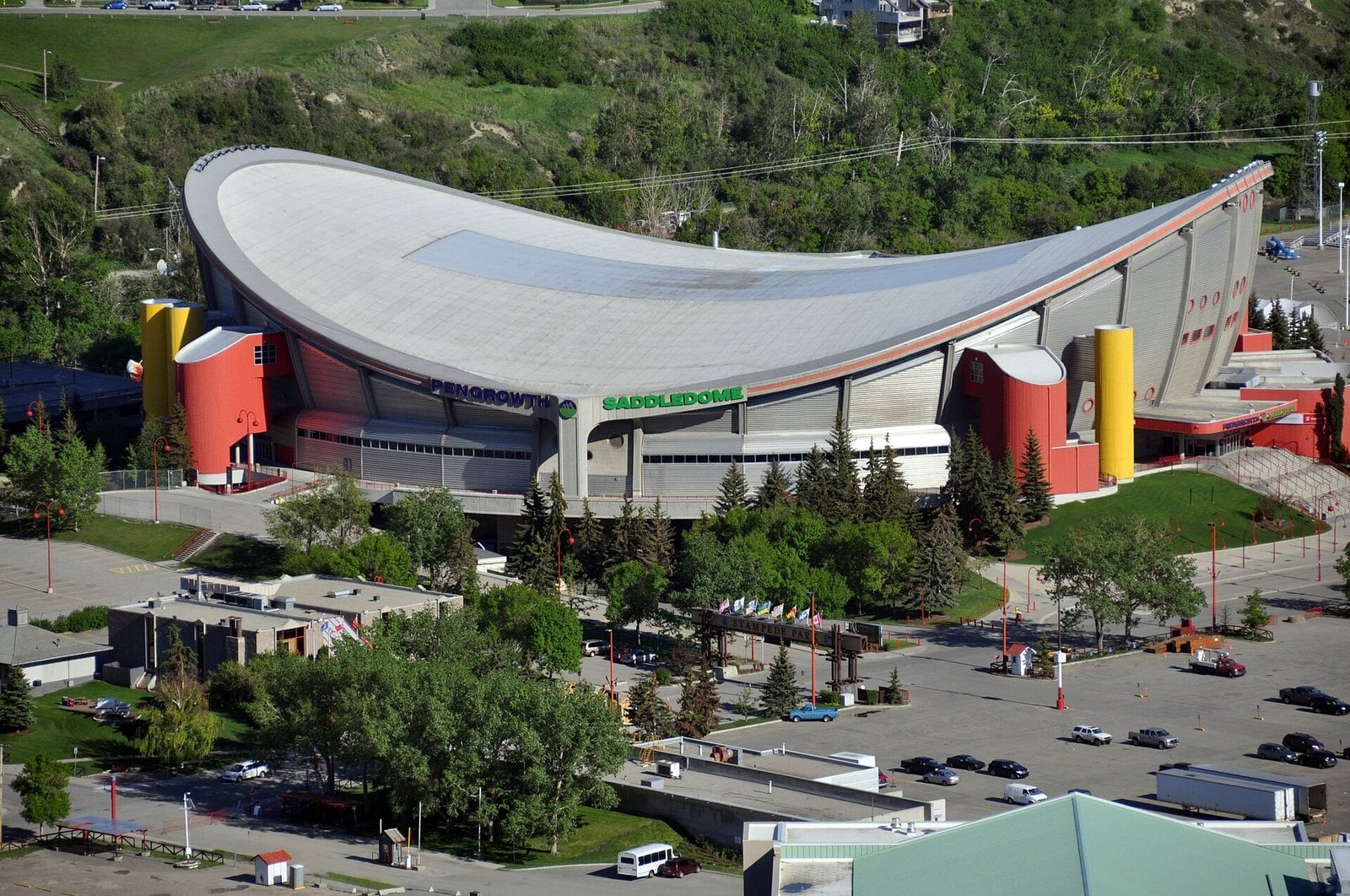
Where: Olympic Saddledome, Calgary (away game)
When: April 30, 1994
Game 7 of the first round, April 30, 1994, in Calgary. The game went to a second overtime. Pavel Bure broke in alone and beat Flames goalie Mike Vernon to win it 4-3.
It was an upset, and it opened the door to a long spring. Bure led the whole league with 16 playoff goals that year. The Canucks went all the way to the Final.
Plenty of fans remember this one by ear. Jim Robson’s radio call of the goal is still a favourite.
1. Towel Power is born (Chicago Stadium and the Pacific Coliseum)
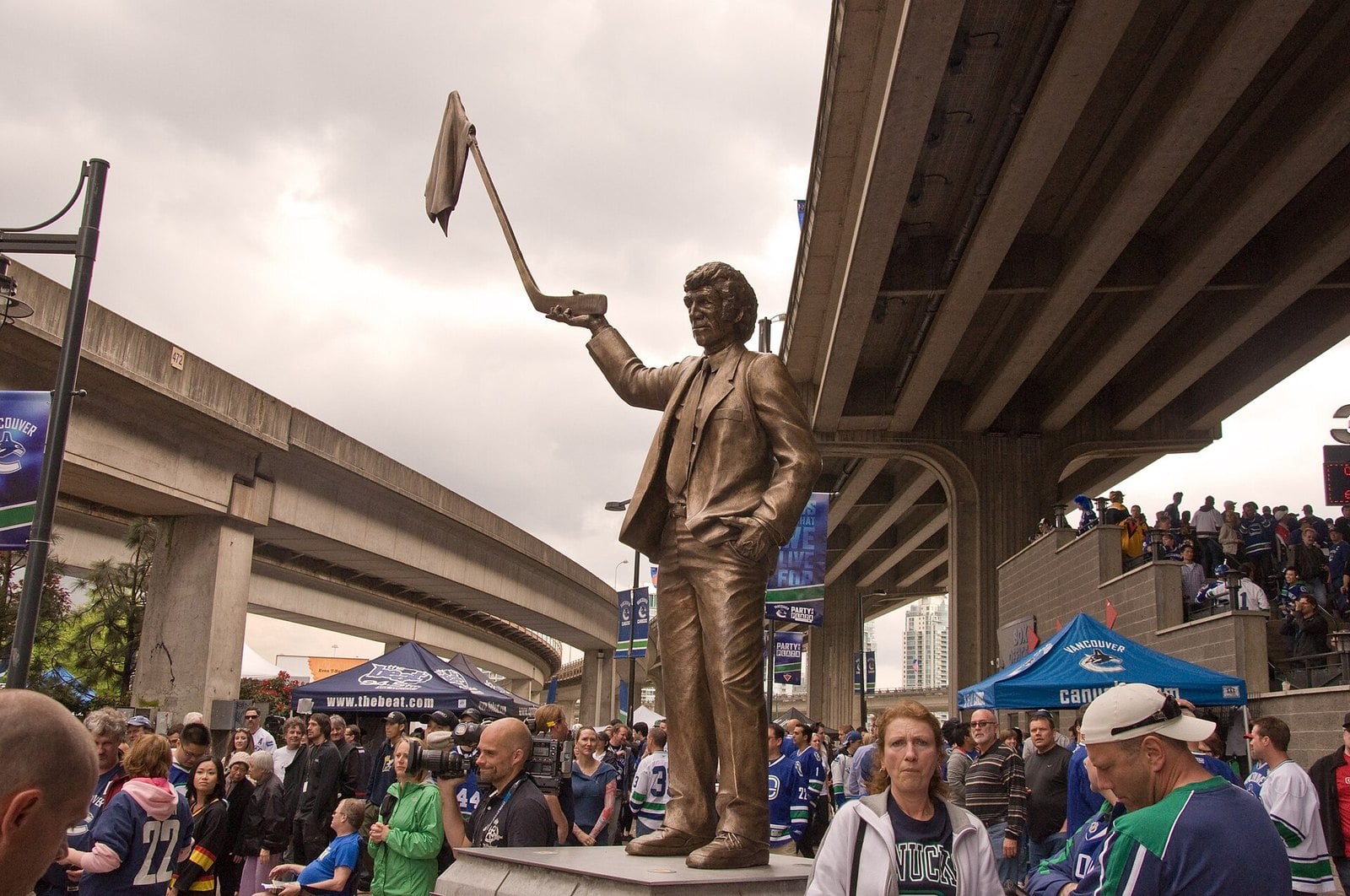
Where: Chicago Stadium (the protest); Pacific Coliseum (the fans’ answer)
When: April 29, 1982 (Game 2), followed by Game 3 in Vancouver
Getting there: The Coliseum is at Hastings Park, East Vancouver
The towel went up in Chicago first. On April 29, 1982, in Game 2 of the conference final, interim coach Roger Neilson was angry about the officiating. He hung a towel on a hockey stick and raised it in mock surrender. Two players copied him. All three were thrown out of the game.
The league didn’t see the joke. The NHL later fined the team $10,000 and fined Neilson another $1,000. The Canucks lost that game too.
Vancouver is where it became a tradition. When the series came back to the Pacific Coliseum for Game 3, the stands were full of fans waving white towels in support. Strictly, the protest belongs to Chicago. The tradition belongs to Vancouver.
| Number | Player | Date | Venue |
|---|---|---|---|
| 12 | Stan Smyl | 1991-11-03 | Pacific Coliseum |
| 16 | Trevor Linden | 2008-12-17 | GM Place |
| 19 | Markus Naslund | 2010-12-11 | Rogers Arena |
| 10 | Pavel Bure | 2013-11-02 | Rogers Arena |
| 22 | Daniel Sedin | 2020-02-12 | Rogers Arena |
| 33 | Henrik Sedin | 2020-02-12 | Rogers Arena |
Getting to Rogers Arena
- Stadium-Chinatown station on the Expo Line is right next to the arena on Expo Boulevard. Use the Stadium entrance/exit across from Gate 10.
- The underground parkade, Lot 987, is off Griffiths Way. It has a 2 m height limit.
- Lot 987 is not open to the public during Canucks games (only a limited number of disability stalls, by reservation through Fan Services at 604.899.7440). For most other events it opens to ticket holders no earlier than 15 minutes before doors. On Canucks nights, take transit.
- Full details are on the arena’s parking and directions page.
Going inside the Pacific Coliseum this season
The Vancouver Goldeneyes of the PWHL play at the Pacific Coliseum. Their 2026-27 home opener is Saturday, December 5 at 1:00 pm PST against Seattle. Other listed home dates include December 12 (Las Vegas), December 22 (Boston Fleet) and January 2 (New York Sirens). Schedules are on pne.ca and thepwhl.com.
Where the memorabilia lives
- The Museum of Vancouver holds 86 of the 2011 riot boards in its permanent collection. Check with the museum whether any are on display now.
- The BC Sports Hall of Fame, at Gate A of BC Place, covers BC sports history, including the province’s pro teams. Check with the Hall for hours and admission before you go.
- Retirement dates for every banner are in the team’s uniform numbers guide.
Crowds and safety on big hockey nights
The 1994 and 2011 riots changed how the city plans for playoff crowds. It now spreads viewing events beyond the downtown core, as it did during the 2024 playoff run. If a big game is on, check the city’s plans before you head downtown. Take transit. Agree on a meeting spot with your group in case you get separated in the crowd.
Anniversary dates worth marking
- October 9: first NHL Canucks game (1970)
- November 2: Bure’s banner (2013)
- November 3: Smyl’s banner (1991)
- December 11: Naslund’s banner and the Hall of Heroes (2010)
- December 17: Linden’s banner (2008)
- February 28: Golden Goal at Canada Hockey Place (2010)
- April 29: Towel Power (1982)
- April 30: Bure’s double-overtime winner in Calgary (1994)
- June 4: Burrows’ 11-second overtime goal (2011)
- June 14: the 1994 riot
- June 15: the 2011 riot, with the cleanup the next day
| Place | What’s there | How to get in | Getting there |
|---|---|---|---|
| Rogers Arena | Retired-number banners, Ring of Honour | Event ticket | Expo Line to Stadium-Chinatown; Lot 987 off Griffiths Way (2 m height limit; not open to the public during Canucks games) |
| Pacific Coliseum | Canucks home from 1970 to 1995; where Towel Power took hold | Event ticket (Goldeneyes home opener December 5, 2026) | Hastings Park, East Vancouver |
| Museum of Vancouver | 86 riot boards from 2011 in the permanent collection | Check with the museum for admission and current displays | Vanier Park |
| BC Sports Hall of Fame | BC sports history exhibits, including pro teams | Check with the Hall for hours and admission | Gate A, BC Place |
Most of this history is within reach of a transit ride. The banners are downtown at Rogers Arena. The Coliseum still has hockey at Hastings Park. The riot boards are in a museum collection in Vanier Park. Pick a date from the calendar above, go see the place it happened, and bring your side of the argument.
Get the weekend plan in your inbox. Burrard Bulletin is a free email on what’s actually on from Vancouver to Whistler. Sign up here.
Photo credits
- Rogers arena vancouver 2016.jpg by kallerna, CC BY-SA 3.0 (combined into a montage, cropped). Via Wikimedia Commons.
- Rogers Arena 2016.jpg by kallerna, CC BY-SA 4.0 (combined into a montage, cropped). Via Wikimedia Commons.
- Rogers Arena 2016 2.jpg by kallerna, CC BY-SA 4.0 (combined into a montage, cropped). Via Wikimedia Commons.
- Rogers Arena, Vancouver (3) (36610806154).jpg by Daniel from Glasgow, United Kingdom, CC BY 2.0 (combined into a montage, cropped). Via Wikimedia Commons.
- Roger Neilson Statue 2011.jpg by Matthew Grapengieser, CC BY-SA 2.0 (resized; cropped for the featured image). Via Wikimedia Commons.
- Pacificcoliseum.jpg by Arnold C, Attribution (resized). Via Wikimedia Commons.
- Pacific Coliseum (30308131510).jpg by Jeff Hitchcock from Seattle, WA, USA, CC BY 2.0 (resized). Via Wikimedia Commons.
- StanSmylBanner18012009.jpg by Kaiser matias, Public domain (resized). Via Wikimedia Commons.
- Pengrowth Saddledome.jpg by abdallahh from Montréal, Canada, CC BY 2.0 (resized). Via Wikimedia Commons.
- Vancouver – The Manhattan 02.jpg by Joe Mabel, CC BY-SA 3.0 (resized). Via Wikimedia Commons.
- Rogers Arena.jpg by Hucul002, CC BY-SA 3.0 (resized). Via Wikimedia Commons.
- Ryan Miller & Hernik Sedin (16353422053).jpg by Harold Cecchetti, CC BY-SA 2.0 (resized). Via Wikimedia Commons.
- Trevor-Linden retired jersey.jpg by Bad intentionz, CC BY-SA 3.0 (resized). Via Wikimedia Commons.
- Russia vs Latvia (2010 Olympics) 02.jpg by Chase N. from Marysville, WA, USA, CC BY-SA 2.0 (resized). Via Wikimedia Commons.
- Henrik Sedin 02-2015c.JPG by Harold Cecchetti, CC BY-SA 4.0 (resized). Via Wikimedia Commons.
- Rogers Arena Vancouver.jpg by Just4thetrolz, CC BY-SA 3.0 (resized). Via Wikimedia Commons.
- Orland Kurtenbach ring of honour.jpg by Matt Boulton from Vancouver, Canada, CC BY-SA 2.0 (resized). Via Wikimedia Commons.
- Rogers Arena (Vancouver).jpg by Quintin Soloviev, CC BY 4.0 (resized). Via Wikimedia Commons.
- Riot police in Downtown Vancouver during 2011 Stanley Cup riot.jpg by Charles de Jesus, CC BY 2.0 (resized). Via Wikimedia Commons.
- Wayne Maki Pavel Bure Glen Hanlon jerseys.jpg by Kyle Pearce from Vancouver, Canada, CC BY-SA 2.0 (resized). Via Wikimedia Commons.