8 Places to See Thousands of Snow Geese Near Vancouver This Winter
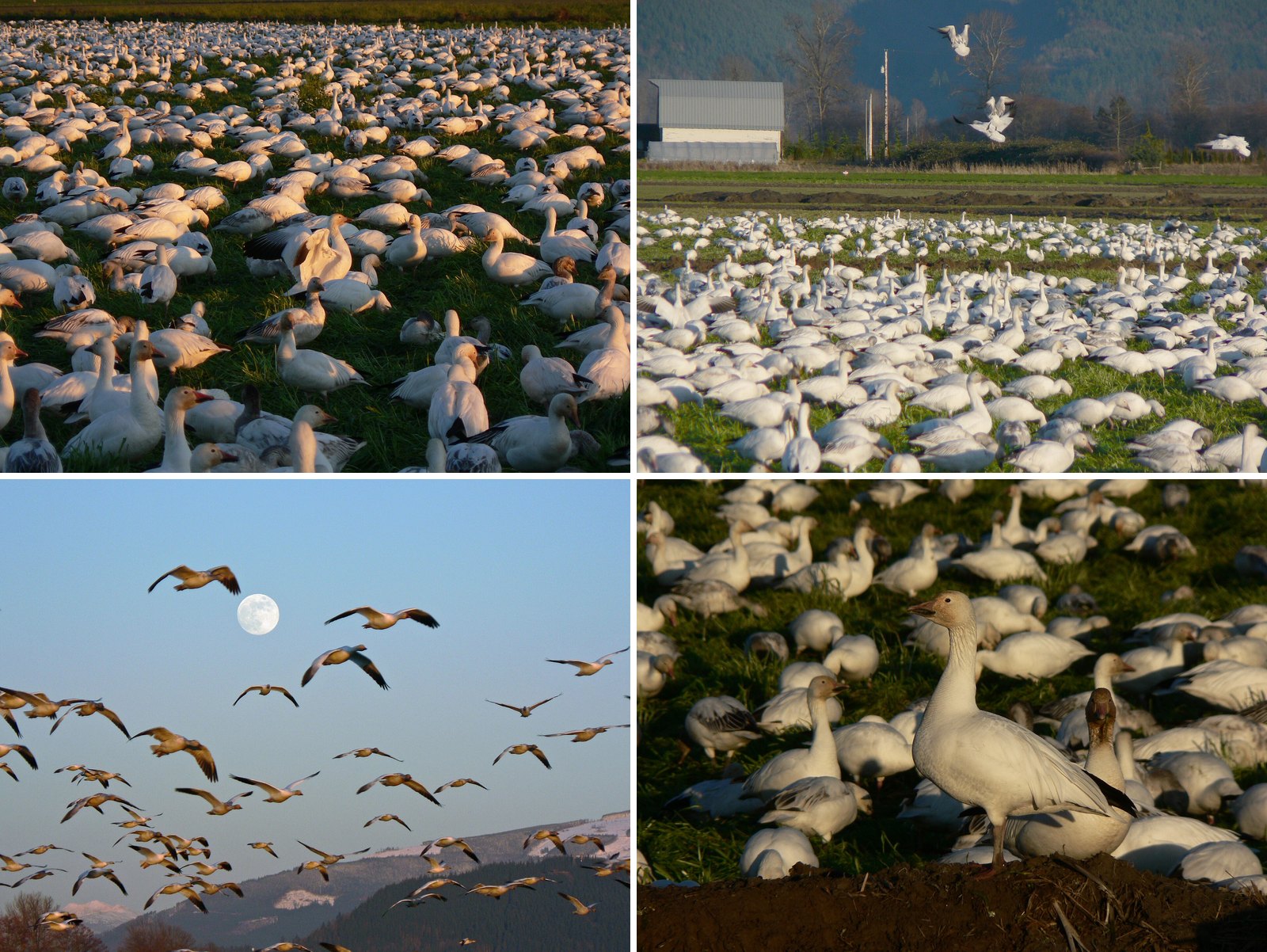
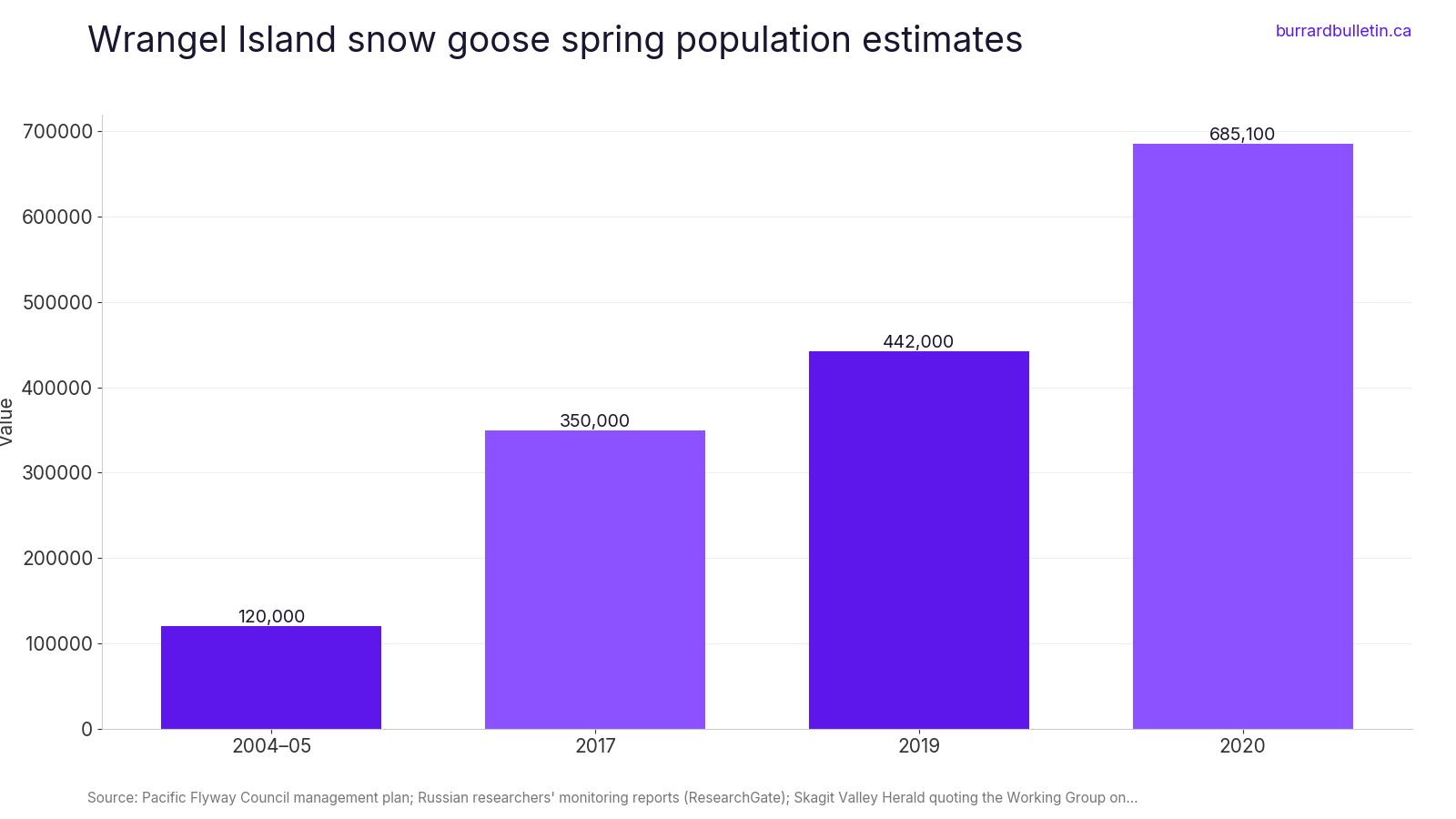
Every fall, lesser snow geese leave Wrangel Island, off the Arctic coast of Russia, and fly about 5,000 km to the Fraser delta. They arrive in October. Most of them settle in Delta and Richmond, graze the farm fields and marshes, and head north again in March and April. Reifel’s January 2021 mid-winter count put the whole Fraser and Skagit flock at 135,000 birds. The City of Richmond estimated about 180,000 in Richmond in winter 2020/21.
Biologists call this the Fraser-Skagit flock because the birds shuttle between the Fraser estuary and Washington’s Skagit estuary. That shuttle matters for planning. Some winters most of the flock crosses the border from late December to February. In the mild 2025-26 winter, the Delta Optimist reported they stayed longer than they had in the past.
This guide covers where to watch them, starting with the one paid sanctuary and moving on to free dyke trails, roadside fields, a Steveston park and a beach beside the airport. For each spot you get what you’ll see, when to go, how to get there and the local rules that keep you, the farmers and the geese out of each other’s way.
8. Iona Beach Regional Park (Richmond)
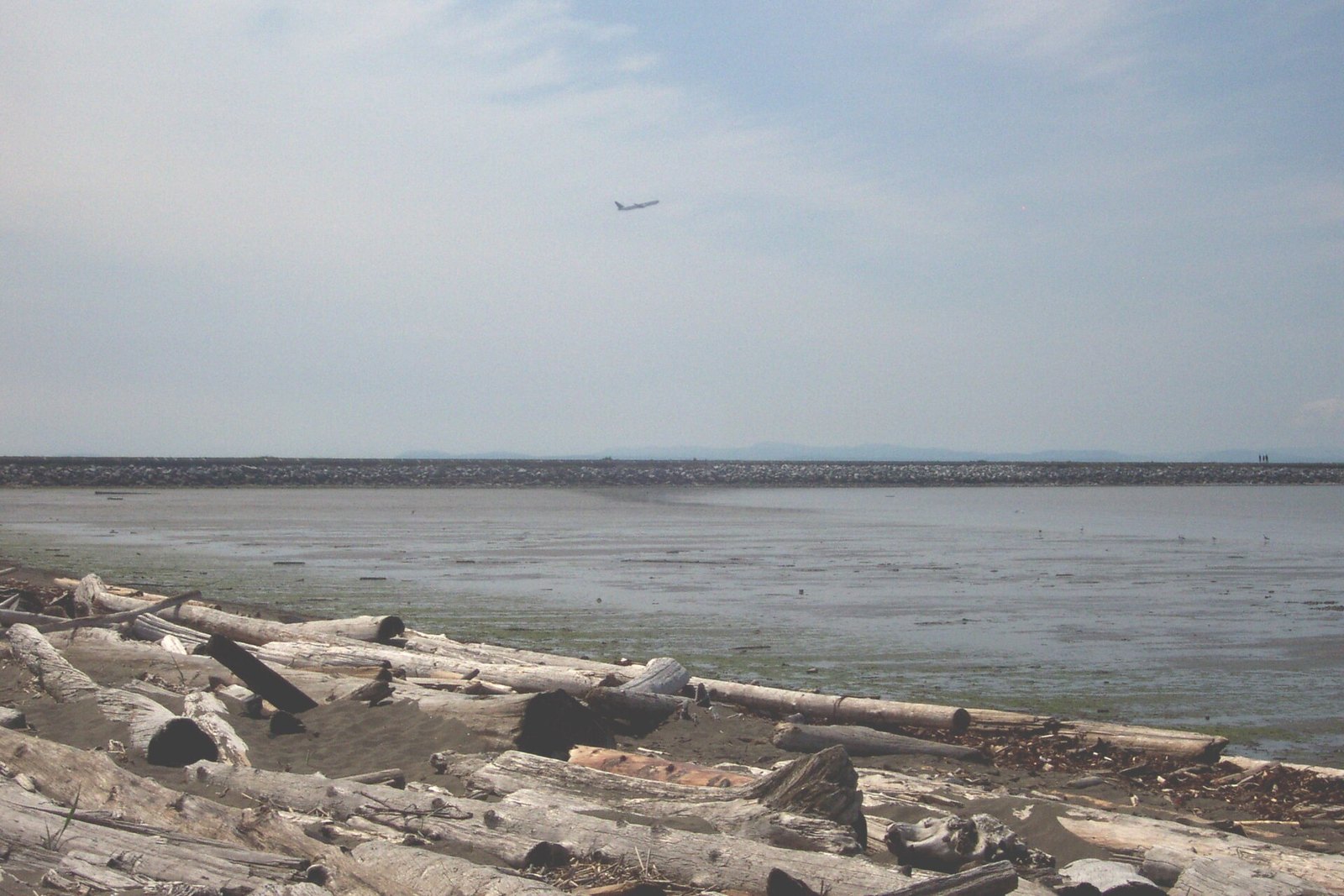
Where: 900 Ferguson Road, Sea Island area, Richmond
When: Fall through spring. Open 7 am to 7 pm until Nov 2, then 7 am to 6 pm to Dec 31
Cost: No admission fee listed on the official page
Getting there: Grauer Road and Ferguson Road through Sea Island to the park lot
Iona is a Metro Vancouver regional park at the mouth of the Fraser, right next to YVR. More than 300 bird species stop here to rest and feed during spring and fall migration. You can watch planes land between birds, which helps keep kids interested.
Be realistic about the geese. They show up here less reliably than in Delta. Still, YVR lists snow geese among the birds that winter on Sea Island. A Nature Vancouver photo trip one October found a large flock resting on the beach, and The Richmond Sentinel listed snow geese among the birds to look for at Metro Vancouver’s Wings over Iona event.
Fall through spring is the season. The park is open 7 am to 7 pm until November 2 and 7 am to 6 pm from November 3 to December 31. The viewing structure at the end of the jetty is closed for storm damage.
Drive through Sea Island via Grauer Road and Ferguson Road to the park lot. Keep dogs on leash, and keep them away from the east-side ponds and off the beach foreshore, where the geese rest. Because geese aren’t a sure thing here, pair Iona with the West Dyke Trail on the same day.
7. Garry Point Park (Steveston, Richmond)
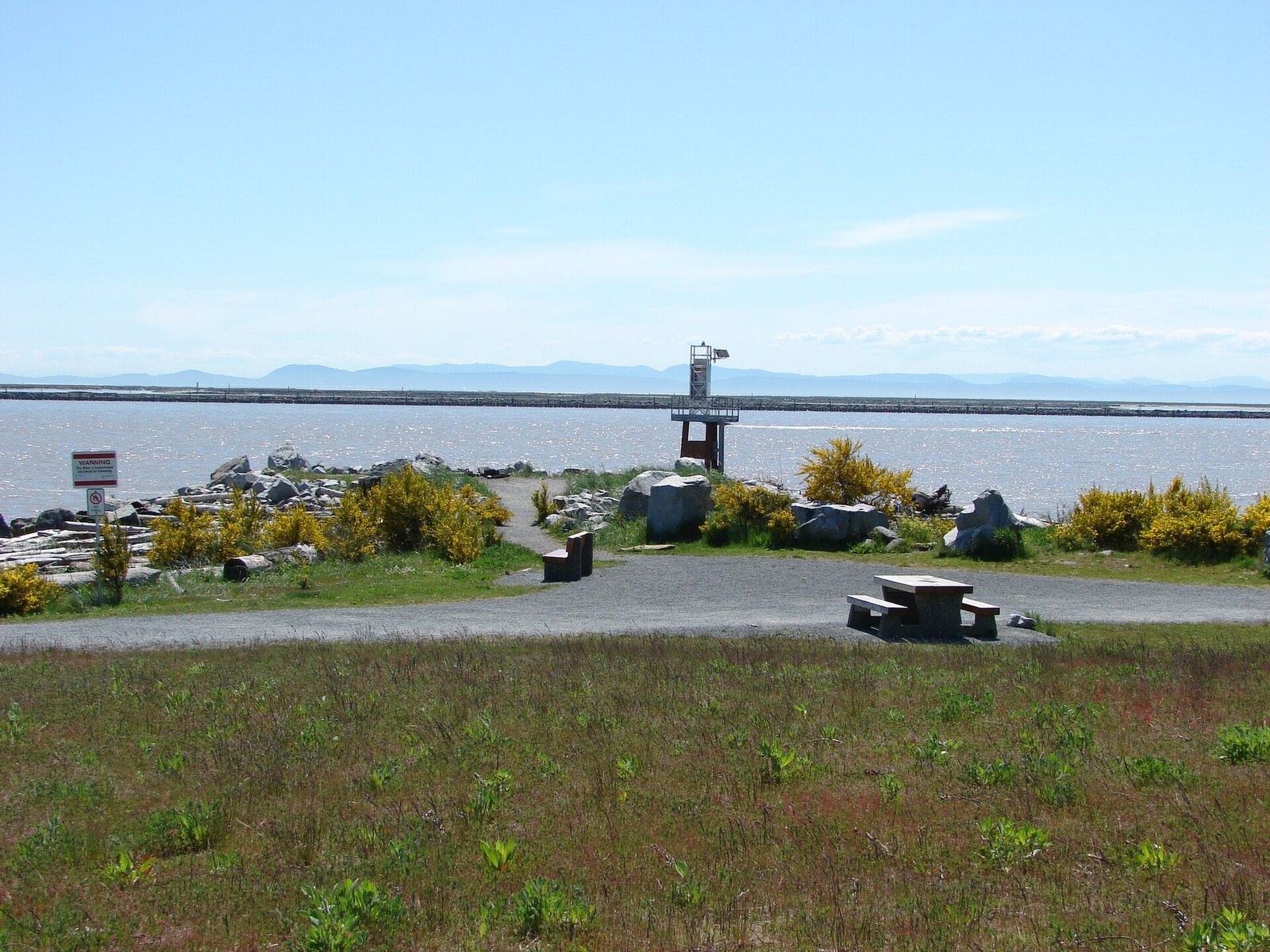
Where: 12011 7th Avenue, Steveston, Richmond
When: October to April. Late afternoon for the sunset
Cost: Free
Getting there: End of Chatham Street in Steveston, then 7th Avenue. Parking on site. Easier to reach by bus than Terra Nova, per Visit Richmond
Garry Point is the big waterfront park at Richmond’s southwest tip and the south end of the West Dyke Trail. Visit Richmond describes the snow geese as a dramatic presence here in fall and winter. CBC photographed snow geese at Garry Point on January 4, 2021.
There’s more to look at between flocks. The park has the Kuno Garden, a Japanese-style memorial garden, plus the Fisherman’s Memorial Needle and the historic Scotch Pond moorage. The City of Richmond lists parking, picnic tables, public washrooms and seasonal concession stands, which makes it a convenient stop for families.
Go October to April. Richmond calls Garry Point one of the best places in the city to watch the sunset, so a late afternoon visit gets you geese and a western sky.
Head to the end of Chatham Street in Steveston, then onto 7th Avenue. Visit Richmond says it’s easier to reach by bus than Terra Nova. Afterwards, Steveston Village is a short walk away for fish and chips. Stay out of the water: the City of Richmond warns the Fraser’s current is very strong and the area is unsafe for swimming.
6. West Dyke Trail (Richmond)
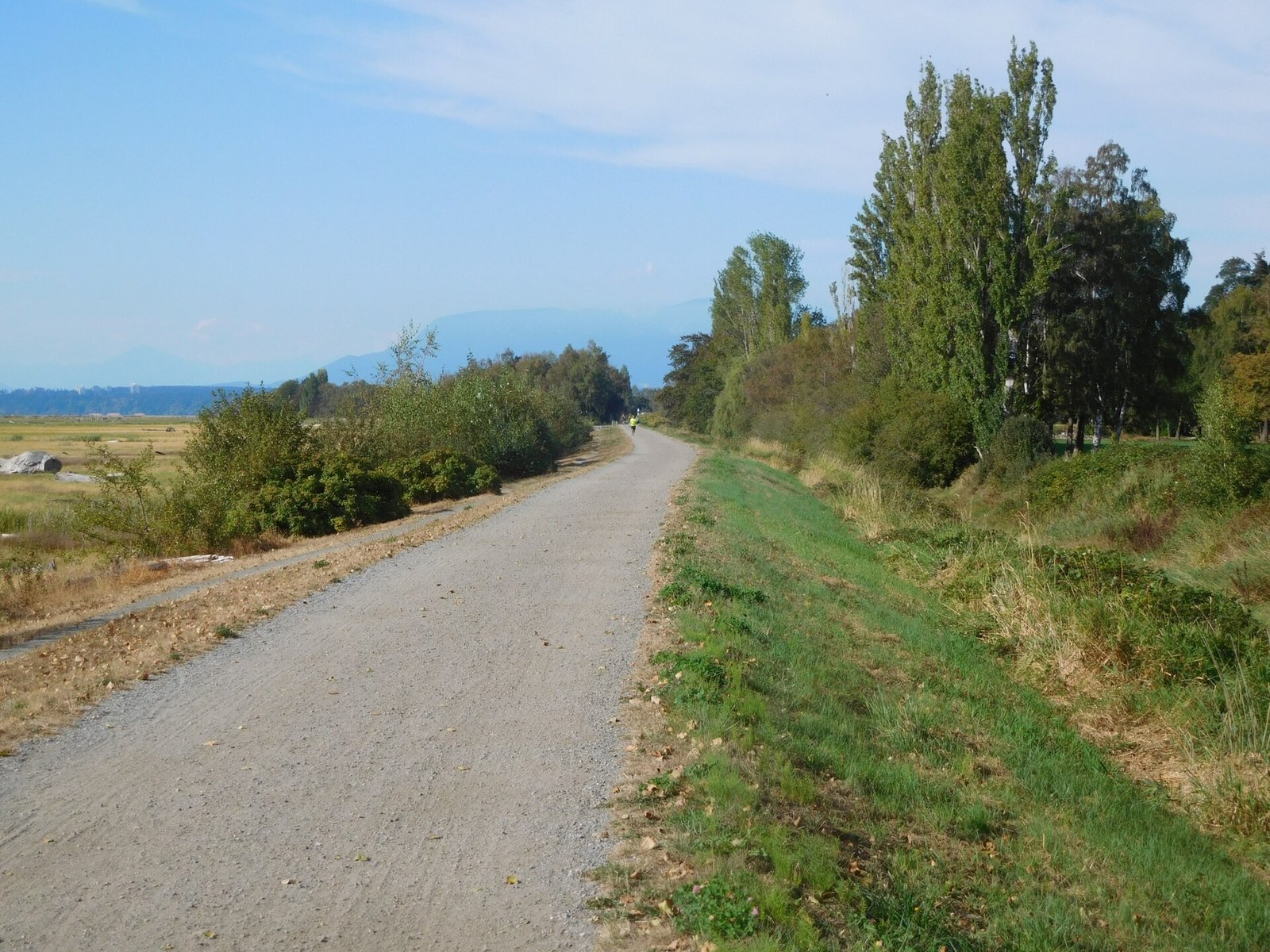
Where: West edge of Richmond, between Terra Nova Rural Park and Garry Point Park
When: October to April. Flocks often roost off the dyke by day and fly inland later
Cost: Free
Getting there: Parking at Terra Nova and Garry Point. Garry Point is easier by bus
This flat 6 km gravel trail runs along Richmond’s west edge between Terra Nova Rural Park and Steveston’s Garry Point Park. The Sturgeon Banks marsh sits on the water side. On a clear day the view reaches the North Shore mountains and the Gulf Islands.
The Richmond News has reported flocks camped beside the trail between Francis and Williams roads. In 2021, the city said the geese were spending their days on the Grauer Lands beside the West Dyke and flying inland afterwards. That’s the pattern to expect: roosting near the dyke in the daytime, then heading for fields, schoolyards and sports fields.
Go October to April.
You can start at either end, since both have parking. Visit Richmond says Garry Point is the easier end to reach by bus. Bikes are allowed, so you can ride the full 6 km and loop back. This is the best goose walk in Richmond if you have a dog, on leash at all times per Visit Richmond’s trail page. One catch: Terra Nova Rural Park is a no-dogs area, so start from Garry Point or a side street if the dog is coming. A loose dog scatters a whole flock, and the geese need that energy for the winter.
5. Boundary Bay Dyke at 104th Street (Delta)
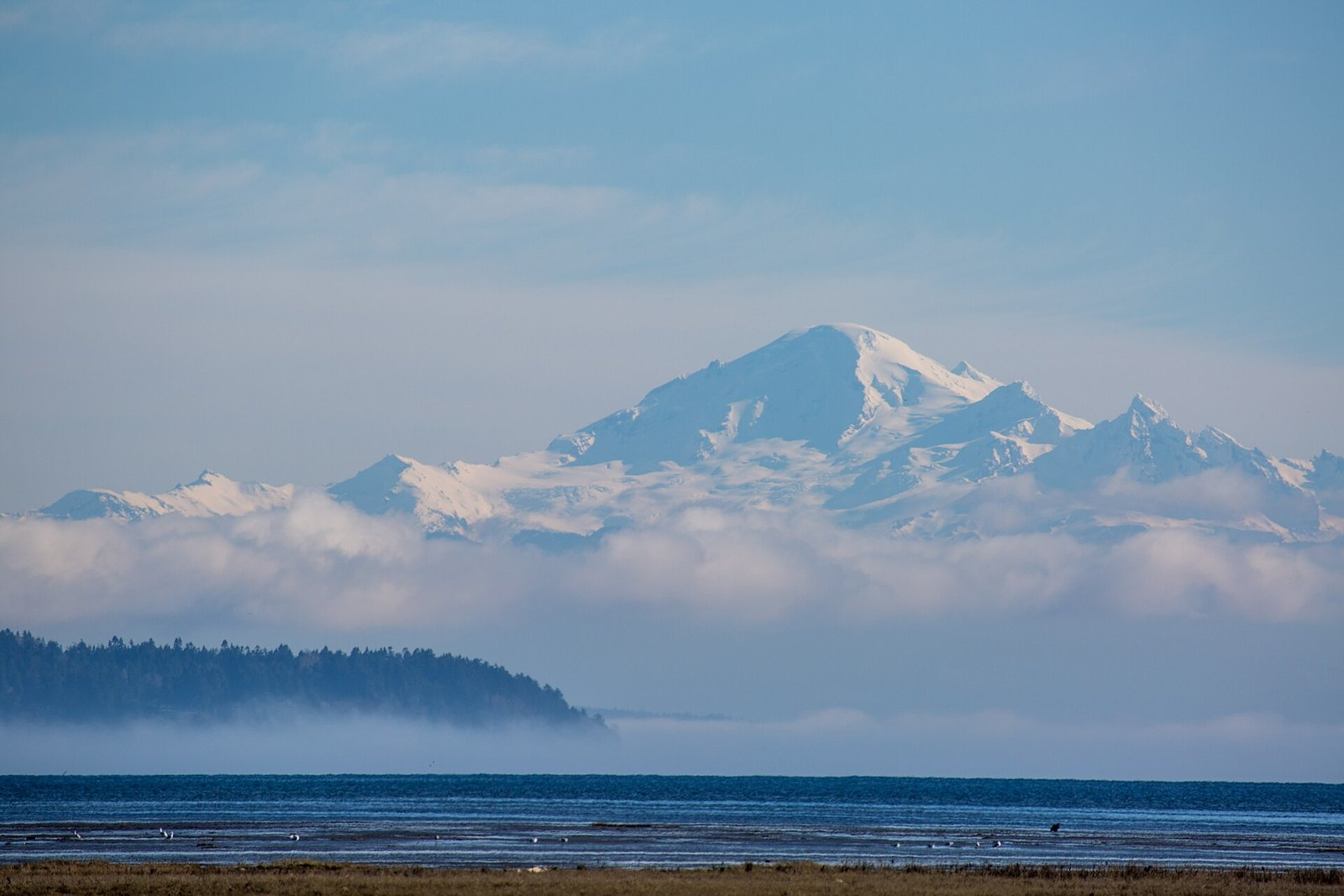
Where: South end of 104th Street off Hornby Drive, Delta (Delta Heritage Airpark, 4103 104th Street)
When: October to March
Cost: Free
Getting there: Highway 99 to Hornby Drive, then south on 104th Street to the airpark. Some parking provided for dyke users
This is the third Boundary Bay access point the Delta Optimist named for snow geese. It’s also the handiest start if you’re coming from North Delta or Surrey. The Delta Heritage Airpark has sat at this spot since the 1960s. It provides some parking and signs for people using the dyke, and you might see small planes on its grass runway while you scan the fields.
From here the regional Dyke Trail carries on along the bay. Metro Vancouver lists the full trail, from 17A Avenue to Mud Bay Park, at 34 km return, or 17 km each way. It’s open to hikers, cyclists and riders on horseback. You don’t need to do all of it. A long out-and-back gives you the geese plus winter raptors and shorebirds.
Go October to March.
Take Highway 99 to Hornby Drive, then go south on 104th Street to the airpark at 4103 104th Street. The dyke is completely exposed and the only facilities are at the access points, so bring layers and water. This stretch is east of 64 Street, where hunters may legally shoot seaward from the dyke in season, so expect gunshots and wear something bright.
4. Boundary Bay Dyke at 64th and 72nd Streets (Delta)
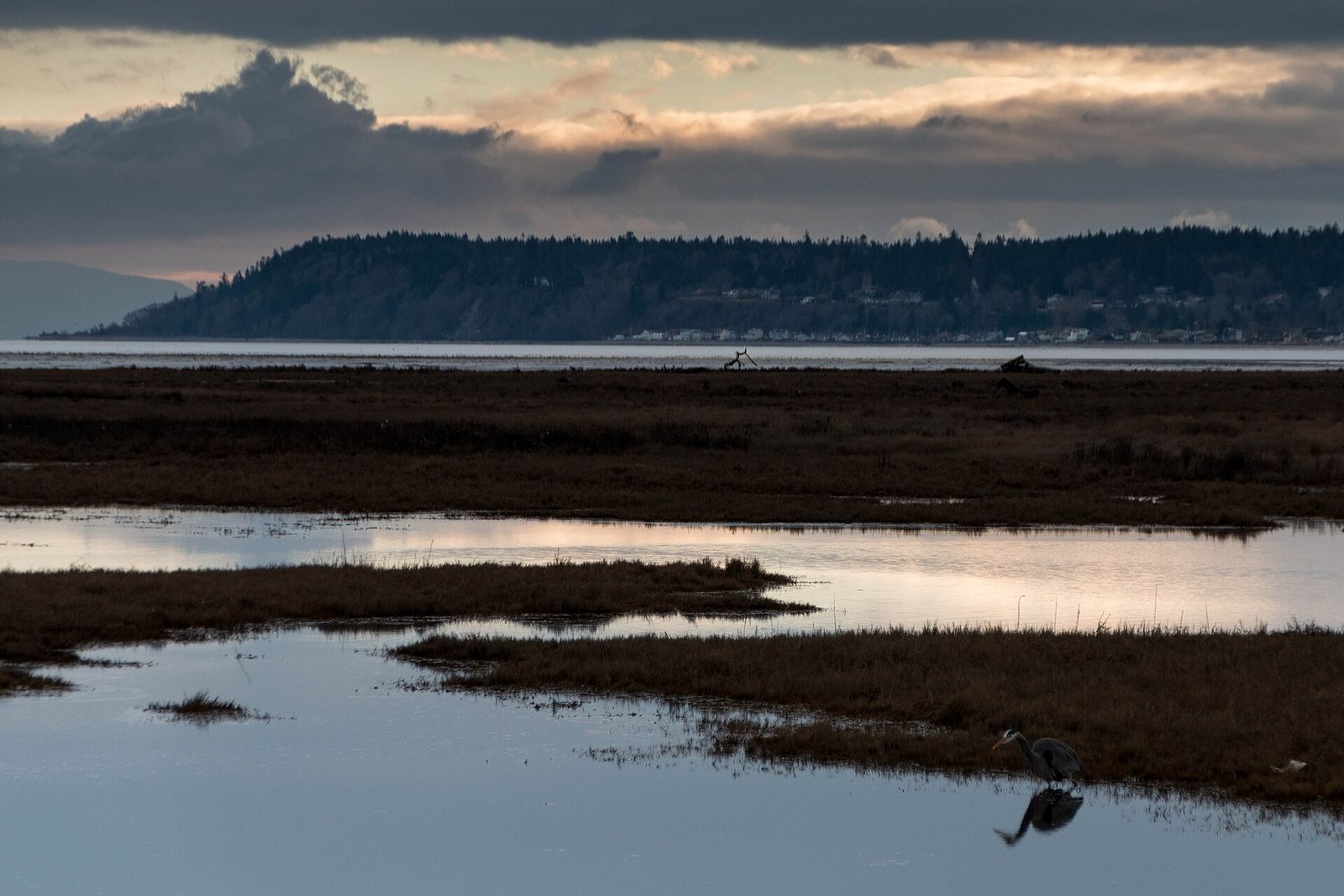
Where: South ends of 64th Street and 72nd Street, off Ladner Trunk Road, Delta
When: October to March. Snowy owls only in some years
Cost: Free
Getting there: Ladner Trunk Road (Highway 10), then south to the end of 64th or 72nd Street. Parking restrictions strictly enforced
These two road ends put you on a raised dyke above the Boundary Bay Wildlife Management Area. The province designated it on June 21, 1995. It supports more than 1.5 million birds from three continents and 20 countries. The Fraser estuary as a whole supports the largest wintering shorebird and waterfowl populations in Canada, and this is one of the places you can see why.
The City of Delta named the dyke trails off 64th and 72nd as good places for snow geese. The Delta Optimist reported in March 2026 that Boundary Bay and Westham Island are the two busiest places for them. The Delta Naturalists recommend Boundary Bay for shorebirds and short-eared owls, and the province lists bald eagles, northern harriers and peregrine falcons among the common species here. Some winters, snowy owls turn up too.
October to March is the window for waterfowl and raptors. Snowy owls appear only in some years, so treat one as a bonus.
From Ladner Trunk Road (Highway 10), drive south to the end of 64th Street or 72nd Street. Metro Vancouver says the dyke has several access points and that parking restrictions are strictly enforced. Farm vehicles use the dyke, so step aside and let them pass. In hunting season, hunters may legally shoot seaward from the dyke itself between 64 Street and the Surrey border. Expect gunshots, wear bright clothing and give hunters a wide berth.
3. Brunswick Point Trail, Hwlhits’um (Ladner, Delta)
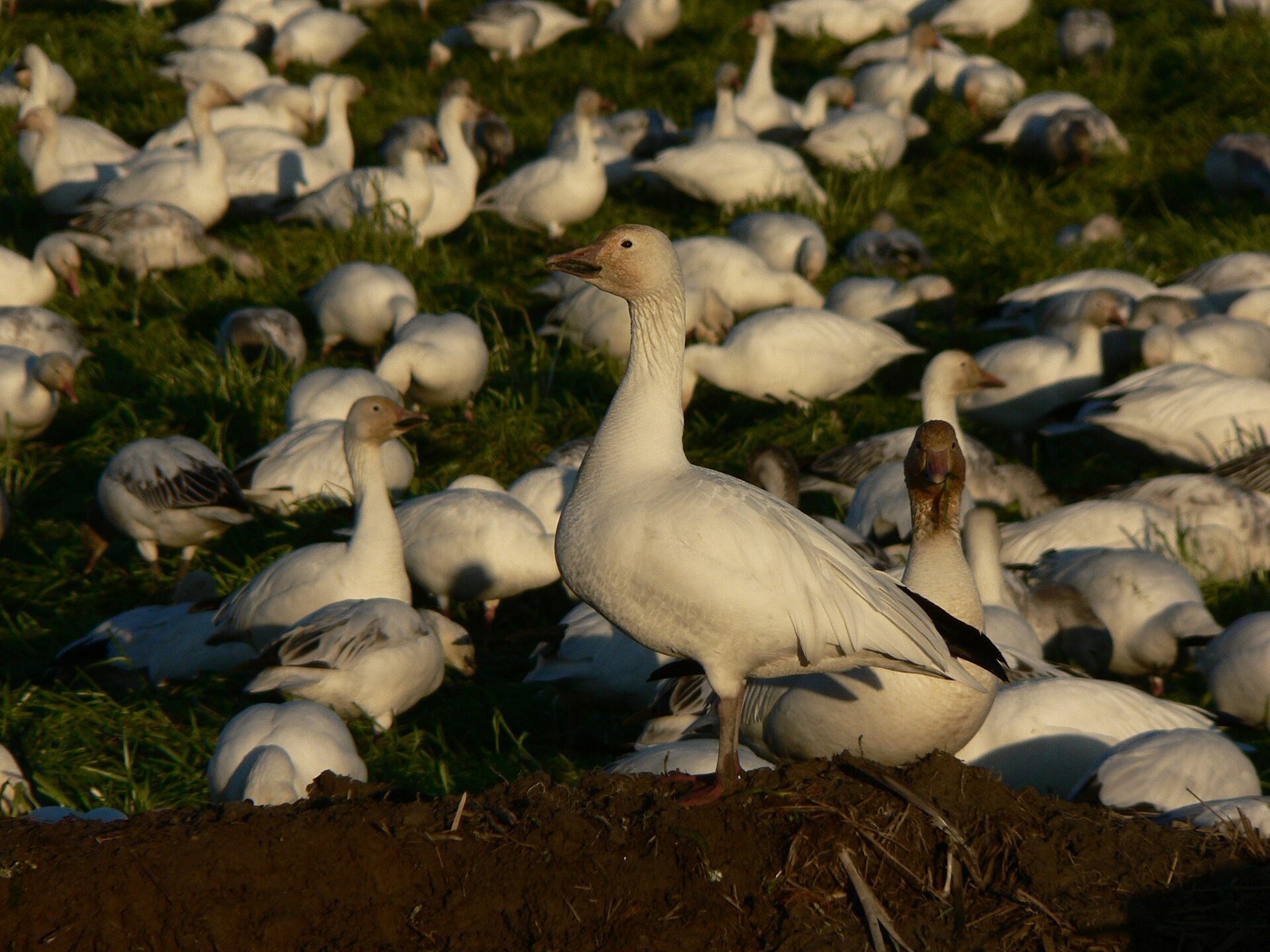
Where: End of River Road West, Ladner, Delta
When: October to April. Best in fall and during the March build-up
Cost: Free
Getting there: River Road West past the Westham Island Bridge turnoff to the end of the road. Park in the designated areas only
This wide gravel path runs along the dike from the western tip of River Road almost to Deltaport Way. Farmland sits on one side. The Fraser River, salt marsh and mudflats sit on the other. That mix is why it works: the geese feed in the fields and move toward the water, and you’re on the raised line between them.
Hwlhits’um is the Hul’q’umi’num name for Brunswick Point. The City of Delta listed the trail as a good place to see snow geese. The Delta Naturalists say the farmland around Roberts Bank hosts snow geese and trumpeter swans in winter. On their October 8, 2024 outing they reported huge, noisy flocks in the fields.
Go October to April. Fall and the spring build-up in March tend to be best.
Drive River Road West past the Westham Island Bridge turnoff to the end of the road. Park only in the designated areas at the end of River Road West. The Delta Naturalists put the lot about 1 km back from where the trail starts. Delta put up no-parking signs after cars on the road edge blocked farm vehicles, so don’t improvise. The whole dike to Deltaport Way falls under Delta’s hunting rules, so shotgun blasts in season are legal waterfowl hunting. Stay on the dike top and keep out of the marsh.
2. Westham Island farm fields (Delta)
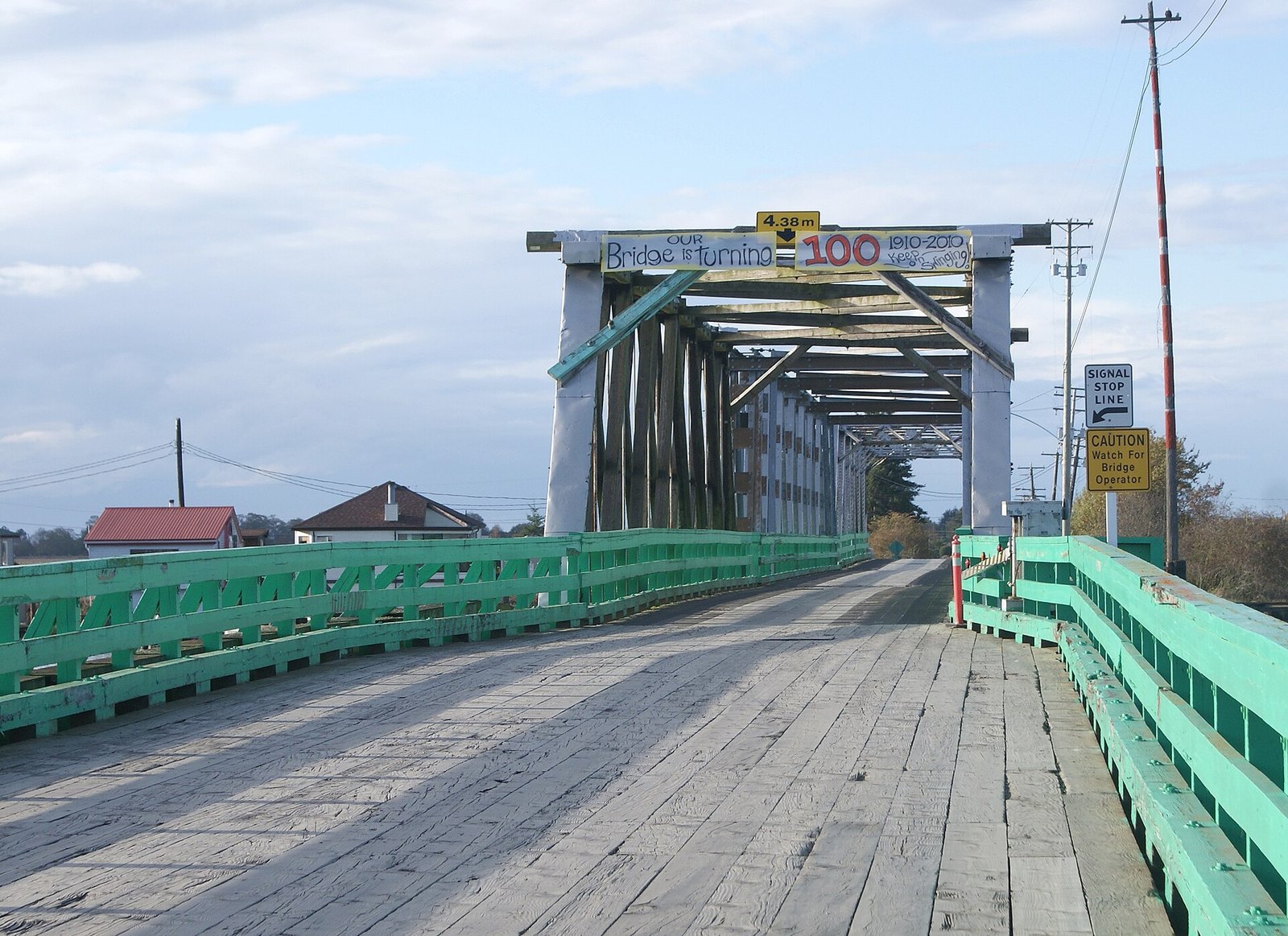
Where: Westham Island, Delta, along the road to Reifel
When: October through the spring return in March and April. Flocks move throughout the day
Cost: Free from the public road
Getting there: River Road West in Ladner, then the single-lane Westham Island Bridge
You don’t have to pay admission to see the geese. The BC Bird Trail describes flocks covering entire farm fields on Westham Island near Reifel. In March 2026, the Delta Optimist reported that Westham Island and Boundary Bay are the two busiest places for the birds. Reifel’s newsletter has shown an October flock just inside the gates of the neighbouring Alaksen National Wildlife Area.
The fields aren’t full of geese by accident. Delta farmers plant winter cover crops through the Trust’s Greenfields program, and the geese graze them. It’s a working arrangement between farms and a flock that needs a lot of food to get through the winter.
The flocks arrive in October and move around all day. Some days they’re on the field beside the road. Other days they’re a white smear half a field away. They stay into the spring return in March and April.
The route is the same as Reifel: River Road West in Ladner, then the single-lane Westham Island Bridge. The bridge reopened to vehicles on March 28, 2026, and TransLink says it is open to traffic. Watch from the road shoulder, stay off private fields and never stop on the bridge. Reifel notes the flocks get restless when people or dogs come close. If they lift off, you came too close.
1. George C. Reifel Migratory Bird Sanctuary (Westham Island, Delta)
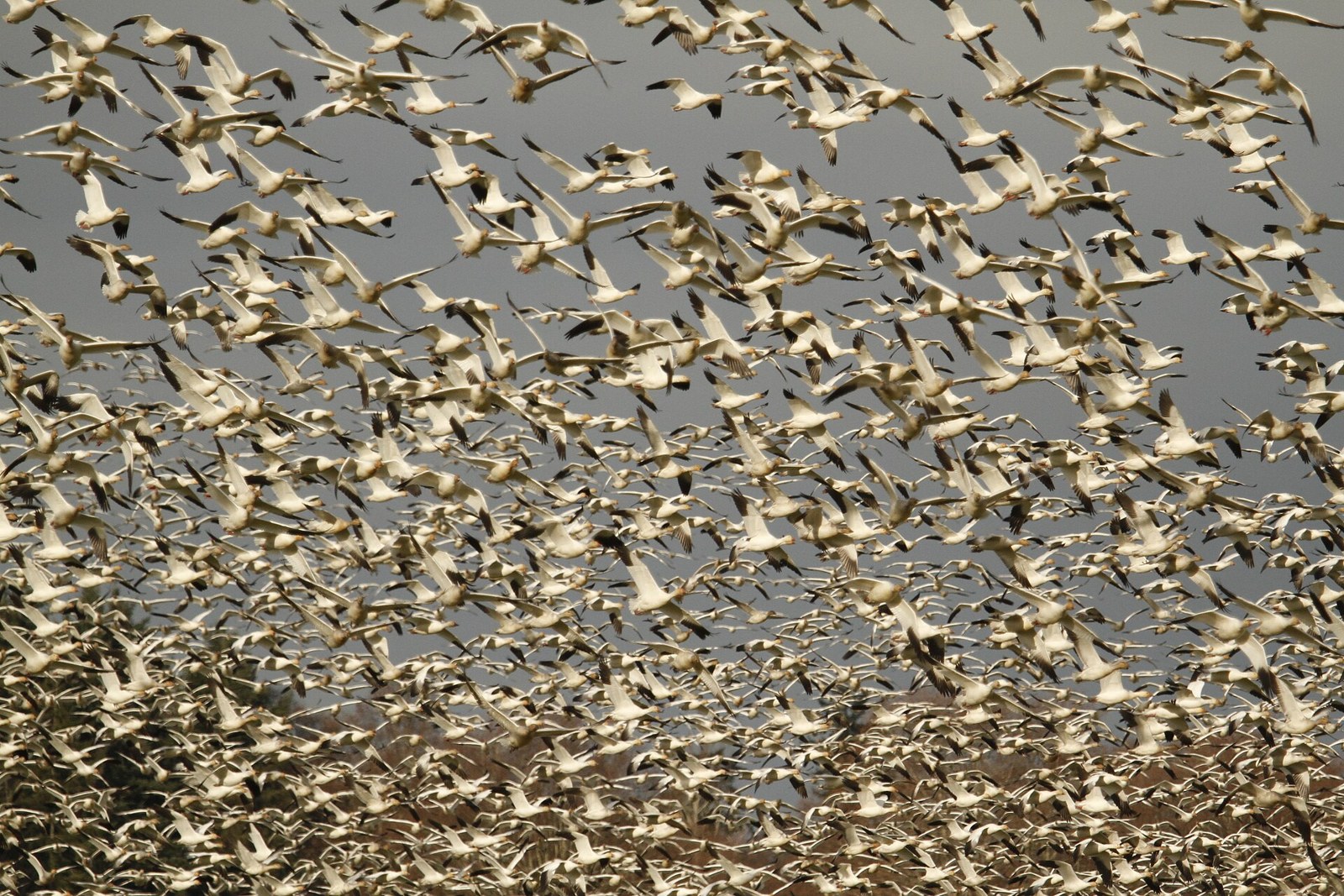
Where: 5191 Robertson Road, Westham Island, Delta
When: Tuesday to Sunday, 9 am to 4 pm. Last entry 3 pm with a reservation, 2:30 pm for drop-ins. Best geese mid-Oct to mid-Dec and mid-March to mid-April
Cost: Adults $10, seniors (65+) $8, children (2 to 14) $7. Seed $2. Annual pass $70 individual, $140 family. Free reservation required
Getting there: Less than an hour’s drive from Vancouver. Highway 99 south to Ladner Trunk Road, west through Ladner onto River Road West, over the single-lane Westham Island Bridge, then Westham Island Road and Robertson Road. No public transit to the sanctuary
Reifel calls itself the winter home of the snow geese, and in fall it earns the name. The sanctuary covers 300 hectares of ponds, treed paths, tidal marsh and channels. An observation tower looks out over the marsh where the geese feed and rest. Most visitors spend 1 to 1.5 hours on the paths. The sanctuary is wheelchair accessible.
It is a federal Migratory Bird Sanctuary managed under a long-term agreement with the Government of Canada. The non-profit BC Waterfowl Society has run it since 1963. Early 2026 was rough: flooding closed the sanctuary on January 4, then a barge struck the Westham Island Bridge on January 20 and extended the closure. It reopened at the end of March 2026.
Timing is everything here. Reifel says the best snow goose viewing is mid-October to mid-December and again mid-March to mid-April. From late December to February, nearly all the geese usually move to the Skagit estuary in Washington, so a January visit may show you ducks and chickadees instead. Kids can buy a $2 bag of seed to hand-feed them, which tends to make up for it.
Hours are Tuesday to Sunday, 9 am to 4 pm, closed Mondays except some statutory holidays. A free reservation is required, and you can book on Reifel’s planning page starting three days ahead until 8 am on the day. October to December brings the most visitors of the year, so book weekends as soon as the window opens. Leave your own birdseed at home because outside seed isn’t allowed. Leave the dog at home too: dogs aren’t allowed anywhere on site, including in a car in the parking lot. Winter 2026-27 holiday hours aren’t posted yet.
| Place | Adult cost | Dogs | Booking | Closed |
|---|---|---|---|---|
| Reifel Bird Sanctuary | $10 | No | Free reservation required | Mondays |
| Westham Island fields (roadside) | Free | Not applicable (stay in car or on shoulder) | No | — |
| Brunswick Point Trail | Free | Check posted signs | No | — |
| Boundary Bay Dyke (64th/72nd/104th) | Free | Check posted signs | No | — |
| West Dyke Trail | Free | On leash | No | — |
| Garry Point Park | Free | Check posted signs | No | — |
| Iona Beach Regional Park | Free | On leash | No | Closes 6 pm Nov 3 to Dec 31 |
| Period | What happens |
|---|---|
| Early October | First flocks arrive at Reifel |
| Mid-Oct to mid-Dec | Peak fall viewing (Reifel); Richmond numbers typically peak in November |
| Late Dec to Feb | Many or most move to Washington’s Skagit estuary (fewer in mild winters) |
| Dec to Mar | Flocks on Richmond schoolyards as far inland as No. 5 Road |
| Mid-Mar to mid-Apr | Spring return and second peak; geese leave for Wrangel Island in April |
When to go
The first flocks reach Reifel in early October. Fall viewing peaks from mid-October to mid-December, and the Richmond News says Richmond numbers usually top out in November. From December to March, flocks spread onto Richmond schoolyards and sports fields. The spring return runs mid-March to mid-April, and the geese leave for Wrangel Island in April.
Midwinter is the wild card. Reifel says nearly all the birds usually move to the Skagit estuary from late December to February. In the mild 2025-26 winter, the Delta Optimist reported the geese were staying longer than they had in the past. If you’re going in January, lean toward the Delta fields and Richmond rather than counting on Reifel. The calendar table and the population chart above fill in the rest.
How to read a flock
- Adults are white with black wing tips, a pink bill with black markings and pink feet.
- Young of the year are grey. Their first set of adult feathers isn’t white yet.
- A small group with two white birds and several grey ones is probably a family. Snow geese mostly mate for life, and the three or four young raised each year migrate with their parents.
Etiquette and the law
- Snow geese are a protected species. Don’t chase, feed or flush them for a photo.
- At Reifel, harassing birds is illegal, outside birdseed is banned and you’re asked to stay at least 2 m from nests. The full rules are on the sanctuary’s planning page.
- Delta’s dykes cross working farmland. Yield to farm vehicles and park only in marked spots.
- If a flock lifts off as you approach, back away. Every flight burns energy they need for winter.
Hunting season on the Delta dykes
Waterfowl hunting is legal on parts of Delta’s dykes and foreshore in fall and winter. In season, hunters may shoot seaward from the dyke itself at Brunswick Point and along Boundary Bay from 64 Street east to the Surrey border, and may hunt private farmland with the owner’s permission. Wear bright clothing. Provincial and federal rules allow hunting from half an hour before sunrise to half an hour after sunset.
We couldn’t find Delta’s 2026-27 season dates. The latest city notice covered September 7, 2024 to March 10, 2025. Check the City of Delta’s hunting notices (the latest we found covers 2024-25) before you go, wear something visible and stay on the dyke top.
Road safety
Geese walk onto roads next to fields and parks. In one week in February 2023, Richmond RCMP reported about 23 geese killed by drivers. Slow down near flocks, and pull fully off the road before you reach for the camera.
The Westham Island Bridge to Reifel is a single-lane swing bridge. It reopened on March 28, 2026, after a barge strike, and TransLink says it is open to traffic. Wait your turn and never stop on the deck.
Dogs: where they can and can’t go
- Reifel: no dogs anywhere, including in a car in the parking lot.
- Terra Nova Rural Park: no dogs allowed.
- West Dyke Trail: dogs allowed on leash at all times.
- Iona Beach: dogs on leash, and kept away from the east-side ponds and off the beach foreshore.
- Brunswick Point, the Boundary Bay road ends and Garry Point: dog rules weren’t confirmed on official pages, so check posted signs.
What to bring
- Binoculars. Flocks often sit well out in the fields.
- Warm waterproof layers and a windproof shell. The dyke tops have no shelter.
- Water and snacks. Facilities are limited; Garry Point Park has public washrooms, and its concession stands run seasonally, so don’t count on food in winter.
- For Reifel: your reservation and payment for admission. Seed is sold on site, and outside seed isn’t allowed.
Help the research: report collared geese
More than 2,000 of these geese have been fitted with coloured neck collars or radio transmitters. Reifel asks visitors to report any marked birds through its snow goose page. Your binoculars can feed an international study.
The tracking has turned up some good stories. Before heading north, one collared goose made a test flight from Westham Island over YVR to English Bay.
Getting there
Most of these spots are a drive. Reifel is the only one with an official figure: less than an hour from Vancouver. The Delta stops all hang off Highway 99, Ladner Trunk Road (Highway 10) and Hornby Drive. Garry Point is the easiest of these spots to reach by bus (Visit Richmond says it’s easier than Terra Nova), which also makes it the best transit start for the West Dyke Trail. Wherever you go, park only where it’s marked. Delta put up no-parking signs at Brunswick Point because cars on the road edge were blocking farm vehicles, and Metro Vancouver says parking restrictions on the Boundary Bay dyke are strictly enforced.
| Place | Parking | Transit | Facilities | Hunting nearby in season |
|---|---|---|---|---|
| Reifel Bird Sanctuary | On-site lot (no dogs, even in cars) | No public transit | Wheelchair accessible; seed sold on site | Not listed |
| Westham Island fields | Road shoulder only; never on the bridge | No public transit | None | Not listed |
| Brunswick Point Trail | Designated areas at end of River Road West | Check TransLink | Check before you go | Yes, whole dike to Deltaport Way |
| Boundary Bay at 64th/72nd | Road ends; restrictions strictly enforced | Check TransLink | At access points only | Yes, seaward side from 64 Street east |
| Boundary Bay at 104th | Some parking at Delta Heritage Airpark | Check TransLink | At access points only | Yes, seaward side from 64 Street east |
| West Dyke Trail | Terra Nova, Garry Point, dead-end side streets | Garry Point end easier by bus | At trailheads | Not listed |
| Garry Point Park | On site | Easier by bus than Terra Nova | Washrooms, picnic tables, seasonal concession | Not listed |
| Iona Beach Regional Park | Park lot | No public transit | Washrooms; open 7 am to 6 pm Nov 3 to Dec 31 | Not listed |
Start with Reifel in fall if you want the tower, the paths and the easiest sure thing. After that, the free spots are where the scale shows: whole fields on Westham Island, white flocks off the Boundary Bay dyke, and grass at Garry Point gone pale with birds. Check the calendar, check Delta’s hunting notice, dress for wind and give the flock room. They’ve come about 5,000 km, and they’ll be leaving in April.
Get the weekend plan in your inbox. Burrard Bulletin is a free email on what’s actually on from Vancouver to Whistler. Sign up here.
Photo credits
- Reifel Bird Sanctuary Snow Geese.jpg by ShayneKayePhoto, CC BY-SA 4.0 (resized). Via Wikimedia Commons.
- Chen caerulescens 32368a.JPG by Walter Siegmund (talk), CC BY 2.5 (combined into a montage, cropped). Via Wikimedia Commons.
- Chen caerulescens 32370.JPG by Walter Siegmund (talk), CC BY 2.5 (combined into a montage, cropped). Via Wikimedia Commons.
- Chen caerulescens 32394a.JPG by Walter Siegmund (talk), CC BY 2.5 (combined into a montage, cropped). Via Wikimedia Commons.
- Chen caerulescens 32452.JPG by Walter Siegmund (talk), CC BY 2.5 (combined into a montage, cropped). Via Wikimedia Commons.
- Westham island bridge.jpg by Tony Fox, CC BY-SA 3.0 (resized). Via Wikimedia Commons.
- Boundary Bay Sunset.jpg by James Abbott, CC BY-SA 2.0 (resized). Via Wikimedia Commons.
- Mount Baker Boundary Bay.jpg by Hop Phan, CC BY 2.0 (resized). Via Wikimedia Commons.
- West Dyke bike trail in Richmond, BC. (29758844405).jpg by Robert Ashworth from Bellingham, WA., USA, CC BY 2.0 (resized). Via Wikimedia Commons.
- Garry Point Lighthouse – panoramio.jpg by SpiderRider3, CC BY-SA 3.0 (resized). Via Wikimedia Commons.
- Iona Beach Regional Park.jpg by User:Usgnus, CC BY-SA 3.0 (resized). Via Wikimedia Commons.